

How Can Hair Transplantation Improve Facial Proportions?
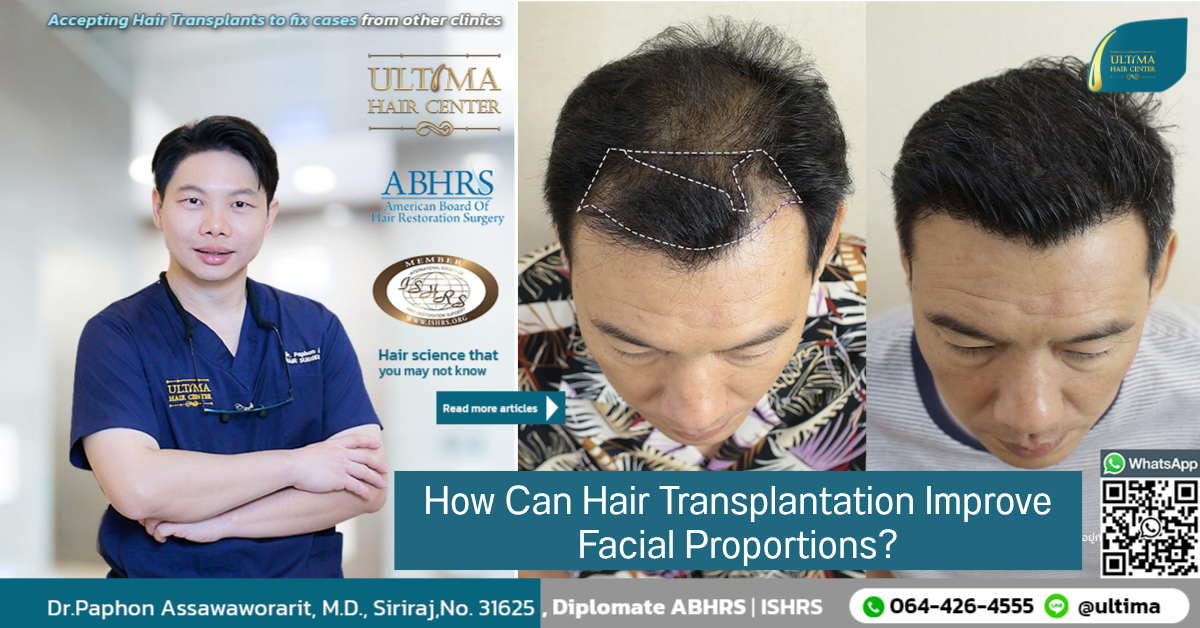
Designing a Hairline for a More Balanced Appearance
When people think about facial enhancement, they may think of cosmetic surgery, dermal fillers, or other aesthetic procedures. However, hair, particularly the frontal hairline and temple areas, also plays an important role in the overall appearance of the face.
Hair transplantation is not only intended to restore hair in areas affected by thinning or baldness. In selected cases, it can also be used to redesign the hairline, restore hair around the temples, and adjust the visible proportions of the forehead. These changes may help create a more balanced overall facial appearance.
However, it is important to understand that hair transplantation does not change the underlying bone structure or the actual shape of the face. Instead, it changes the visible “frame” of the face created by the hairline.
Therefore, an appropriately designed hairline may make the same person appear to have different facial proportions. This can be particularly noticeable when the original hairline has receded, the forehead appears broad, or the temples have deep recessions.
This article explains how hair transplantation can improve facial proportions, who may benefit from hairline redesign, how a suitable hairline should be planned, and why choosing the right physician and clinic is important for achieving an appropriate result.
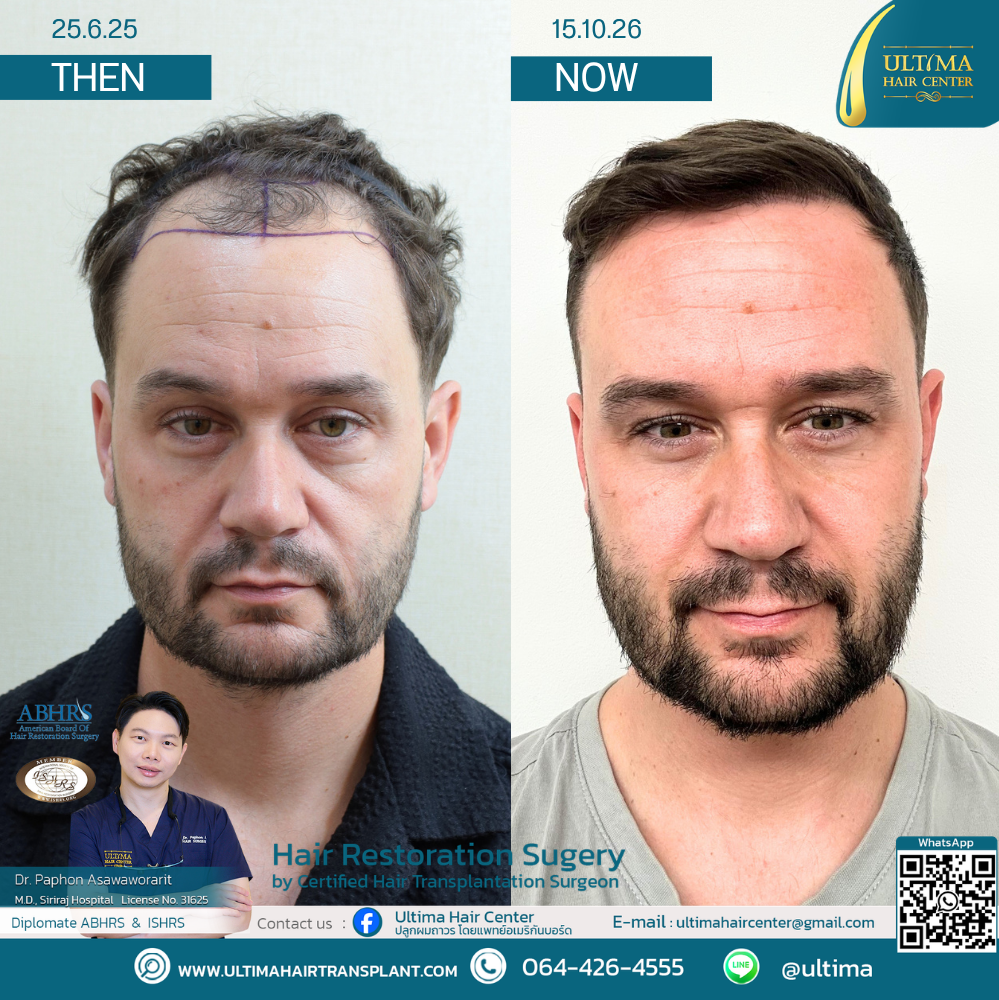 Can Hair Transplantation Really Improve Facial Proportions?
The answer is yes, hair transplantation can improve the overall appearance of facial proportions, but it does not directly change the underlying facial structure.
What hair transplantation can change is the visible “facial frame,” which is shaped by the frontal hairline, temple contours, and hair density around the face.
For example, when someone has significant hairline recession, more of the forehead becomes visible. This may make the face appear longer or the forehead look broader.
By designing a new hairline and restoring hair in appropriate areas, the visible forehead area may be reduced, potentially creating more balanced facial proportions.
Conversely, creating a hairline that is too low or does not suit the person’s facial features may make the face appear shorter, the forehead look narrower, or the hairline appear unnatural.
The goal, therefore, is not to make the forehead as small as possible. It is to design a hairline that is appropriate for each individual.
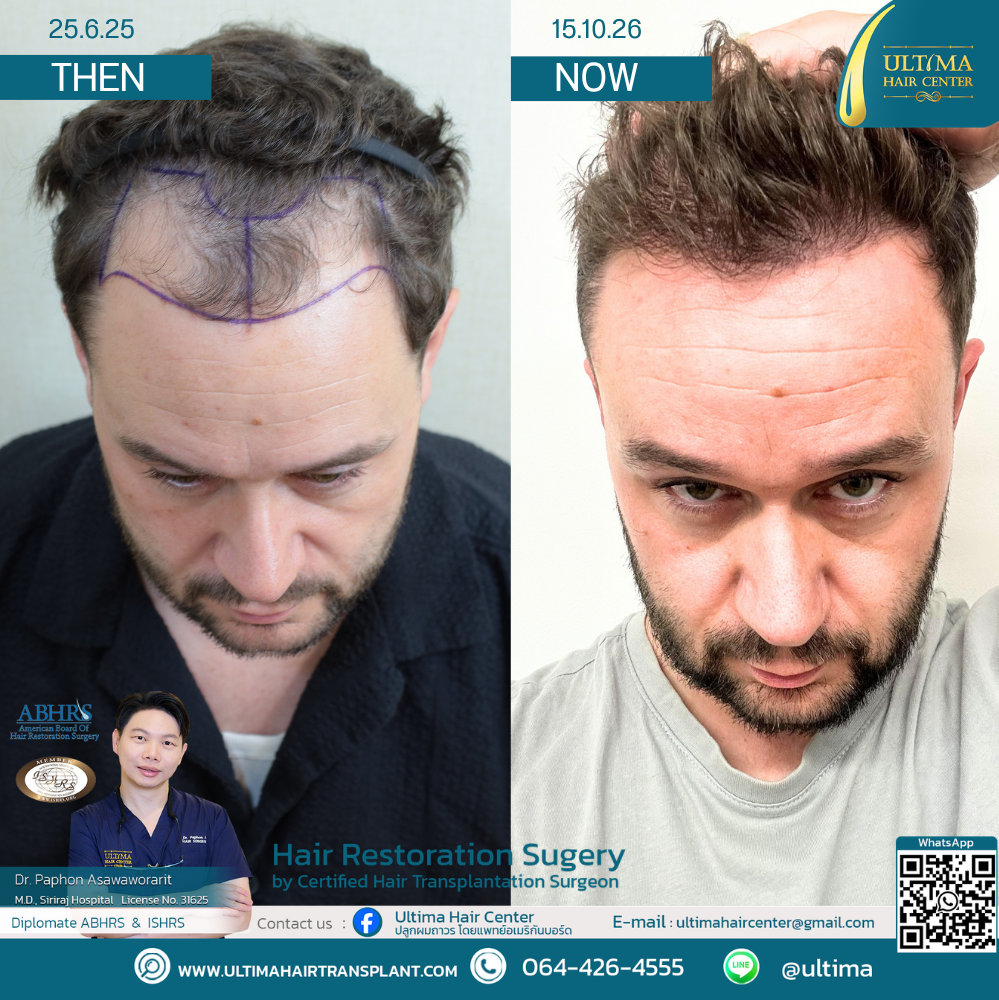 How Can Hair Transplantation Improve Facial Proportions
The hairline acts as the upper frame of the face.
Imagine a face with no hair along the front. The forehead becomes fully exposed, making the face look different from how it would appear with a typical hairline.
Conversely, when the hairline is appropriately lowered, the visible forehead area may decrease, potentially creating a better balance between the forehead and the other facial features.
Factors that influence the overall appearance include:
- The position of the hairline
- Forehead width
- The depth of the temples
- Hairline shape
- Hair density
- Hair growth direction
- The relationship between the hairline and eyebrows
- Facial shape
- Hair color and skin tone
A well-planned hair transplant therefore considers more than just the areas where hair is missing. It also considers how the overall appearance of the face may change after hair is restored.
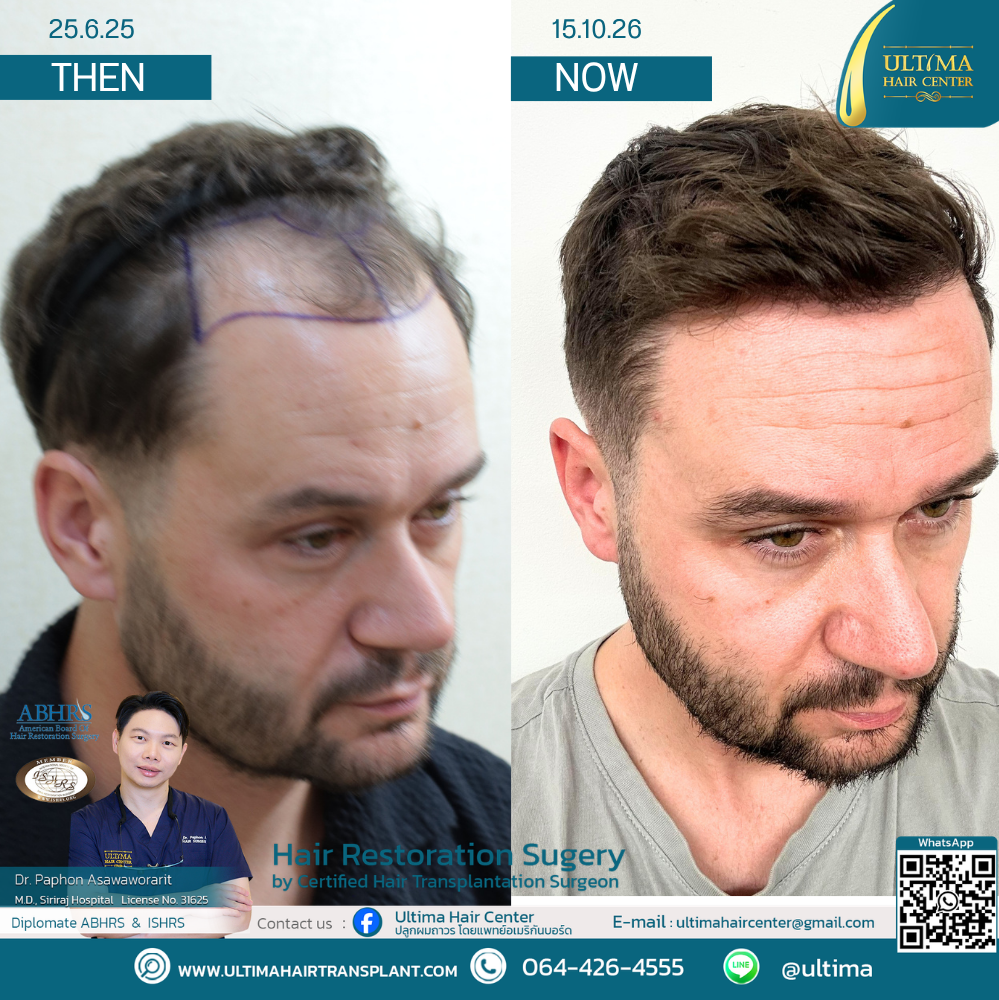 How Can Hair Transplantation Improve Different Aspects of Facial Appearance?
1. Making a Broad Forehead Appear Less Prominent
People with a broad-looking forehead caused by a receding hairline may feel that their face looks more exposed and that their forehead stands out compared with the other facial features.
Appropriate hair transplantation along the frontal hairline can help reduce the visible forehead area.
However, the hairline does not necessarily need to be lowered as much as possible. A suitable hairline should take into account the person’s age, facial shape, and the likely progression of future hair loss.
2. Creating a More Balanced Appearance for a Long Face
As the hairline recedes, the visible forehead area increases, which can make certain face shapes appear longer.
Lowering the hairline to an appropriate level may reduce this visible area and help create a more balanced overall appearance.
However, the assessment should consider the entire face rather than focusing only on forehead height.
3. Improving an M-Shaped Hairline
People with deep recession at both sides of the forehead may benefit from restoring the Temporal area, or temple region, to improve the overall hairline shape.
This area is important because restoring hair only in the center while leaving deep temple recessions may create a disconnect between the new frontal hairline and the existing temple contours.
4. Improving Overall Facial Balance
Human faces are rarely perfectly symmetrical, and the hairline may also differ between the left and right sides.
If one side of the hairline has receded more than the other, targeted hair transplantation may help create a more balanced overall appearance.
However, the goal does not necessarily need to be making both sides identical in every detail. A small degree of asymmetry is common in natural facial features.
 Which Face Shapes Require Particular Attention When Designing a Hairline?
There is no universal rule stating that a particular face shape requires a specific hairline. In general, however, the physician should consider the overall facial proportions.
Long Face Shape
Care may be needed when designing a hairline that sits too high, as this may make the forehead appear larger.
Round Face Shape
The hairline and temples may need to be considered together to create balance without making the face appear excessively short.
Square Face Shape
A hairline with more defined angles and structure may suit some square face shapes. However, the forehead contours and original hairline must also be considered.
Oval Face Shape
An oval face may allow greater flexibility in hairline design, but the original hairline and individual hair characteristics still need to be assessed.
The most important point is that there is no single hairline design that suits everyone.
 Why Should You Avoid Copying Someone Else’s Hairline Exactly?
Many patients bring photographs of celebrities, actors, or people who have undergone hair transplantation and say, “I want a hairline like this.”
Using photographs to communicate personal preferences can be helpful. However, copying another person’s hairline position and shape exactly is not always appropriate.
This is because each person has different:
- Facial proportions
- Forehead height
- Face size
- Hair thickness
- Skin tone and hair color
- Donor Area density
- Likelihood of future hair loss
A hairline that looks attractive on one person may not suit someone else.
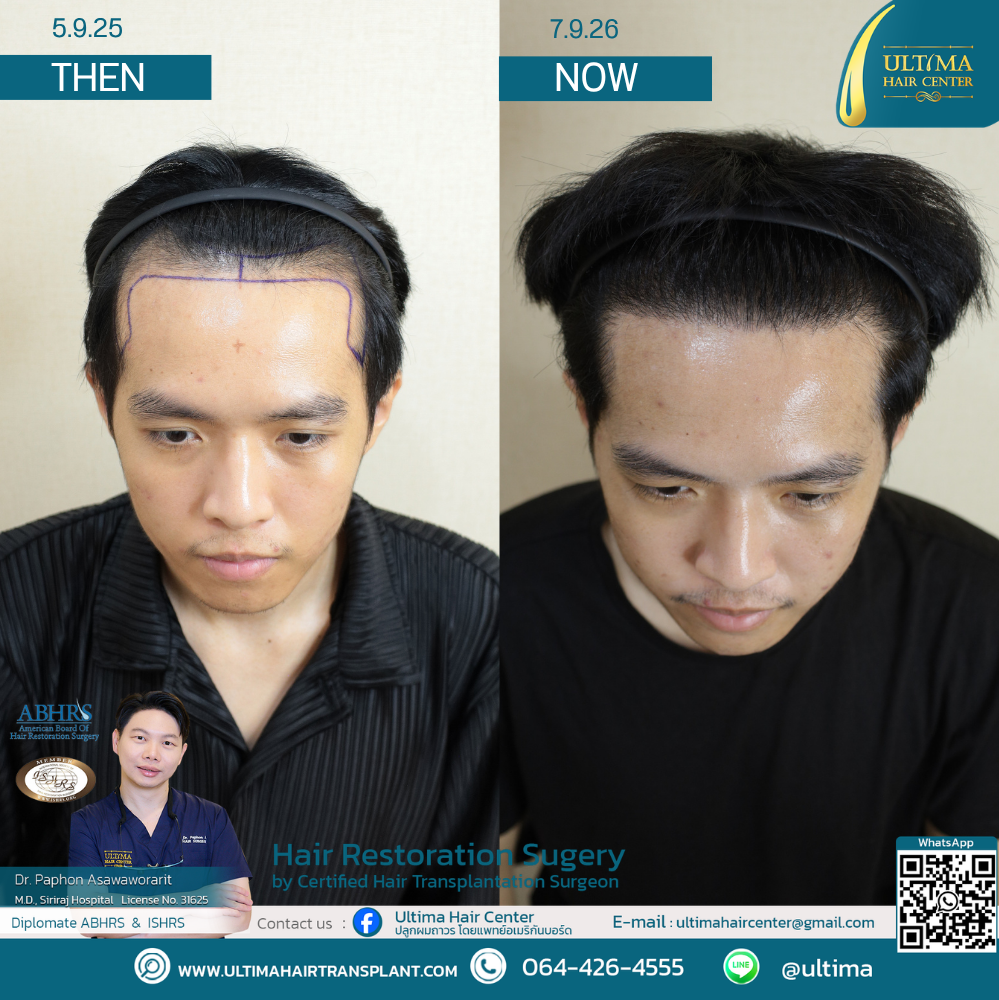 Hairline Design Is More Important Than Simply Using More Grafts
One common misconception about hair transplantation is that “the more grafts used, the better the result.”
However, when designing the frontal hairline, the number of grafts is only one factor.
Achieving a natural-looking hair transplant also requires careful consideration of graft distribution.
The very front of the hairline generally requires a soft, gradual transition. Hair density should not be uniform right from the leading edge, as this may create a clearly visible boundary.
Density can then gradually increase toward the back, as appropriate.
The physician therefore needs to consider the entire design:
Position → Shape → Transition Zone → Density → Direction → Hair Angle
The objective is not simply to maximize the total number of grafts used.
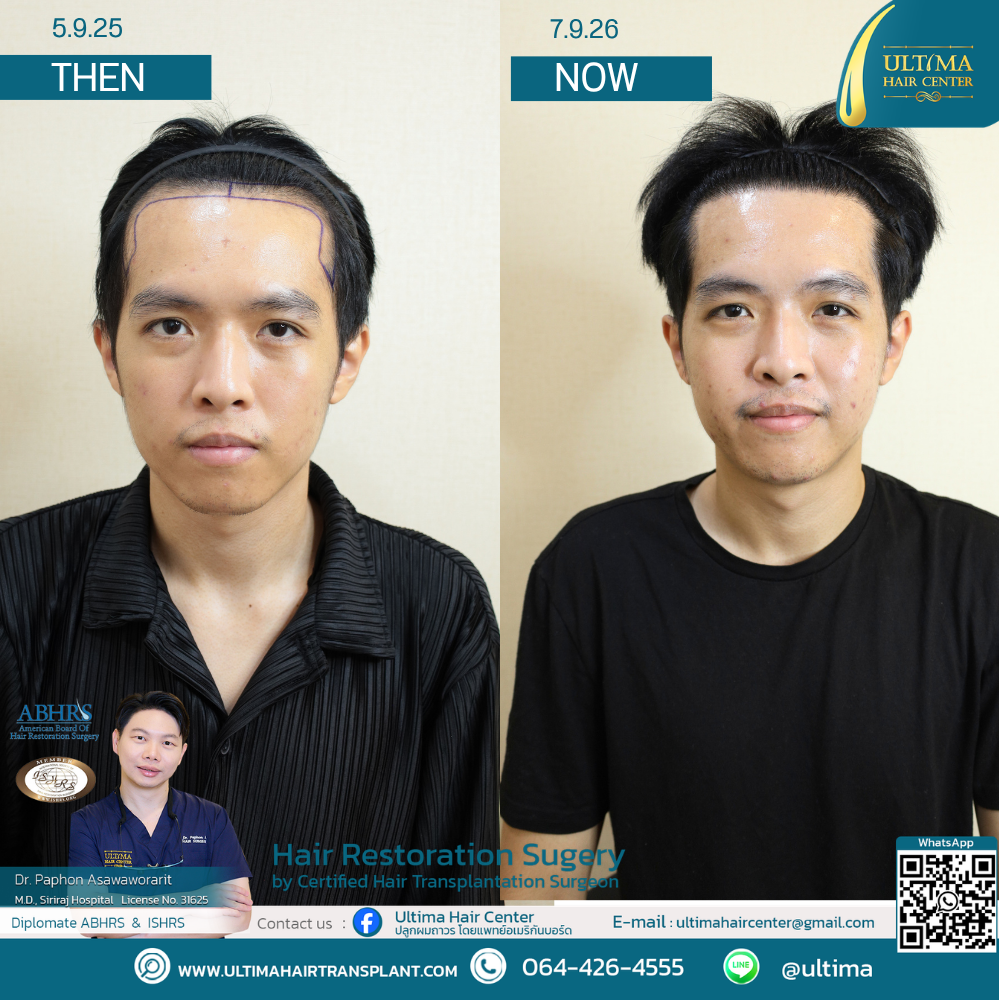 How Can Temple Restoration Improve Facial Proportions?
The temple region, also known as the Temporal area, contributes to the sides of the facial frame.
When the temples are deeply recessed, the face may appear narrower in certain areas, or the forehead may look broader.
In selected cases, hair transplantation in the temples can restore some of this missing coverage, helping the frontal hairline connect more smoothly with the sides.
However, the temple area requires particular care because hair direction and angles are highly detailed in this region.
If grafts are placed in the wrong direction, the hair may point outward or look inconsistent with the surrounding hair.
Temple restoration is therefore not simply about “filling in the area.” The design must follow the direction and characteristics of the existing hair.
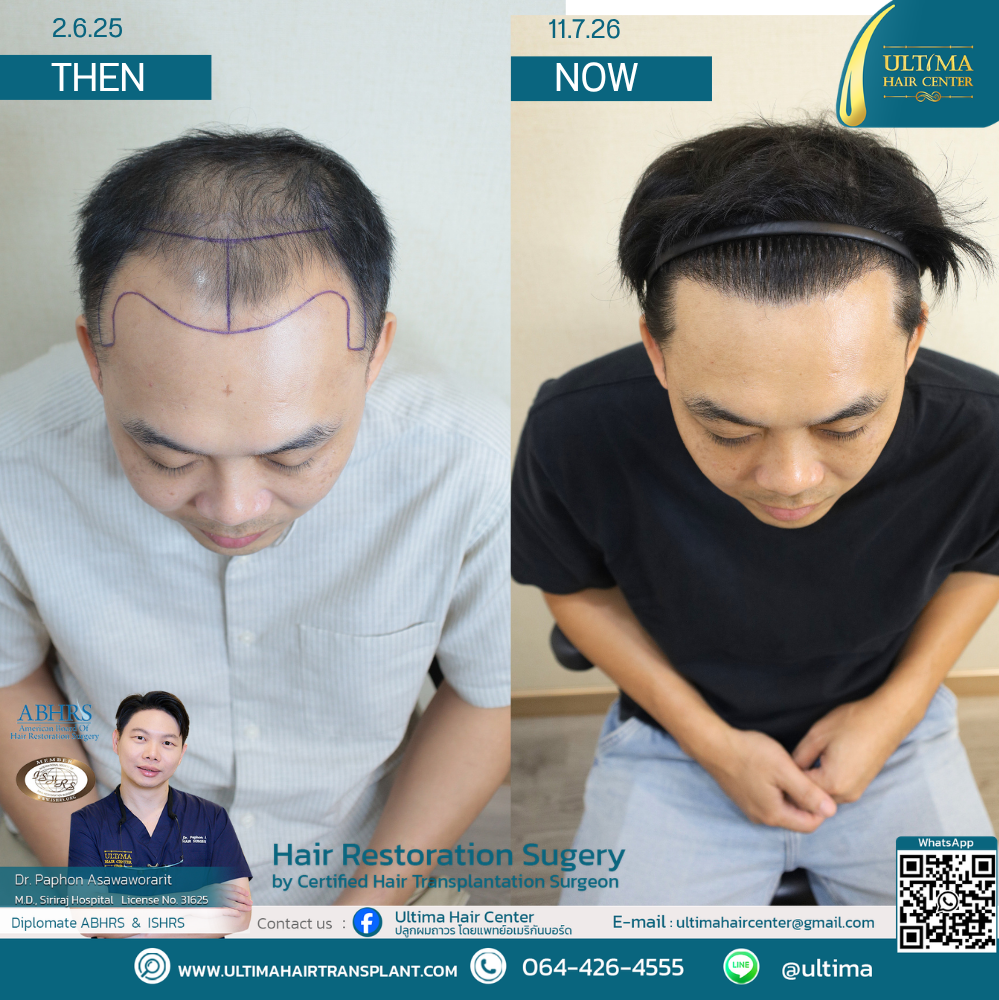 How Much Can Hair Transplantation Lower the Forehead?
There is no single numerical answer that applies to everyone.
The extent to which the hairline can be lowered depends on:
- Facial shape
- Forehead height
- Eyebrow position
- Original hairline
- Age
- Donor Area density
- Hair thickness
- Likelihood of future hair loss
- Available graft numbers
- The patient’s goals
Lowering the hairline excessively may require a large number of grafts. If other areas continue to thin in the future, this may create challenges when allocating grafts for future treatment.
A good design should therefore focus on how much lowering is appropriate, rather than how much lowering is technically possible.
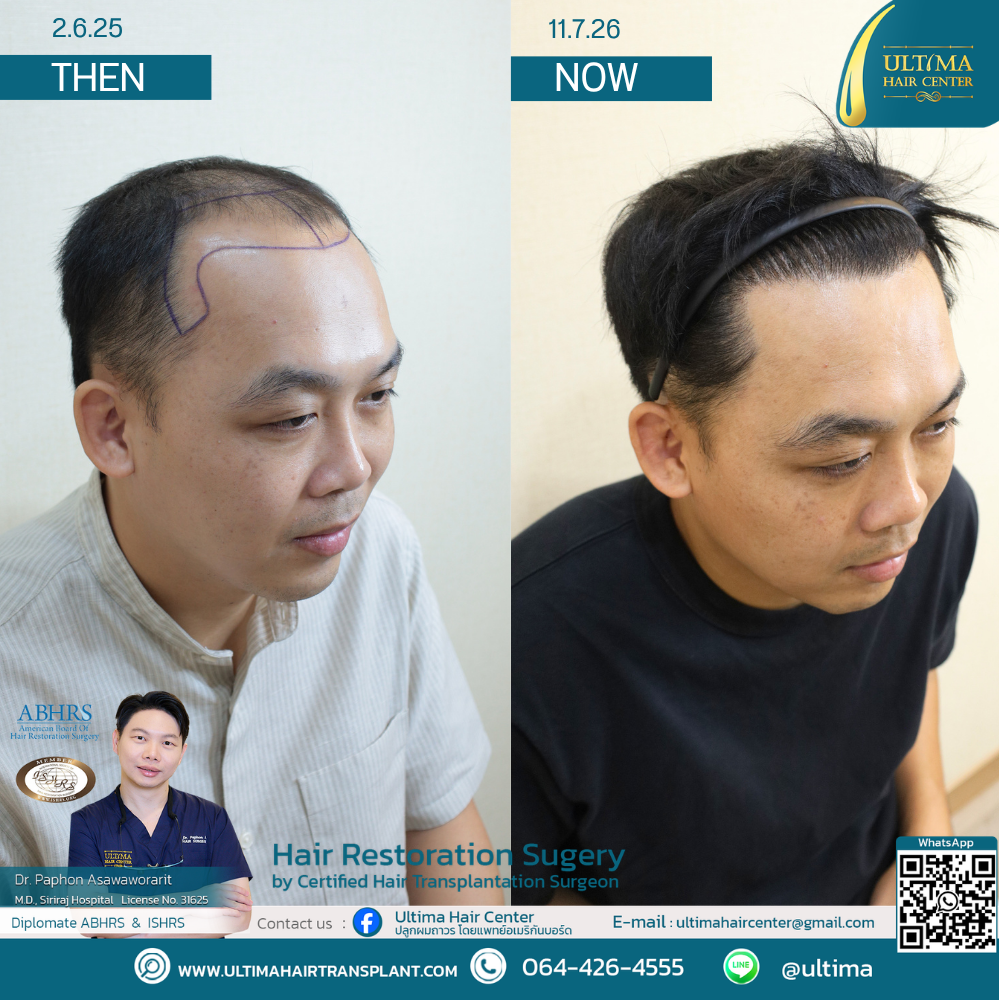 Why Is Age Important When Designing a Hairline?
The hairline changes with age, and genetic hair loss may continue to progress over time.
If a younger person has mild hairline recession and wants a very low hairline, careful planning is necessary because the hair behind the transplanted area may become thinner in the future.
Conversely, designing a hairline that takes the person’s age and likely hair-loss progression into account may help maintain a balanced appearance as time passes.
This is why hairline design should involve long-term planning rather than simply creating the most attractive appearance on the day of the procedure.
 Can Hair Transplantation Make the Face Look Younger?
For some people, adjusting the hairline may change their facial appearance and create an impression of a more youthful look.
One reason is that the hairline affects the upper frame of the face.
As the hairline recedes, more of the forehead becomes visible, which may create a more exposed appearance. Some people associate this look with an older appearance.
Restoring the hairline appropriately may therefore help the overall face look fresher or more balanced.
However, the goal should not be to make the face look exactly as it did during adolescence. A more appropriate objective is to create a hairline that suits the person’s current facial features and age.
Can Women Use Hair Transplantation to Improve Facial Proportions?
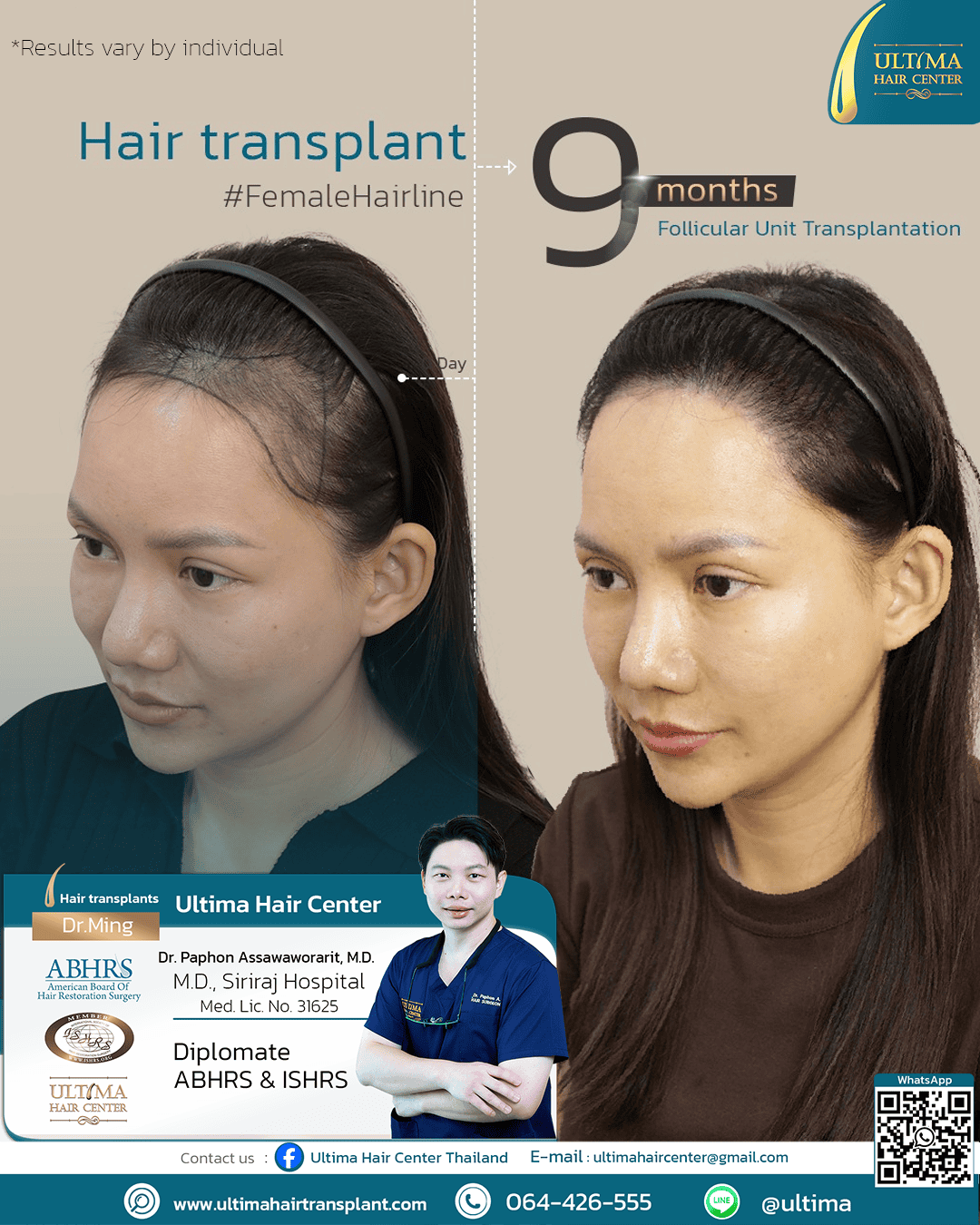
Yes. In selected cases, women with broad foreheads, high hairlines, or receding hairlines may consider hair transplantation to improve the frame of the face.
However, particular attention must be paid to the cause of hair thinning in women. Female hair loss can have several different patterns and may sometimes be associated with underlying medical conditions.
Identifying the cause and assessing suitability should therefore come before deciding to proceed with a transplant.
 Can You Have a Hair Transplant for Facial Proportion Adjustment If You Are Not Experiencing Hair Loss?
Yes. This is something that can be discussed and assessed during a consultation.
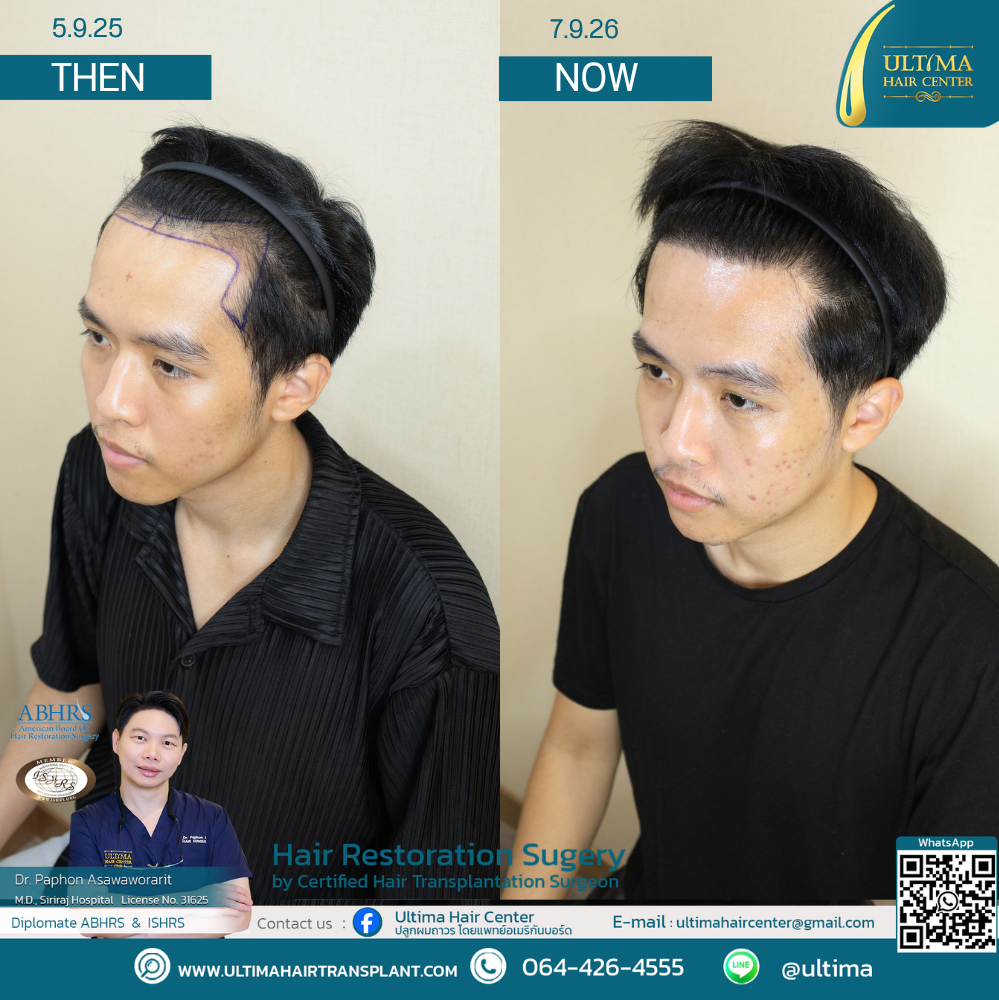
Some people have naturally high hairlines and are not experiencing hair loss, but feel that their foreheads look broad and would like to adjust their facial frame.
In these cases, hair transplantation is being considered primarily for aesthetic adjustment rather than as a treatment for thinning hair.
The physician should assess whether the desired hairline is achievable, whether the available grafts are sufficient, and whether the expected result is realistic.
Can Hair Transplant Repair Improve Facial Proportions?
In selected cases, it may be possible. People who have previously undergone hair transplantation elsewhere and are dissatisfied with the result may experience problems such as:
- A hairline that is too low
- An excessively straight hairline
- A hairline that is too dense
- A hairline that does not suit the facial shape
- Uneven temple contours
- Grafts placed in the wrong direction
- Scarring
- Excessive use of grafts in unsuitable areas
If you are looking for hair transplant repair for cases treated elsewhere, it is important to understand that corrective procedures may be more complex than an initial transplant. The physician must assess the previous work as well as the remaining Donor Area.
In some cases, additional transplantation may help improve the overall appearance. In others, alternative approaches may also need to be considered.
A physician should assess the case before determining the extent to which the problem can be corrected.
What Should You Look for in Hair Transplant Reviews About Facial Proportion Improvement?
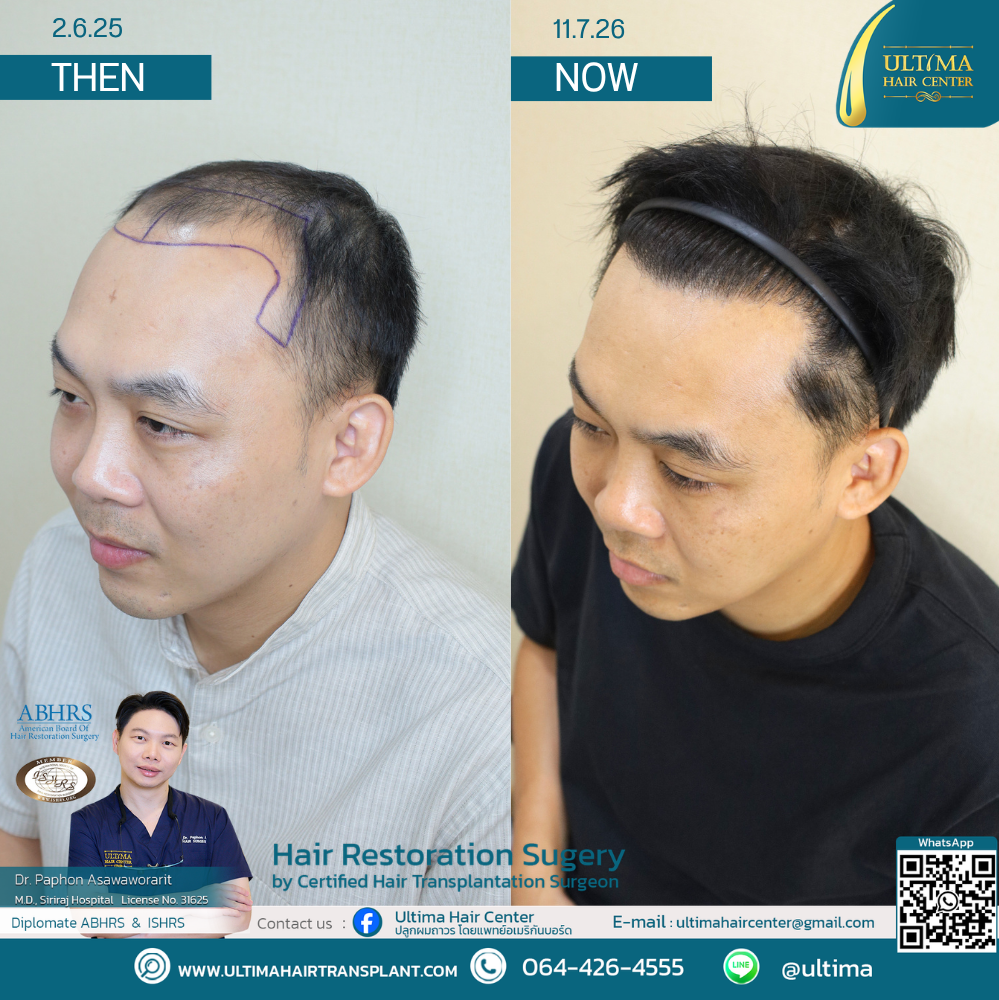
If you are searching for hair transplant reviews to understand whether transplantation can improve facial proportions, look beyond Before & After photographs.
Consider the following points:
1. How Has the Hairline Changed?
Look at how restoring the hairline has affected the visible forehead area.
2. Have the Temples Changed?
Restoration of the Temporal area may have a noticeable effect on the overall facial frame.
3. Review Photographs From Multiple Angles
Front-facing photographs alone may not show the details of the temple contours.
4. Check the Time Since Transplantation
Results should be assessed at an appropriate stage of recovery and growth. Do not judge the final outcome based only on photographs taken shortly after the procedure.
5. Assess Whether the Hairline Looks Natural
A well-designed hairline should not look like a drawn-on line. It should have an appropriate Transition Zone and carefully planned hair characteristics.
 What Should You Look for When Choosing a Hair Transplant Clinic in Bangkok for Facial Proportion Adjustment?
If you are searching for a hair transplant in Bangkok to adjust your hairline, you should consider more than price alone.
Look at whether the physician or clinic places importance on:
- Facial proportion analysis
- Hairline assessment
- Donor Area planning
- Evaluation of future hair-loss progression
- Individualized hairline design
- Graft selection
- Hair direction and angle
- Post-procedure follow-up
- Managing problems when limitations arise
For people seeking facial proportion adjustment, it is particularly important to choose a medical facility that understands hair transplantation as both a medical procedure and a form of aesthetic design.
 What Is the Approach to Hair Transplantation at Ultima Hair Center?
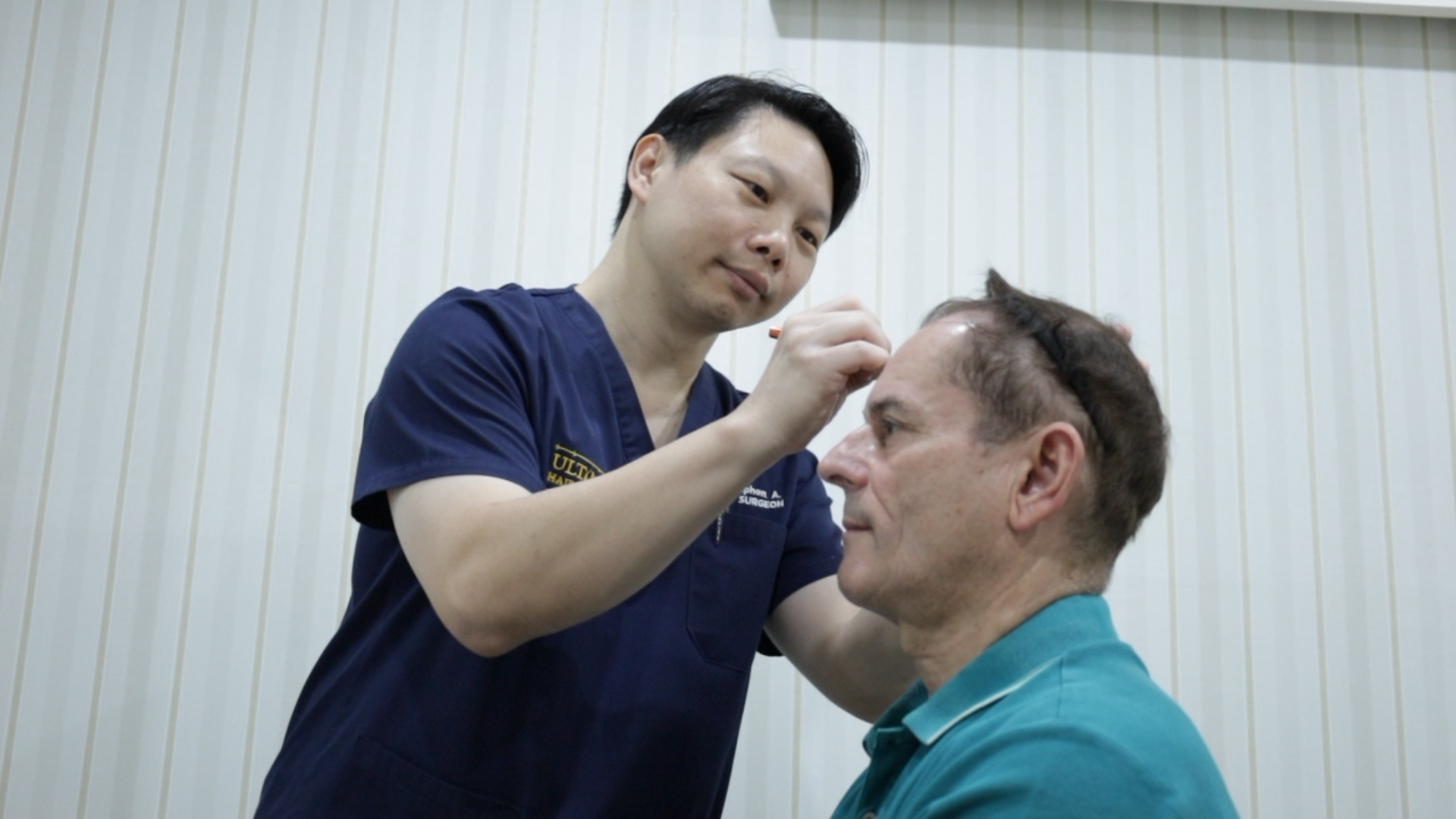
At Ultima Hair Center, the approach is to assess the patient’s overall characteristics before determining a treatment plan, rather than starting with graft numbers or price alone.
For patients who wish to improve their facial proportions, the assessment may include:
Facial Shape → Forehead → Hairline → Temples → Hair Characteristics → Donor Area → Future Hair-Loss Progression → Patient Goals
This helps guide a plan that is appropriate for each individual.
For those searching for hair transplant with Dr. Ming, you can ask preliminary questions and discuss your concerns. Dr. Ming personally responds to patient messages, helping ensure that communication before making a decision addresses each person’s individual concerns.
The principle of hair transplantation with an American Board-certified ABHRS physician should be reflected in treatment planning and standards of patient care, rather than using credentials merely as an advertising claim.
For those seeking quality-focused hair transplantation, the key is to prioritize appropriate hairline design and responsible graft allocation rather than focusing on using the largest possible number of grafts.
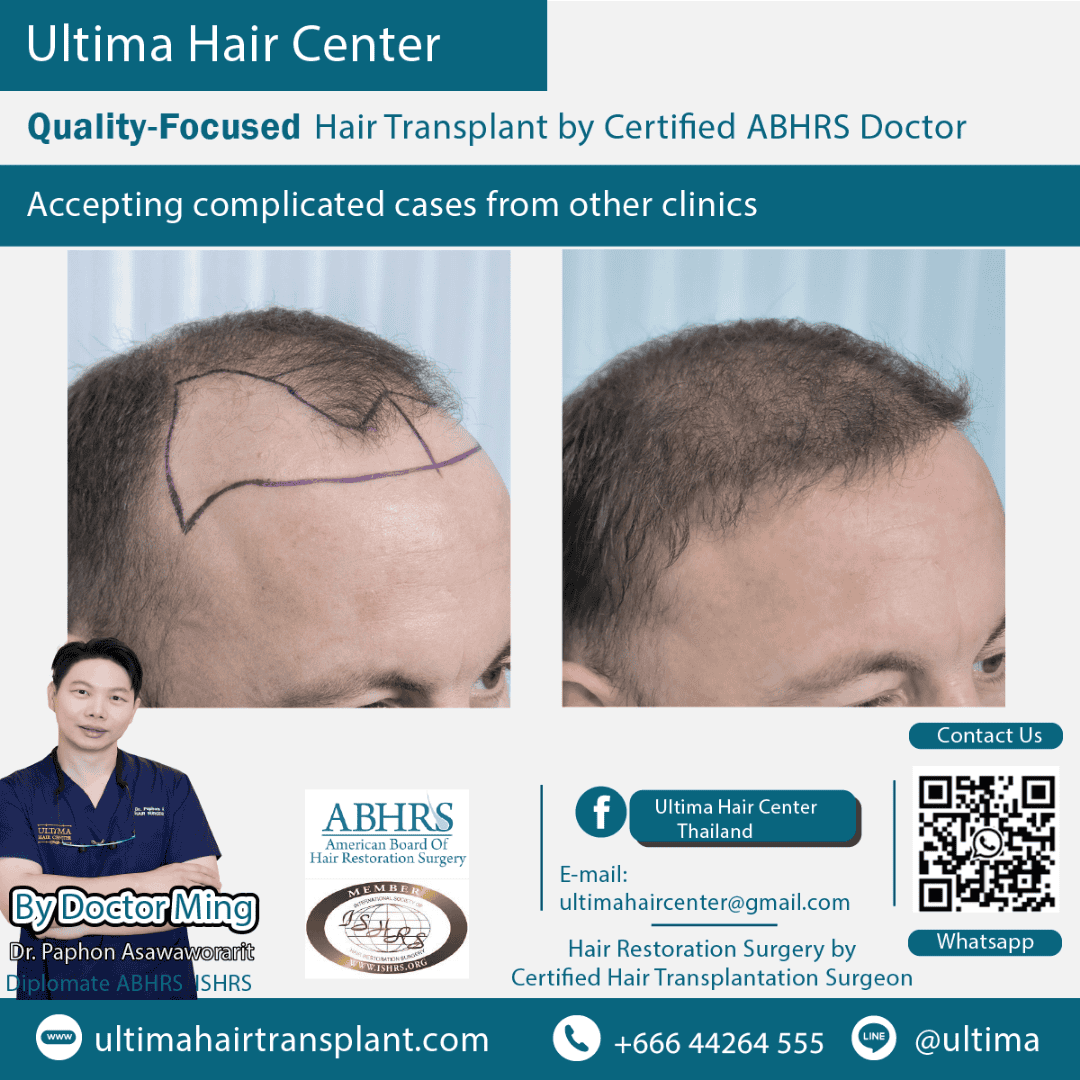 Hair Transplantation for Facial Proportion Adjustment Does Not Mean Using as Many Grafts as Possible
The central principle of hair transplantation for facial proportion adjustment is balance.
If too few grafts are used, the result may not achieve the desired overall change.
However, using too many grafts may consume resources unnecessarily and reduce the grafts available for future planning.
A well-considered plan should answer the following questions:
Which areas need restoration?
How much restoration is appropriate?
Why does that particular area need restoration?
How should future treatment be planned if hair loss progresses?
These questions are more important than simply asking, “How many grafts will be used?”
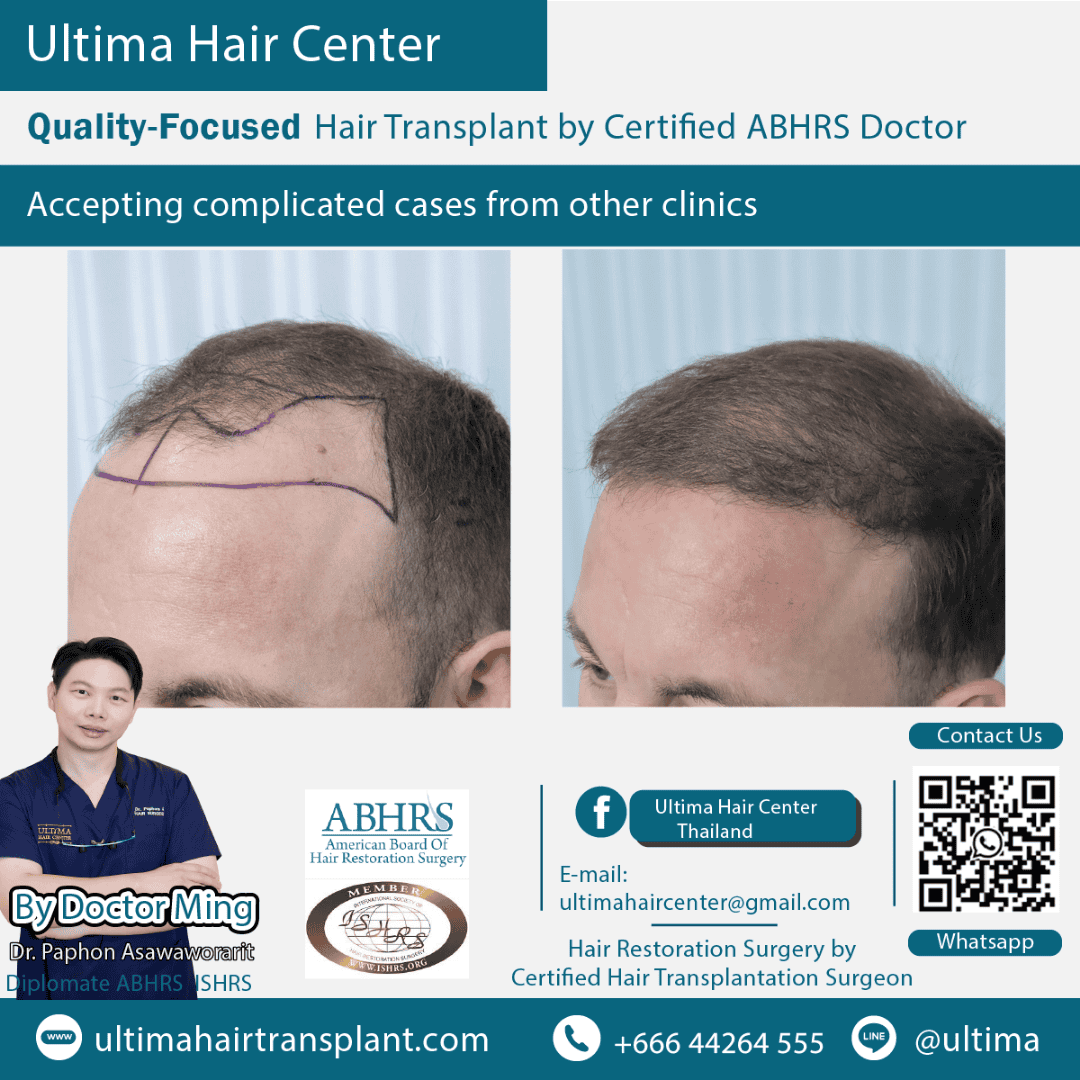 How Can Hair Transplantation Improve Facial Proportions? Summary
Hair transplantation can improve the overall appearance of facial proportions, particularly in people with a receding hairline, a broad-looking forehead, deep temple recessions, or an asymmetrical hairline.
The main mechanism is not a change in the underlying facial bones. Instead, it involves creating a different visible facial frame through the design of the frontal hairline and temple areas.
Good planning should take into account facial shape, age, hair characteristics, Donor Area density, and the likelihood of future hair thinning. Grafts must also be placed at appropriate angles and in suitable directions.
The goal of a natural-looking hair transplant is therefore not to create the lowest or densest possible hairline, or to copy another person’s appearance. It is to create a hairline that suits the individual and provides balanced proportions.
For people considering a hair transplant in Bangkok or seeking hair transplant repair for cases treated elsewhere, a physician’s assessment before making a decision is important because every patient has different goals and limitations.
Ultimately, a good hair transplant should involve more than filling areas where hair is missing. It should consider how restoring hair will change the overall appearance of the face and whether the result will remain appropriate over time.
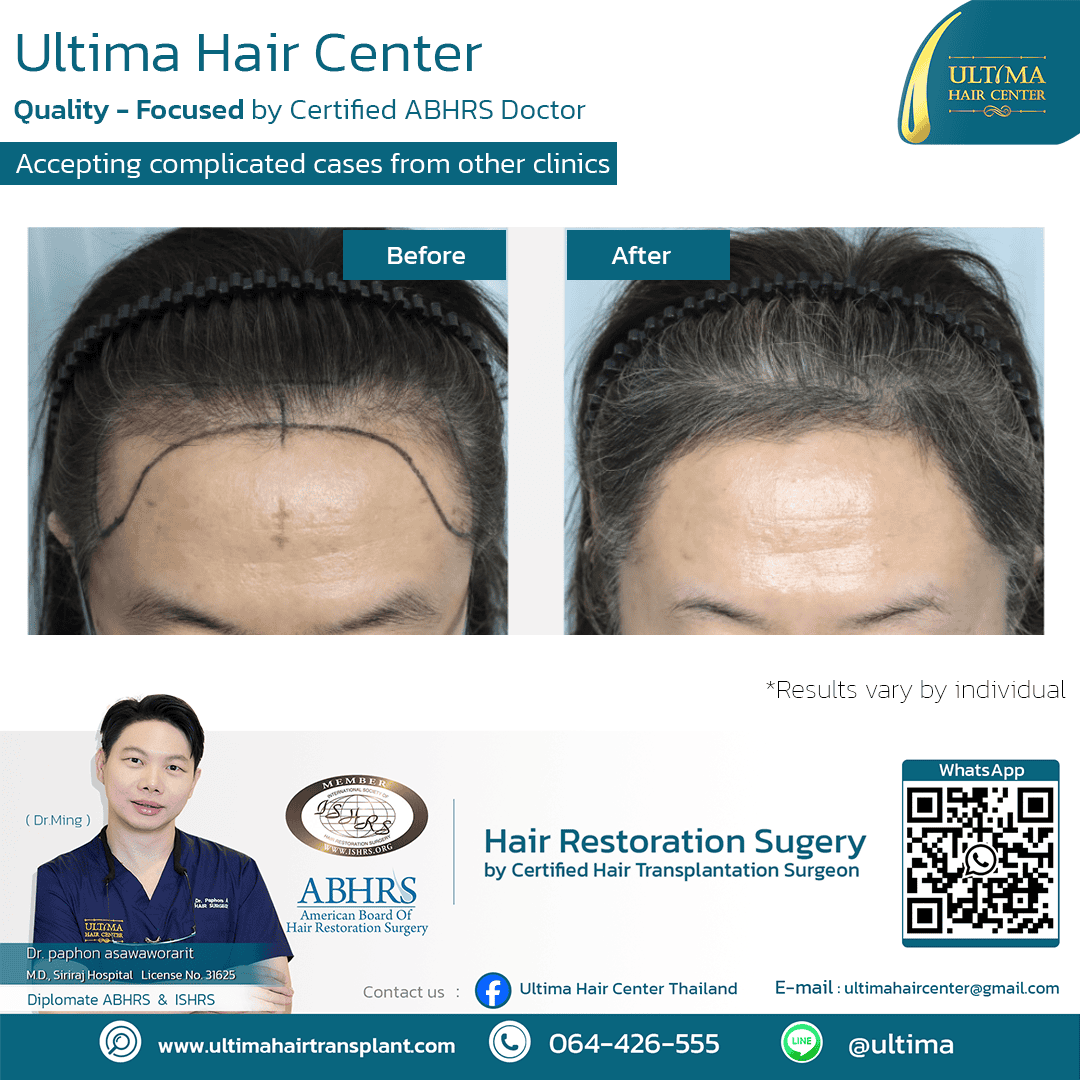 Frequently Asked Questions About Hair Transplantation for Facial Proportion Adjustment
1. Does Hair Transplantation Really Change Facial Shape?
Hair transplantation does not change the underlying bone structure or the actual shape of the face. However, it can change the visible facial frame through adjustments to the hairline and temples, potentially making the overall appearance look different and more balanced.
2. Can Hair Transplantation Reduce the Forehead?
In selected cases, hair transplantation can reduce the visible forehead area by creating a new frontal hairline. However, the design should take facial shape and the likelihood of future hair loss into account rather than focusing on lowering the hairline as much as possible.
3. Can Hair Transplantation Make the Face Look Shorter?
For some people whose foreheads appear broad because of a high or receding hairline, adjusting the hairline may help balance the upper part of the face. This may make the face appear shorter overall, but it does not change the actual length of the underlying facial structure.
4. Can Hair Transplantation Correct a Broad Forehead?
If the forehead appears broad because the hairline is high or receding, hair transplantation may help. However, if the width is primarily due to the underlying forehead or bone structure, hair transplantation will not change that structure.
5. Will Temple Restoration Change the Appearance of the Face?
Temple restoration can change the lateral facial frame in some people, particularly those with Temporal recession. However, careful planning is essential because hair direction and angles in the temple area require considerable precision.
6. How Many Grafts Are Needed to Improve Facial Proportions?
There is no fixed number. The required graft count depends on the areas being adjusted, the shape of the Hairline, hair density, and the quality of the Donor Area. A physician should assess these factors before determining the number of grafts needed.
7. Can I Have a Hair Transplant to Adjust My Hairline If I Am Not Experiencing Hair Loss?
This can be assessed in selected cases. The physician should consider the patient’s goals, facial proportions, and Donor Area, as well as discuss the limitations and expected results in detail.
8. Can Women Have Hair Transplants to Improve Facial Proportions?
Yes, in selected cases. Women with broad foreheads or high hairlines may be suitable candidates, but the cause of hair thinning should also be assessed because female hair loss can have several different causes.
9. Can a Hair Transplant Recreate My Teenage Hairline?
It may be possible to design a lower hairline, but a teenage hairline should not automatically be the target. Current age, the likelihood of future hair loss, and long-term graft allocation must all be considered.
10. Can an Unsatisfactory Hairline From a Previous Hair Transplant Be Corrected?
In some cases, correction may be possible. The physician must assess the existing hairline, previously transplanted grafts, scarring, and remaining Donor Area. A corrective plan should therefore be tailored to the individual.
11. What Should I Look for in Hair Transplant Reviews if I Want to Improve My Facial Proportions?
Review the frontal hairline, temples, photographs from multiple angles, time since transplantation, and how well the result suits the person’s face. Do not focus only on Before & After photographs or the number of grafts used.
12. Should I Consult a Physician Before Designing My Hairline?
Yes. A suitable hairline depends on facial shape, age, hair characteristics, Donor Area, and the likelihood of future hair loss. An assessment before the procedure helps ensure that the treatment plan is appropriate for the individual.
Contact Us:
Dr. Paphon Asawaworarit (Dr. Ming)
Physician Directory ABHRS
Ultima Hair Center (Thailand Website)
Ulitma Hair Transplant (English Website)
Line: @ultima
E-mail: ultimahaircenter@gmail.com
