

Popular Female Hairline Styles: Hair Transplantation to Enhance Your Facial Frame
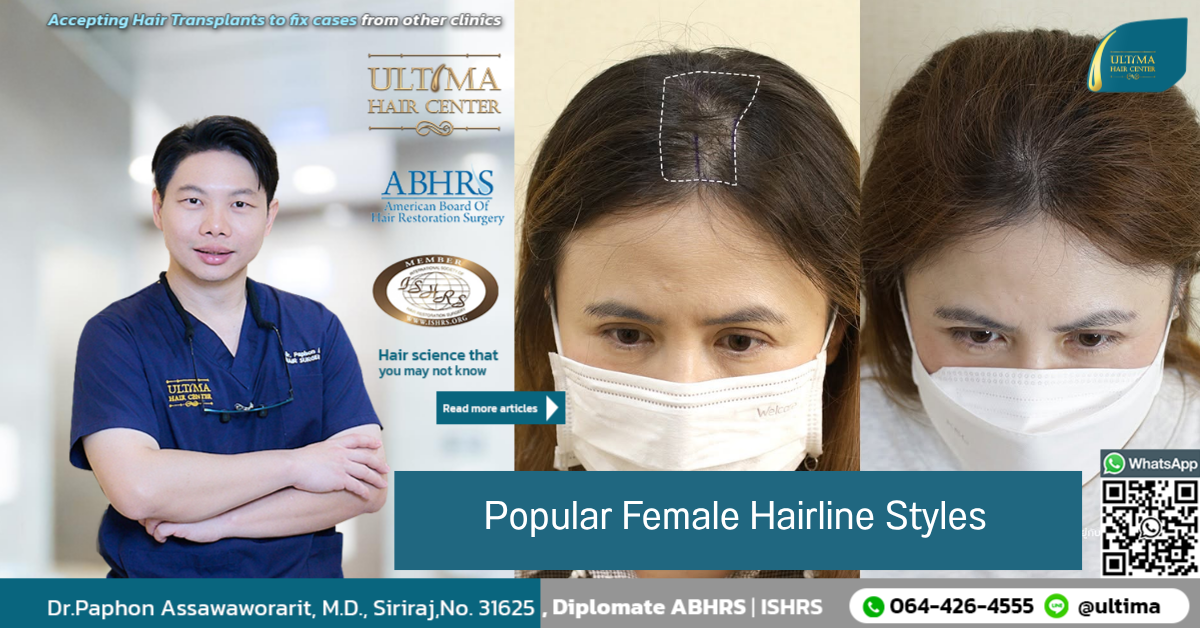
The hairline is a small facial feature that can have a greater impact on overall appearance than many people realize. This is particularly true for women with a broad forehead, a high hairline, recessed temples, or thinning hair at the front. Hairline restoration is not simply about increasing the number of hairs. It involves designing a facial frame that complements each individual’s unique features.
Today, many women are becoming interested in hair transplantation along the hairline for various reasons, including reducing the appearance of a broad forehead, lowering a high hairline, filling in the temples, or addressing thinning caused by tight hairstyles, hormonal changes, or other factors.
However, the term “popular female hairline styles” does not mean that there is one hairline design suitable for every woman. A hairline that looks attractive on one person may not suit another. Facial shape, age, hair characteristics, hair thickness, and forehead proportions all influence the design.
Therefore, if you are considering a natural-looking hair transplant to enhance your facial frame, the most important step is not simply choosing a hairline from a reference photo. Instead, a physician should assess your individual features and design a hairline that suits your face.
 Why Is the Female Hairline Important for Facial Framing?
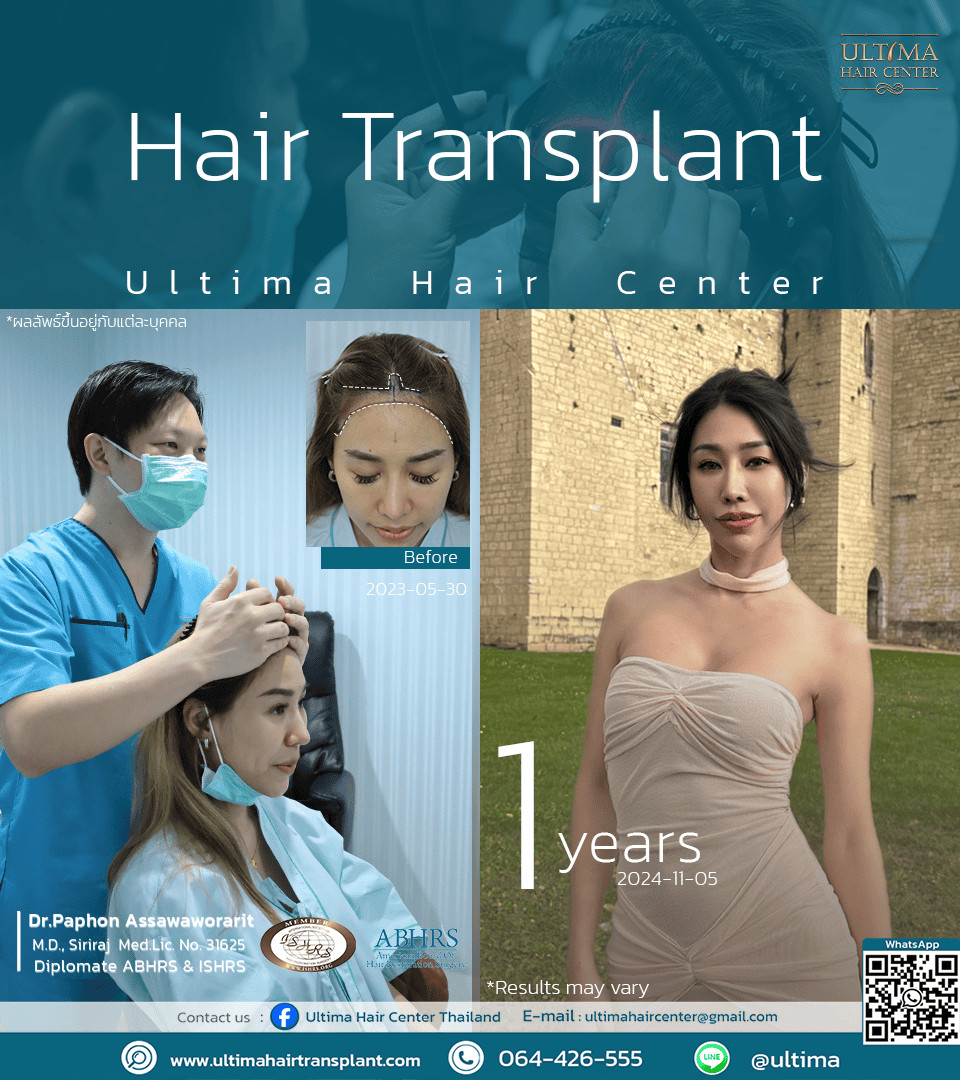
The hairline marks the boundary between the forehead and the hair-bearing scalp. When the hairline is high or the hair at the front becomes thin, the visible proportions of the face may change. Some women may feel that their forehead looks broader or their face appears longer.
Conversely, when the hairline is appropriately redesigned, the visible forehead area may become smaller, helping the upper part of the face appear more balanced with the rest of the facial features.
However, hair transplantation does not change the underlying bone structure or directly alter the shape of the face. Instead, it changes the frame created by the hair, which can influence how the overall facial proportions are perceived.
For this reason, hairline design should take the entire face into account rather than focusing solely on forehead height.
 Which Female Hairline Styles Are Popular?
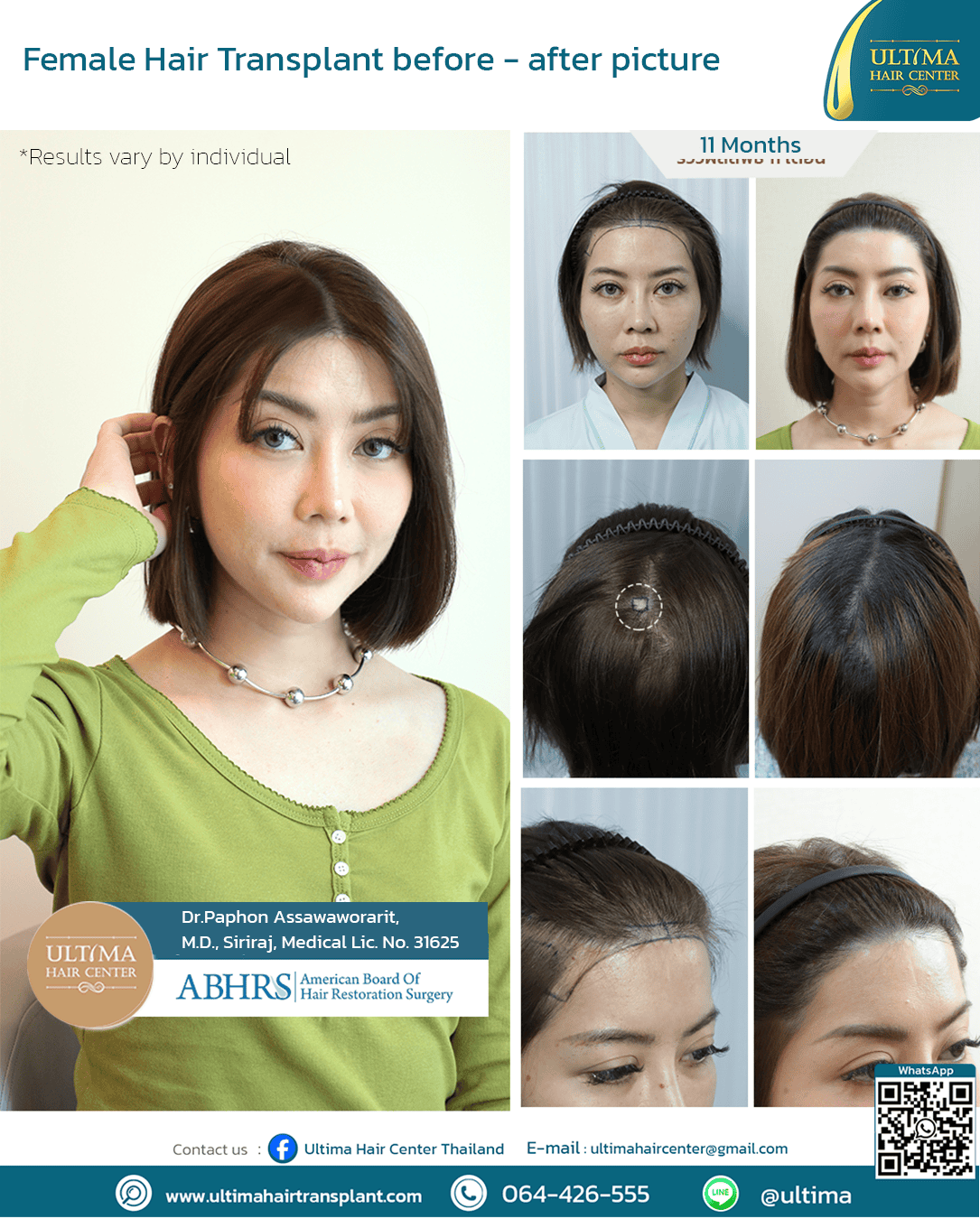
Female hairlines can have many different shapes, and certain styles may serve as useful references when planning a hairline. However, no single style should be treated as a universal formula.
1. A Softly Rounded Hairline
A softly rounded hairline is a style that many people find gentle and well suited to feminine facial features.
The key is not to create a perfectly symmetrical curve, but to establish a gradual transition from the forehead to the hair-bearing area.
Finer hairs may be placed along the very front of the hairline, with careful attention to detail, to avoid creating an overly sharp or artificial-looking boundary.
2. A Naturally Irregular Hairline
Many women do not have perfectly straight or symmetrical hairlines. Instead, their natural hairlines may include subtle variations in height or fine hairs scattered along the front.
Preserving a small degree of natural irregularity can help the hairline look less like a newly drawn line.
This is an important principle in hairline design because a perfectly straight hairline with uniform density may not match the characteristics of naturally growing hair.
3. A Hairline with Temple Restoration
Some women do not have a broad forehead across the entire front hairline but instead have recessed or thinning temples, making the sides of the face appear more exposed.
Adding hair to the temple area may help connect the frontal hairline with the hair at the sides, creating a more balanced facial frame.
However, the temples should not be filled in excessively. A slight temple recession may be a normal feature of an individual’s facial structure.
4. A Hairline Designed to Lower the Forehead Proportionately
Some women have had a high hairline since birth and feel that their forehead is more prominent than the other features of their face.
When appropriate, hair transplantation may be considered to lower the hairline to some extent.
However, the goal should not be to make the forehead as short as possible. If the hairline is designed too low, it may no longer suit the overall facial proportions and could create limitations if additional hair thinning develops in the future.
5. A Hairline for Women with a Relatively Broad Forehead
Women with broad foreheads may consider hair transplantation to improve their facial frame. However, having a broad forehead does not automatically mean that the hairline needs to be lowered.
Some women may have a broad forehead while maintaining balanced facial proportions. Others may have concerns specifically related to the temples or the sides of the frontal hairline.
A physician should therefore assess both the face and the hair before determining a new hairline design.
 Why Should You Avoid Choosing a Hairline Based on Celebrities or Influencers?
When searching online for female hairline styles, you may find many photos of celebrities and influencers. Some women may wish to recreate the same hairline for themselves.
However, a suitable hairline depends on more than the attractiveness of the person used as a reference.
Each individual has different:
- Facial proportions
- Forehead height
- Hair thickness
- Hair and skin color
- Temple shape
- Donor Area density
- Potential for future hair thinning
Reference photos are therefore best used to communicate your preferences rather than as templates to be copied exactly.
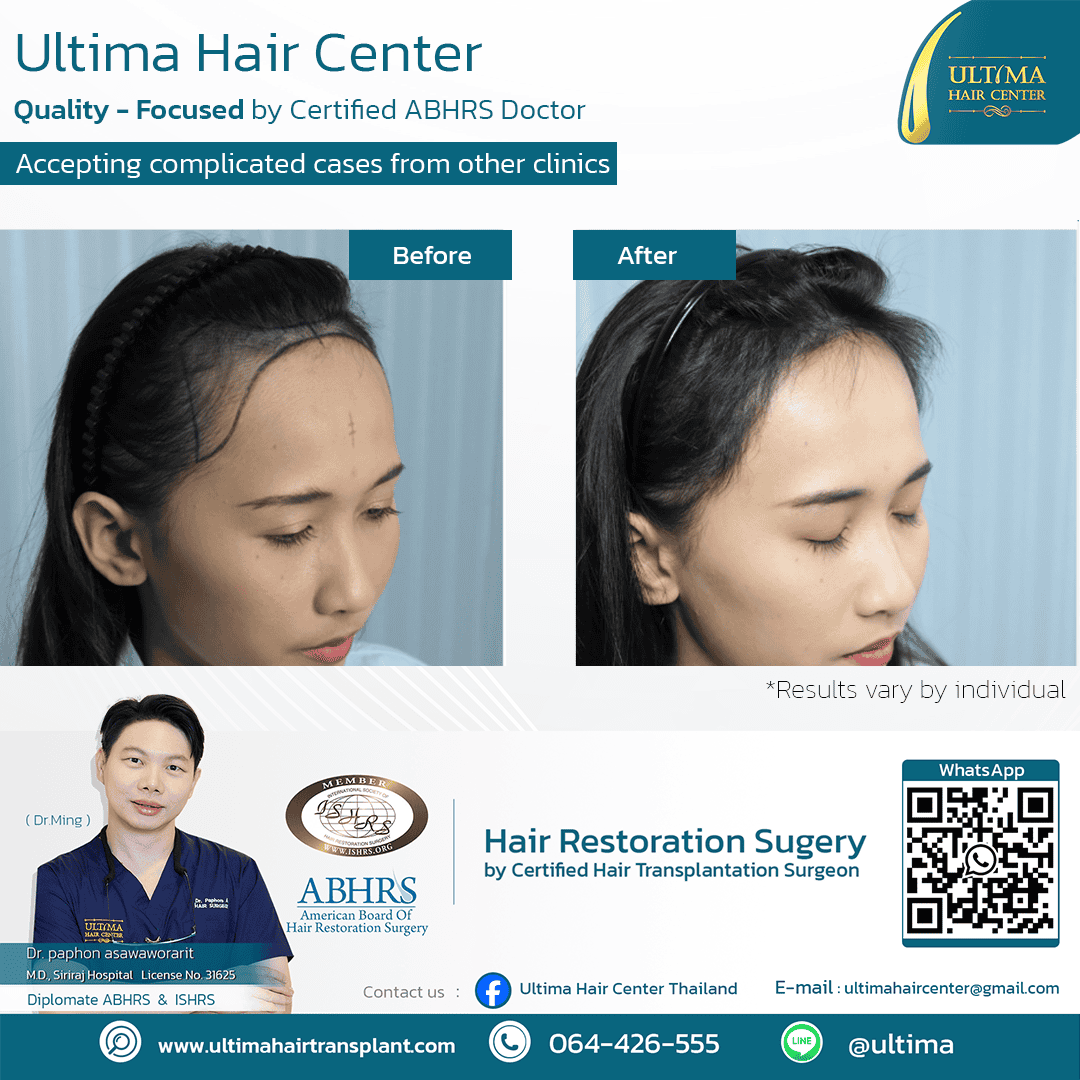 How Does Facial Shape Affect Hairline Design?
Hairline design should be considered in relation to each individual’s facial shape.
Oval Face
An oval face generally has relatively balanced proportions, allowing for a variety of hairline designs. However, preserving the person’s existing hairline characteristics and hair pattern is often more important than trying to create an entirely new shape.
Relatively Long Face
Lowering the forehead slightly may help improve the overall balance of the facial frame. However, this should be considered alongside the proportions of the middle and lower parts of the face.
Relatively Round Face
Hairline design should not focus solely on reducing forehead height, as this could make the face appear too short. The temples and side framing may also play an important role.
Relatively Square Face
A softer hairline that complements the existing hair characteristics may help create a gentler overall facial frame. However, the same curved design should not be applied to everyone.
Heart-Shaped Face or a Relatively Broad Upper Face
Assessing the temples and sides of the hairline may be particularly important. Adding hair in selected areas may help balance the facial frame more effectively than simply lowering the frontal hairline.
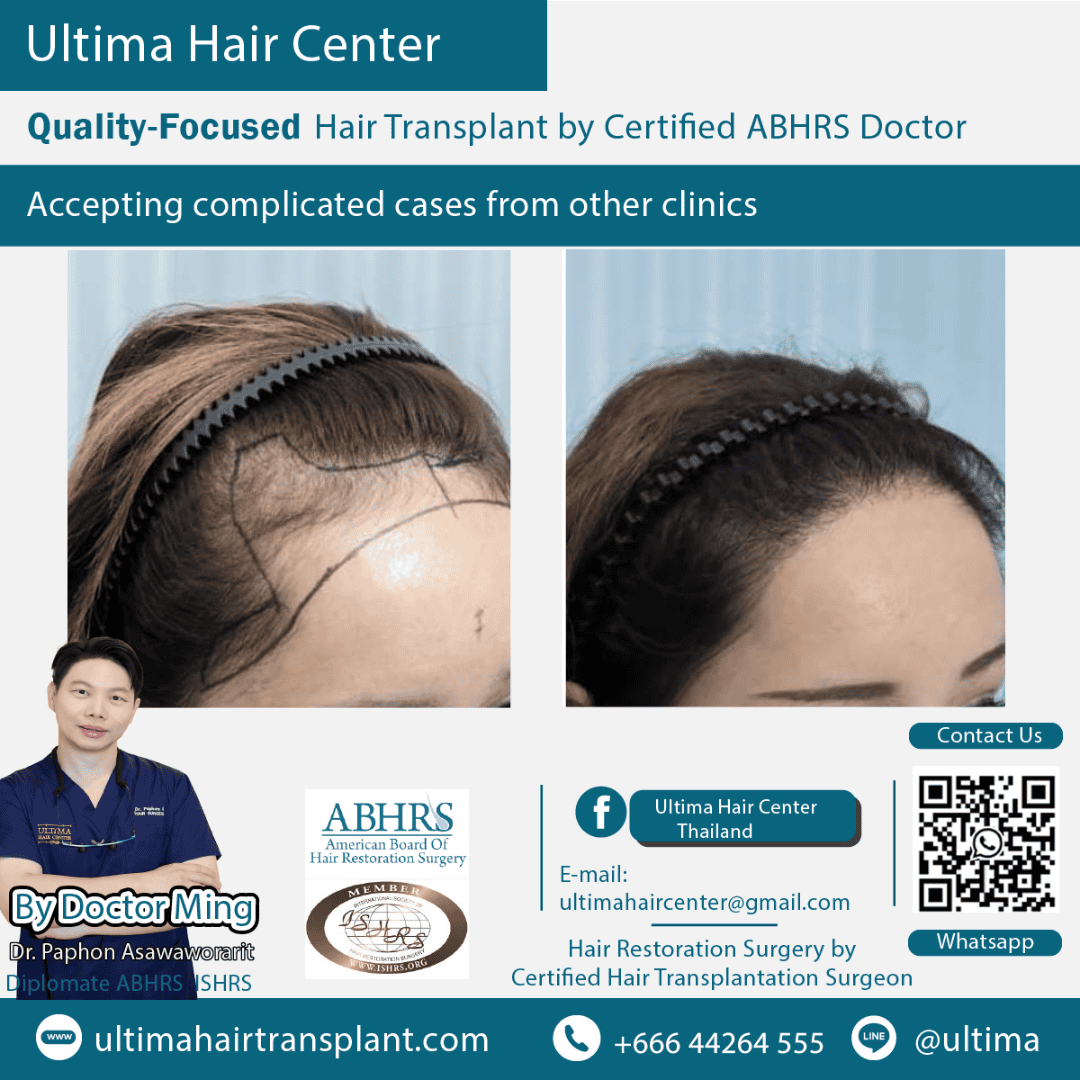 Hair Transplantation for Facial Framing Is Not Just About the Forehead
One common misconception is that improving facial framing through hair transplantation means lowering the forehead alone.
In reality, a physician may need to assess several areas together, including:
- The frontal hairline
- The temples
- The side hairline
- Hair density at the front
- The connection between the frontal hairline and temples
- Hair length and thickness
- The direction of existing hair growth
Some women may benefit from only a small amount of hairline filling, while others may need more attention to the temples.
A good design should first answer the question, “Which area is making the facial frame look unbalanced?” before determining how many grafts may be needed.
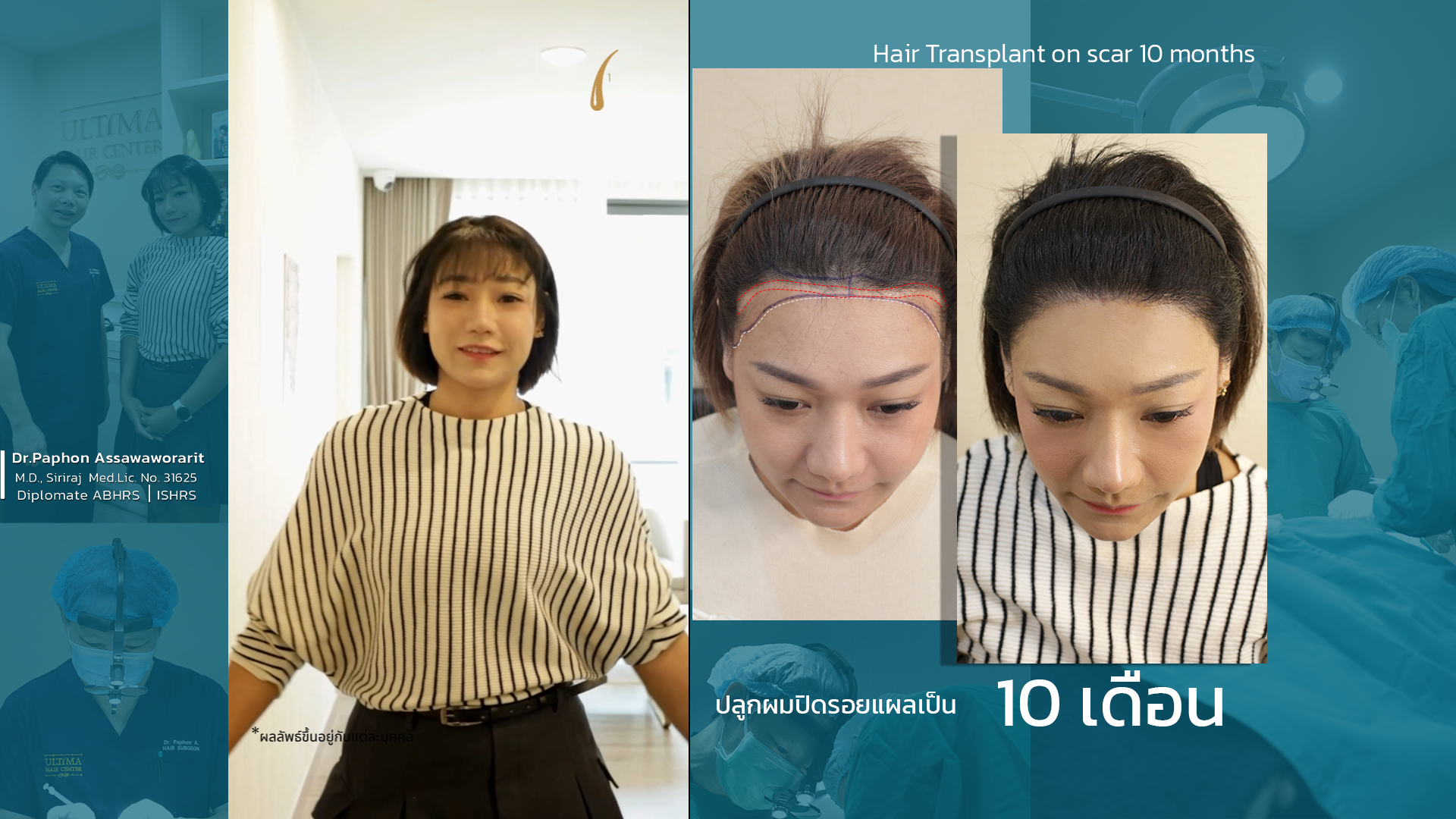
Can Women with Thinning Hairlines from Tight Hairstyles Undergo Hair Transplantation?
Some women experience hairline thinning from tightly pulled hairstyles, ponytails, or other styles that repeatedly place tension on the hair at the front.
This condition is known as Traction Alopecia.
If the problem has only recently developed, the priority is to reduce tension and change hairstyling habits. Some of the affected hair may have an opportunity to recover.
However, if hair has been absent from the affected area for a long time and shows little sign of returning, hair transplantation may be considered as one possible option.
Before treatment, it is important to establish whether traction is truly the cause or whether other factors are also contributing to the hair loss.
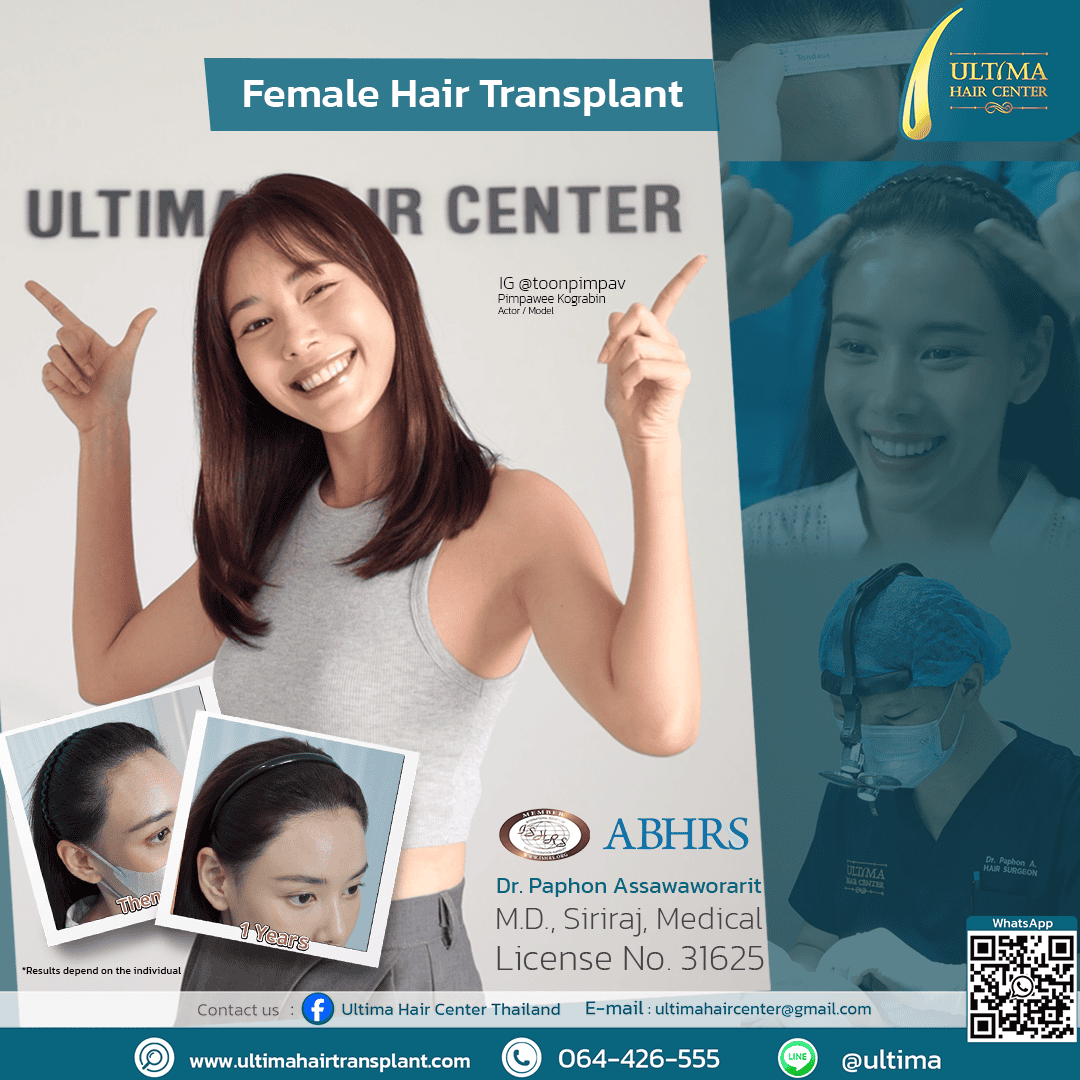 Can Women with Hormone-Related Hair Thinning Undergo Hair Transplantation?
This question needs to be assessed individually because female hair thinning can be associated with different hormonal factors.
If the hair continues to thin, hair transplantation alone may not be the most appropriate solution, as the existing hair that has not been transplanted may continue to become thinner.
The underlying cause and stability of the hair loss should therefore be assessed first. Appropriate treatments for the underlying condition may also need to be considered.
The goal of hair transplantation is to add hair to suitable areas, not to stop every type of hair loss.
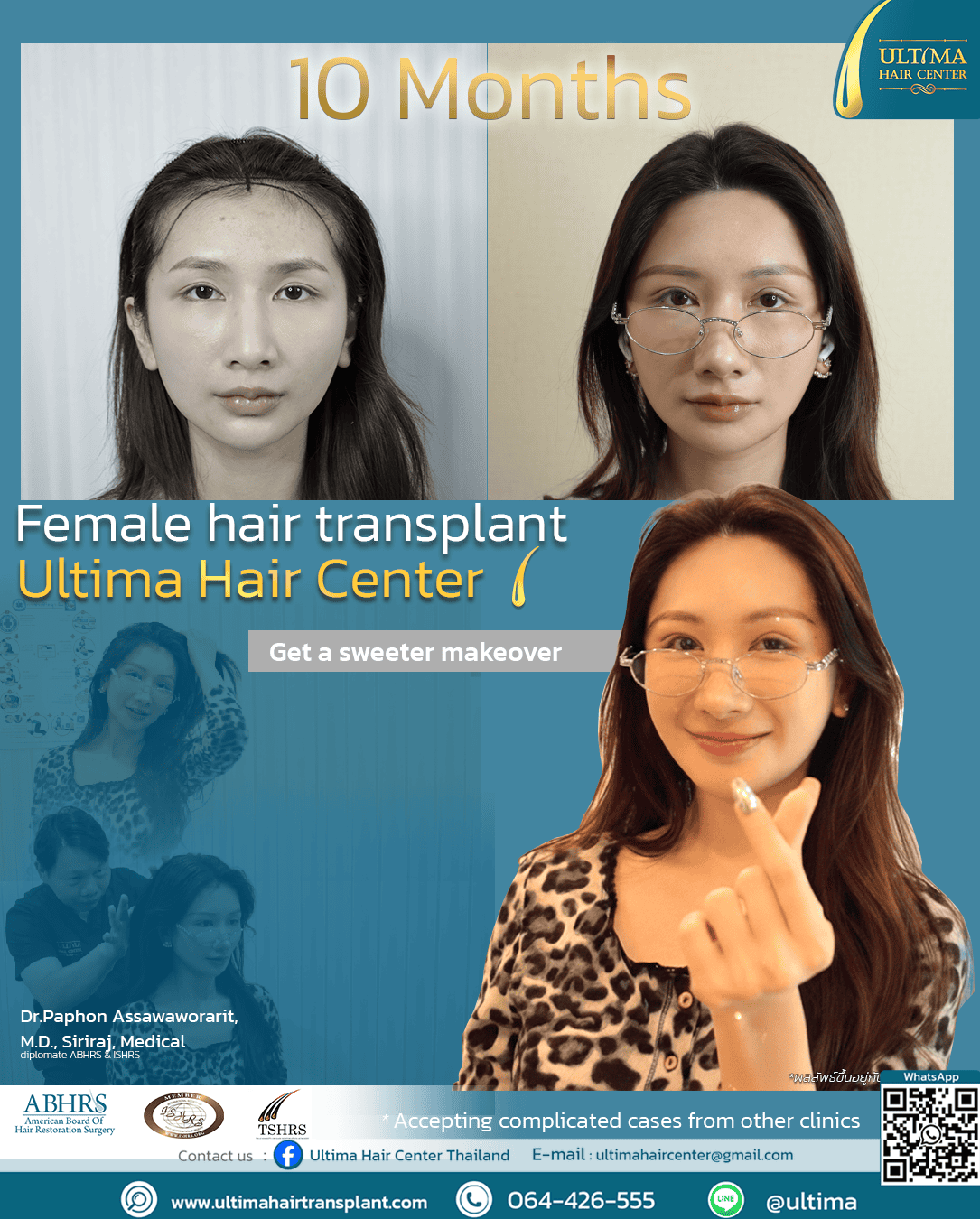 How High Should a Woman’s Hairline Be?
There is no single measurement that can determine the ideal hairline height for every woman.
Hairline design should take the following factors into account:
- Facial shape
- Forehead proportions
- Age
- Hair characteristics
- Donor Area density
- The existing hairline
- Aesthetic preferences
- The potential for future hair thinning
For younger women, long-term planning may be particularly important. Designing the hairline too low could create limitations if further hair thinning develops later.
Therefore, the “most beautiful hairline” is not necessarily the lowest one. It should suit the face and remain reasonably compatible with the person’s hair characteristics over time.
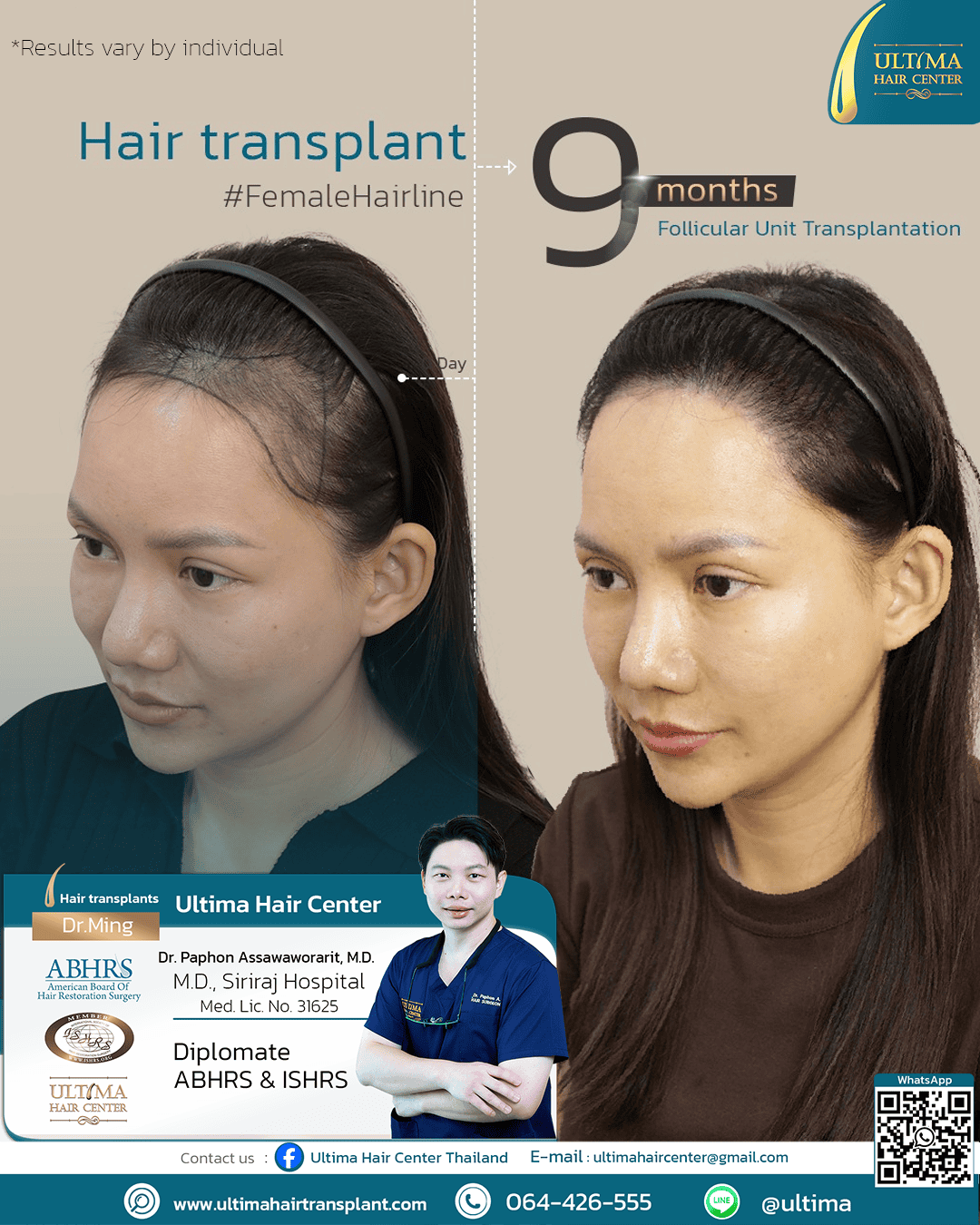 How Does Fine Hair Affect Hairline Design?
Many women have finer hair than men, particularly around the frontal hairline.
Hair characteristics are therefore an important factor in planning the procedure.
Hairline transplantation may require finer hairs to be positioned along the front, with thicker hairs placed appropriately behind them to create a gradual transition in density.
If thicker hairs are placed too far forward, the hairline may look harsh or the transplanted hairs may become more noticeable.
A natural-looking hair transplant therefore depends on more than the number of grafts. The type of grafts, their placement, direction, and overall design also matter.
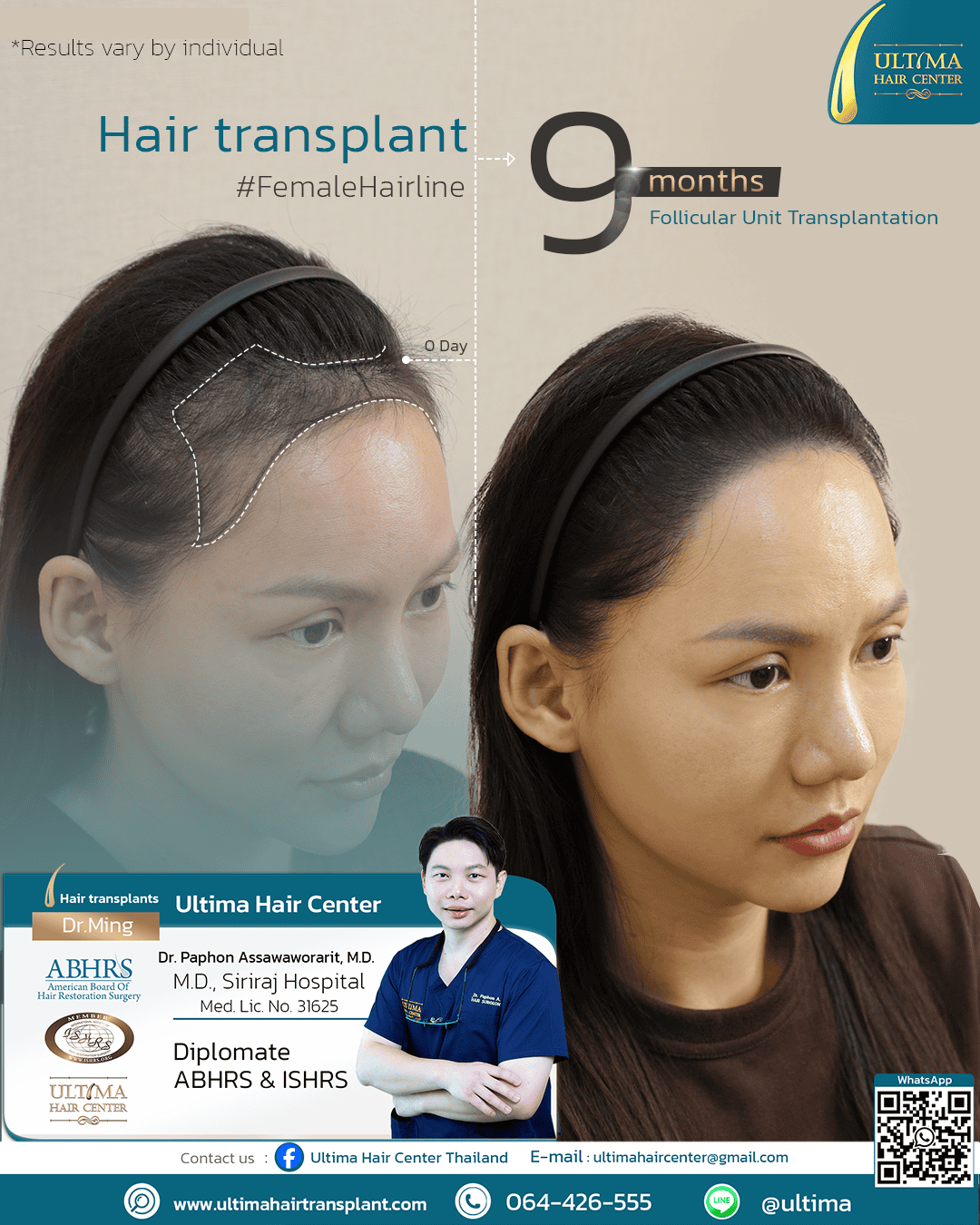 How Many Grafts Are Needed for Hair Transplantation to Enhance Facial Framing?
The number of grafts cannot be determined simply by describing someone as having a “broad forehead.”
Some women may need only a small amount of filling at the temples, while others may want to adjust the entire frontal hairline.
The size of the treatment area, desired density, hair characteristics, and Donor Area all influence the number of grafts required.
Using more grafts does not always produce a better result. Excessive use of grafts may unnecessarily deplete the limited hair resources available in the Donor Area.
Conversely, too few grafts may not achieve the intended goal.
It is therefore important to focus on graft allocation rather than treating the total graft count as the only measure of success.
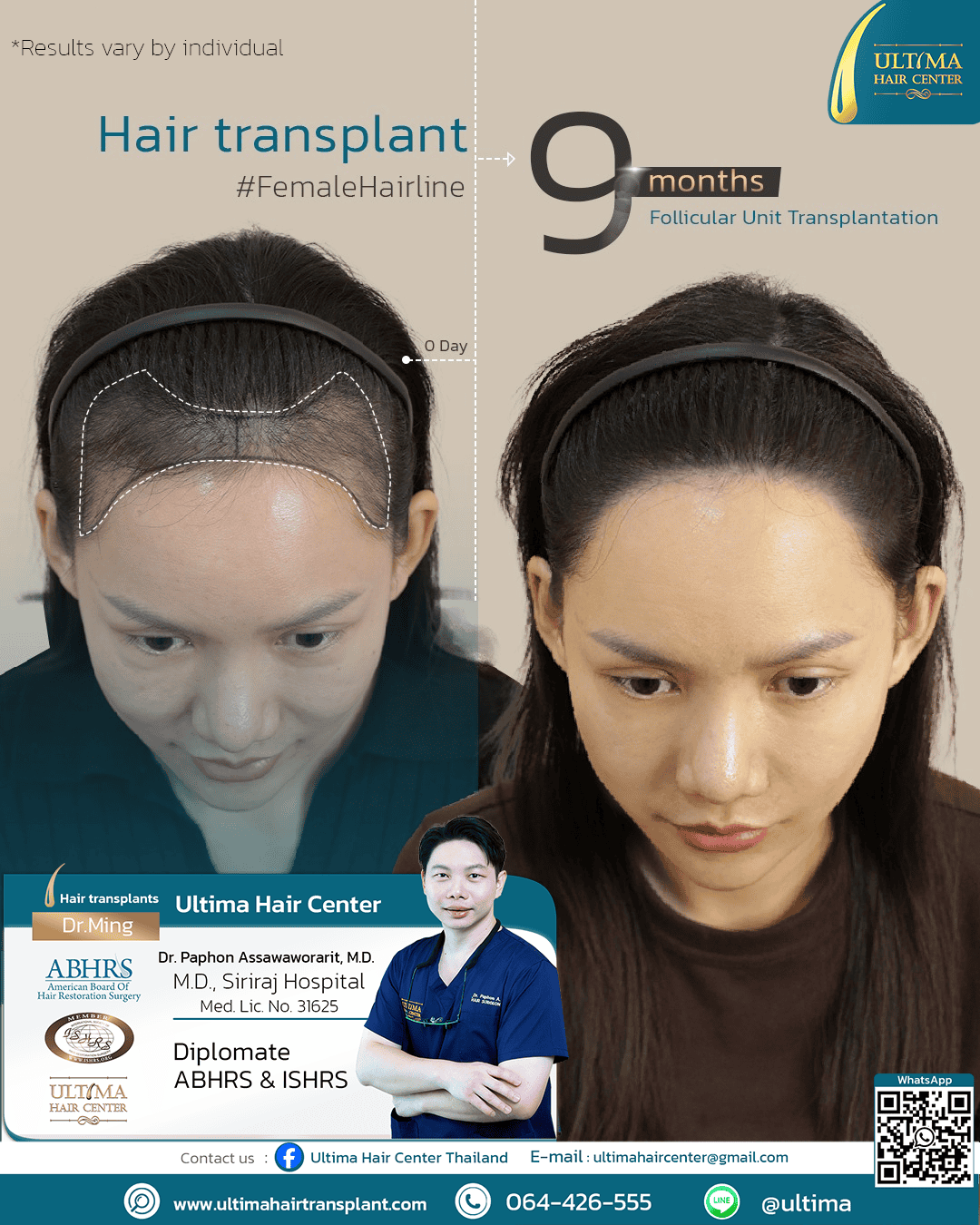 Can FUE and FUT Be Used for Female Hairline Transplantation?
Both FUE and FUT may be considered, depending on the individual’s circumstances.
FUE (Follicular Unit Excision) involves harvesting grafts individually from the Donor Area, while FUT (Follicular Unit Transplantation) involves removing a strip of scalp and preparing it into grafts for transplantation.
The choice of technique should take into account Donor Area density, the number of grafts required, hair characteristics, the hairstyle the woman wishes to maintain, and the long-term treatment plan.
A technique should not be selected solely because advertising claims that one method is best for every woman.
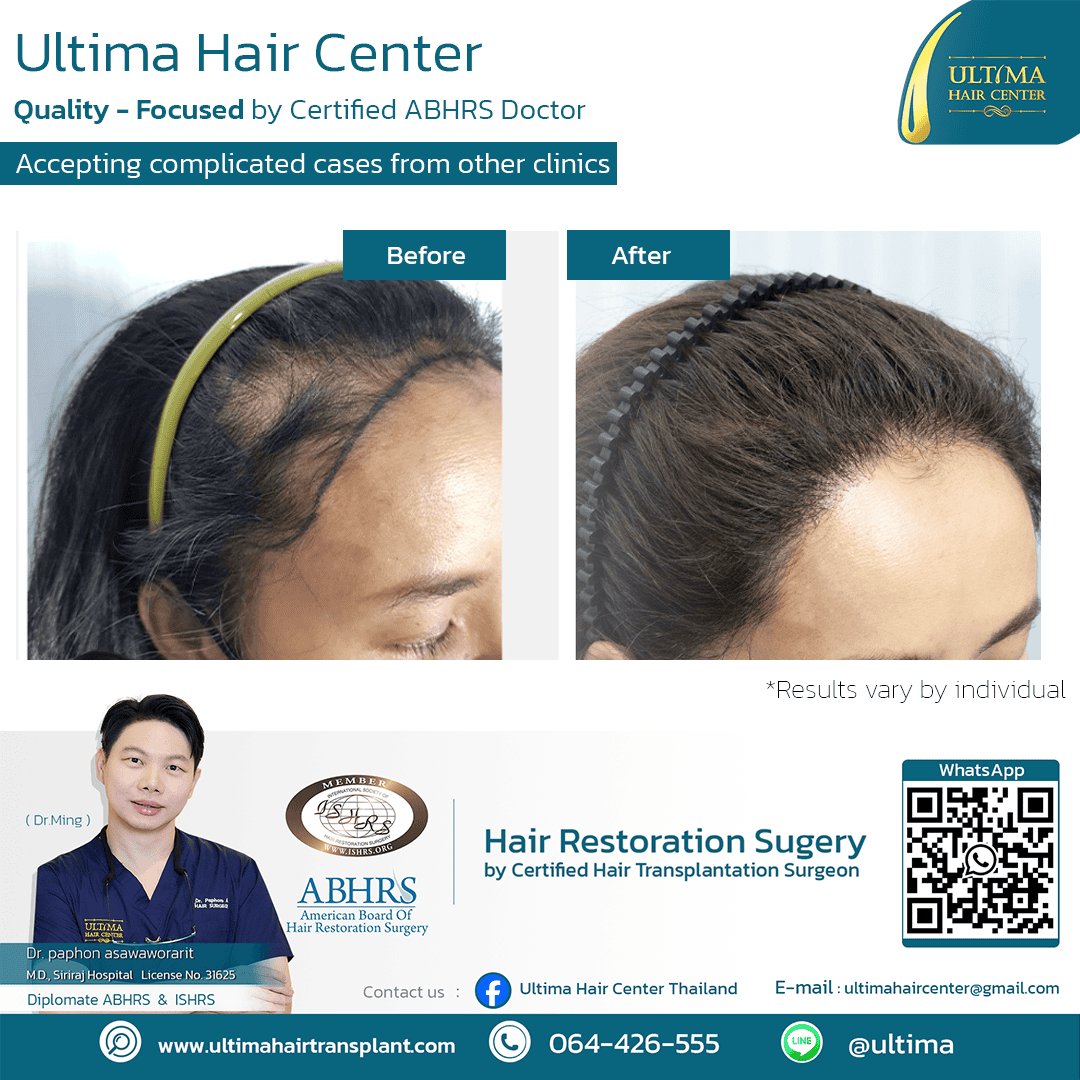 Can an Unsatisfactory Existing Hairline Be Corrected?
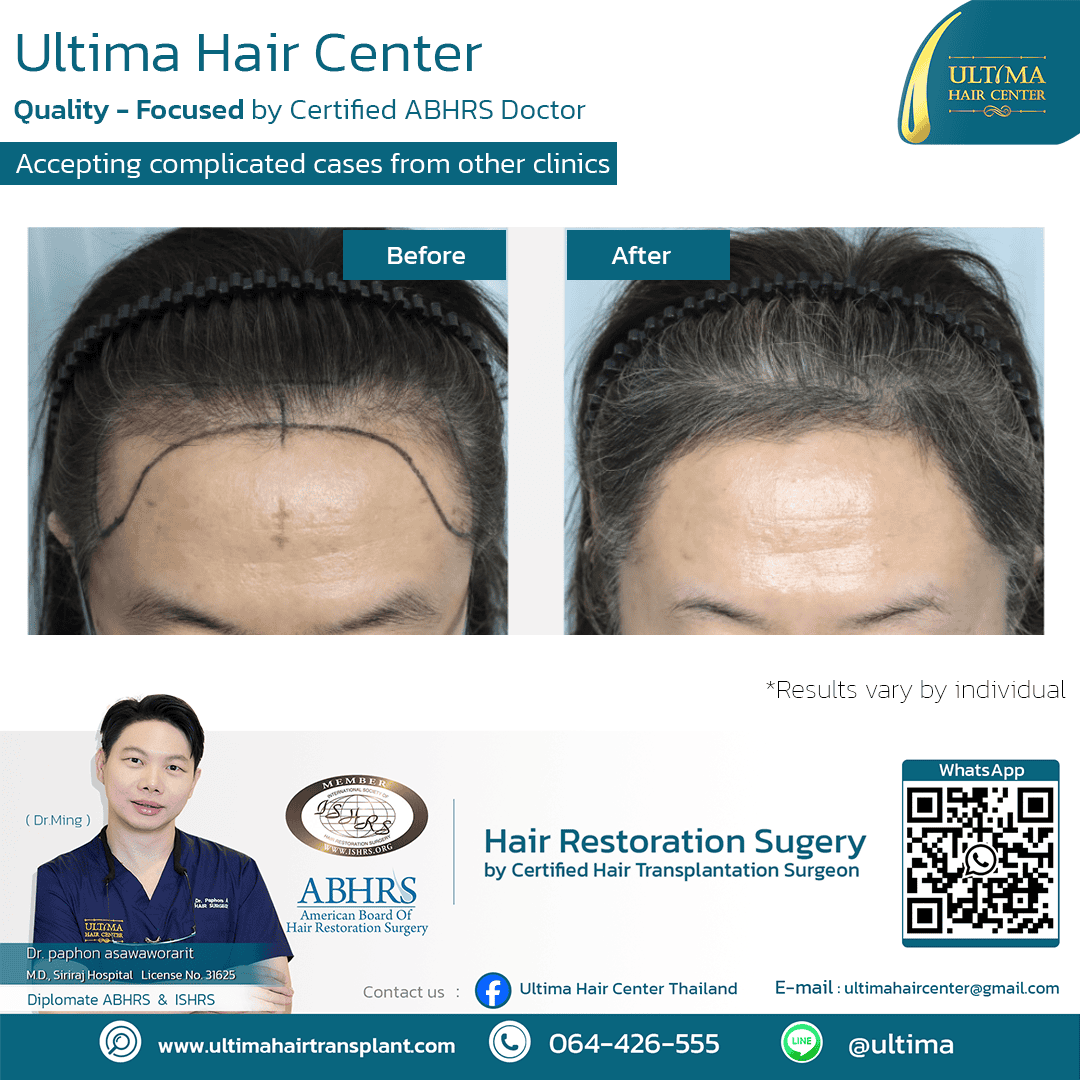
In some cases, an existing hairline can be assessed for revision. Examples include an uneven hairline, a hairline that was designed too low, incorrectly directed transplanted hairs, or inconsistent density.
However, revising a previously transplanted hairline is generally more complex than performing a first procedure.
The physician needs to assess the existing grafts, scarring, hair direction, and the number of grafts remaining in the Donor Area.
If you are looking for a clinic that offers hair transplant repair for cases treated elsewhere, bring photographs from before and after the previous procedure, along with the relevant treatment records. These can help the physician plan according to the actual limitations of the case.
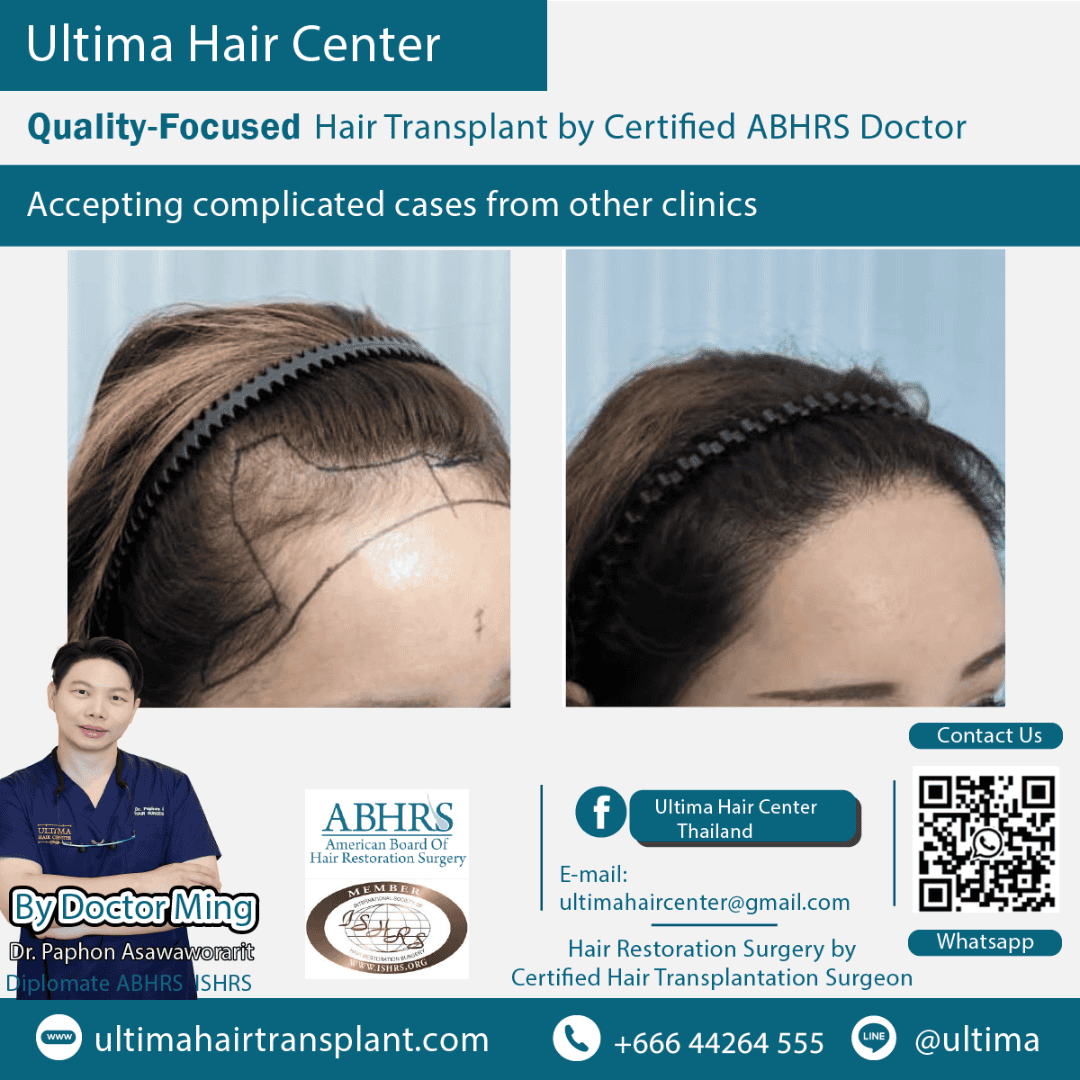 What Should You Look for in Hair Transplant Reviews for Hairline Restoration?
If you are searching for hair transplant reviews to learn about hairline restoration, try to find cases with characteristics similar to your own.
Important details to consider include:
- Whether the person has a similar facial shape
- The height of the original hairline
- The density of the existing hair
- Whether the hair is fine or thick
- Whether temple thinning is also present
- The number of grafts used
- The time elapsed since transplantation
- Whether before-and-after photos were taken from comparable angles
- Whether the images appear to have been edited
Be careful not to use another person’s results as a guarantee of what you will achieve. Hair transplantation outcomes vary from person to person.
 How Should You Choose a Female Hair Transplant Clinic in Bangkok?
If you are searching for a hair transplant in Bangkok, particularly for hairline restoration, prioritize the quality of the assessment and treatment plan rather than price alone.
Consider whether:
- The physician personally evaluates the case
- The cause of hair thinning is investigated
- The Donor Area is assessed
- The hairline is designed according to facial proportions
- Limitations are explained honestly
- Actual patient cases are available for review
- Follow-up care is provided
- The costs and scope of services are clearly explained
For women, identifying the cause of hair thinning is especially important. Planning a hair transplant without understanding why the hair is thinning may lead to an unsuitable treatment approach.
 Ultima Hair Center’s Approach to Female Hairline Design
At Ultima Hair Center, hair transplantation planning is not based solely on how many centimeters the forehead should be lowered or how many grafts should be used. The process begins with an assessment of each individual’s concerns and goals.
Hairline design should consider facial shape, hair characteristics, the existing hairline, temples, Donor Area, and the potential for future hair changes.
If you are interested in a hair transplant with Dr. Ming and would like to ask preliminary questions, you can discuss your concerns and goals before attending an assessment. Dr. Ming personally responds to patient messages, helping people understand the initial options before proceeding with a medical evaluation.
For those who place importance on physician qualifications and are searching for a hair transplant with an ABHRS-certified physician, check the physician’s qualifications and current status directly through the relevant official sources. These details should be considered alongside the physician’s experience managing actual cases.
The philosophy of quality-focused hair transplantation is not to maximize the number of grafts used. It is to use grafts appropriately for each individual’s goals, with careful attention to hairline design, hair direction, and follow-up care.
 Conclusion: The Best Female Hairline Is the One That Suits You
Female hairlines come in many forms, including softly rounded designs, naturally irregular hairlines, designs that add fullness to the temples, and hairlines intended to reduce the prominence of the forehead.
However, no single hairline style is suitable for every woman.
Choosing a hairline from someone else’s photograph and copying it directly may not be the best approach because facial shape, hair characteristics, Donor Area density, and the potential for future hair thinning differ from person to person.
If you want to enhance your facial frame through hair transplantation, the goal should be to design a hairline that suits your own face and hair. It should not be excessively low or high, and it should remain reasonably compatible with potential changes in your hair over time.
Ultimately, a good hairline does not have to be perfectly symmetrical. It should complement the face and the rest of the hair, look harmonious, and support a natural-looking hair transplant.
 Frequently Asked Questions About Female Hairlines and Hair Transplantation for Facial Framing
1. Can women with broad foreheads undergo hair transplantation to reduce forehead height?
In some cases, this may be considered. Hair transplantation along the frontal hairline can reduce the visible forehead area and help adjust the facial frame. However, the design should suit the facial shape, hair characteristics, and Donor Area. The hairline should not simply be lowered as much as possible without considering the overall proportions.
2. Which female hairline style looks the most attractive?
There is no single style that is the most attractive for everyone. A suitable hairline should complement facial shape, forehead height, the temples, hair characteristics, age, and Donor Area density. Individualized design is therefore more important than choosing a style simply because it is currently popular.
3. Can I bring a celebrity’s photo to my physician and ask for the same hairline?
Yes. A reference photo can help communicate your preferences, but you should not expect the result to be identical in every detail. Everyone has different facial structures and hair characteristics. The physician should adapt your preferences to suit your own features.
4. How many grafts are needed to lower the forehead with hair transplantation?
The number of grafts depends on the size of the area to be adjusted, the intended hairline shape, the desired density, hair characteristics, and the Donor Area. The graft count cannot be determined from forehead height alone.
5. Can women with recessed temples undergo hair transplantation?
It may be considered if the temples have thinning hair or areas that would benefit from additional coverage. Adding hair selectively may help create a more balanced facial frame. However, excessive filling should be avoided to preserve a shape that suits the person’s natural facial structure.
6. Can women with thinning hair caused by tight hairstyles undergo hair transplantation?
If hair loss has occurred because of prolonged traction and the hair has not returned, hair transplantation may be one option to consider. However, the hairstyles or habits causing the traction should be addressed first to reduce the risk of further damage to other hair.
7. Will a transplanted hairline look like my original hair?
Appropriate hairline design and graft placement can help the transplanted hair blend with the existing hair. However, the outcome depends on hair characteristics, graft numbers, transplant direction, and individual response. Identical results cannot be guaranteed for everyone.
8. Is FUE or FUT better for female hairline transplantation?
Both FUE and FUT can be considered for harvesting and preparing grafts. The choice should be individualized based on the Donor Area, number of grafts required, hair characteristics, preferred hairstyle, and overall treatment plan.
9. Can an unattractive hairline from a previous transplant be corrected?
In some cases, revision may be possible. However, the existing hairline, graft direction, scarring, remaining grafts, and Donor Area must be assessed first. Revision should be planned carefully, particularly for those seeking hair transplant repair for cases treated elsewhere.
10. What should I look for in hair transplant reviews for hairline restoration?
Consider whether the person’s facial shape, hair characteristics, and original concerns are similar to your own. Also review the time elapsed since transplantation, photo angles, lighting, and graft count when this information is available. Another person’s photographs should not be treated as a guarantee of your own results.
11. Can women undergo hair transplantation solely to improve facial framing?
In some cases, this may be considered even if the person does not have severe hair thinning. However, the suitability of the hairline design and the Donor Area should be assessed first. Hair transplantation uses a limited supply of donor hair, so careful planning is important.
12. Will hair transplantation to enhance facial framing change the shape of my face?
Hair transplantation does not directly change the underlying bone structure or physical shape of the face. However, changing the hairline can alter the visible facial frame and make the overall appearance look different from before the procedure.
13. Are women with diffuse hair thinning across the scalp suitable candidates for hair transplantation?
Each case needs individual assessment. If hair is thinning throughout the scalp, including the Donor Area, there may be limitations on the availability of suitable grafts. Identifying and addressing the causes of hair thinning should therefore come before deciding on transplantation.
14. How should I get started if I am considering a female hair transplant in Bangkok?
If you are searching for a hair transplant in Bangkok, start by consulting a physician to assess the cause of your hair thinning, examine the Donor Area, and discuss your goals. You can then determine whether hair transplantation is suitable and how the hairline should be designed.
15. Can I consult Ultima Hair Center before deciding to undergo hair transplantation?
Yes. You can ask Ultima Hair Center preliminary questions about hair thinning, your hairline, and your goals for facial framing. Dr. Ming personally responds to patient messages to provide initial information before an appropriate medical assessment.

Contact Us:
Dr. Paphon Asawaworarit (Dr. Ming)
Physician Directory ABHRS
Ultima Hair Center (Thailand Website)
Ulitma Hair Transplant (English Website)
Line: @ultima
E-mail: ultimahaircenter@gmail.com
