

Where Can Men Get a Hair Transplant?
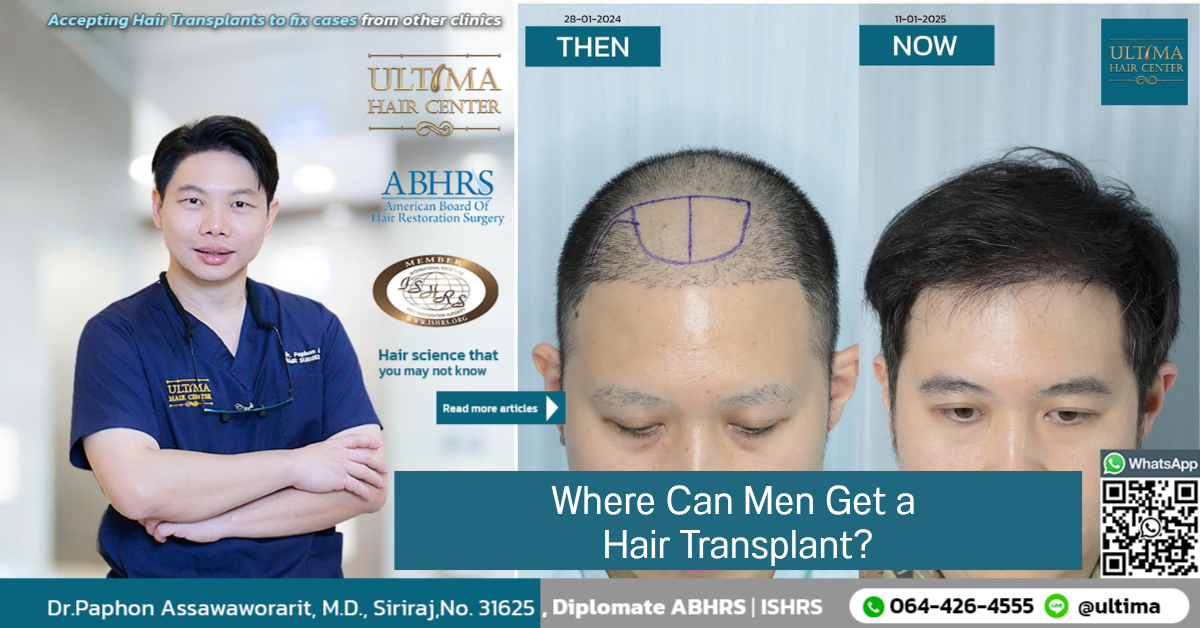
A Complete Guide to Hair Transplant Areas for Men
Men experiencing hair thinning, a receding hairline, a wide forehead, a thinning crown, or sparse moustache and beard growth may consider hair transplantation to increase hair coverage in the areas they wish to improve. However, hair transplantation is not limited to the scalp. Depending on individual suitability, it may also be considered for the temples, sideburns, moustache, beard, eyebrows, and, in some cases, scar camouflage. Each case requires an individual assessment
The question “Where can men get a hair transplant?” should be considered in the context of the target area, the underlying cause of the concern, existing hair characteristics, skin condition, and the amount of available hair in the Donor Area. These factors influence treatment planning and the results that may reasonably be expected
This article explores the different areas where men may consider hair transplantation, along with important limitations to understand before making a decision, helping patients choose an appropriate approach with the goal of achieving a natural-looking result
 1. Hair Transplantation for the Frontal Hairline and Forehead
The frontal hairline is an area of particular concern for many men because it affects facial framing and overall appearance. When the hairline recedes or the forehead appears wider, the face may look different even though the underlying facial bone structure has not changed
Hair transplantation in this area may be considered for men who have concerns such as:
- A receding frontal hairline associated with male pattern hair loss
- A wide forehead and a desire to adjust facial framing
- Thinning along the frontal hairline that makes the scalp more visible
- An asymmetrical hairline between the left and right sides
- Scarring along the hairline caused by an accident or surgery
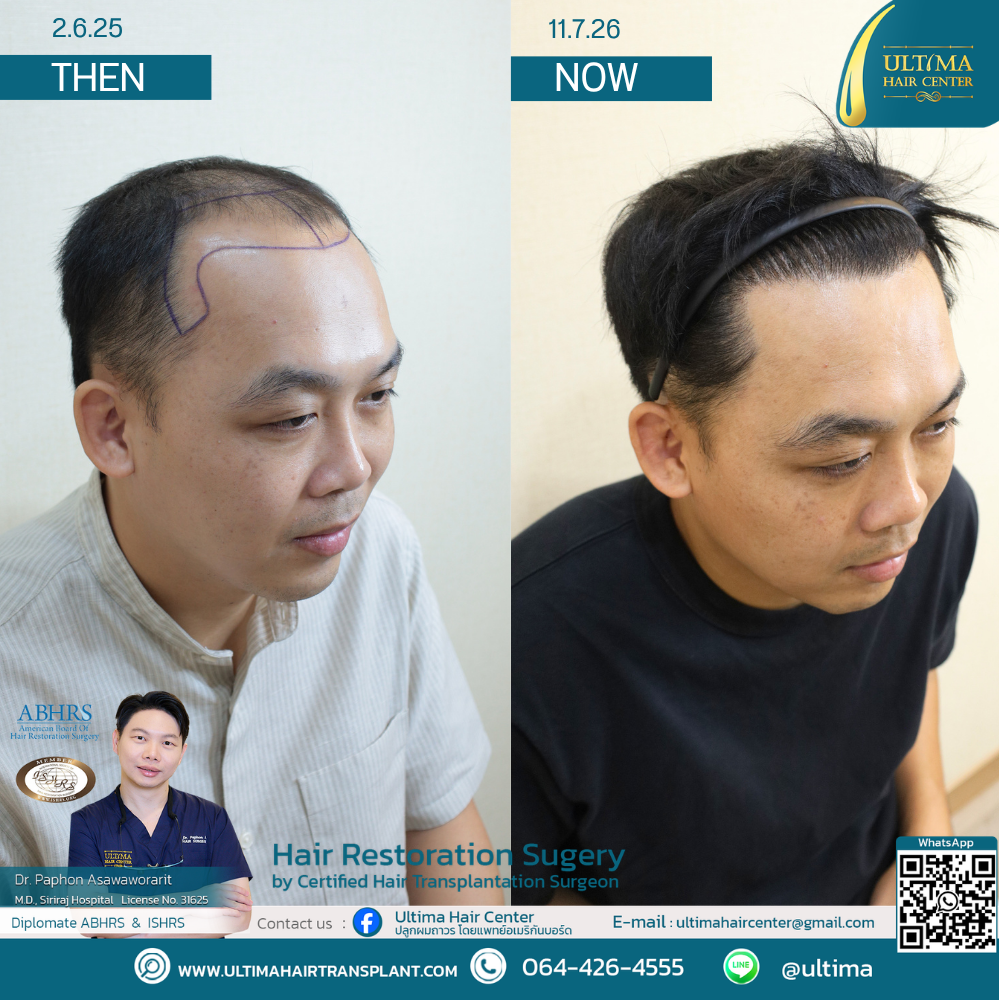
The key to frontal hair transplantation is not simply filling the area with hair. The hairline should be designed to suit the patient’s age, facial shape, hair characteristics, and the potential progression of hair loss in the future
For example, a younger man with genetically influenced hair loss may experience further recession as he ages. If the hairline is placed too low from the outset, the appearance may become unbalanced if the native hair behind the transplanted area continues to thin
Good planning should therefore consider both the current appearance and the potential long-term changes, so that the new hairline remains appropriate for the patient’s facial features and hairstyle
 2. Hair Transplantation for the Temples
The temples are located at the transition between the frontal hairline and the sides of the head. Some men have naturally deep temple recessions from a young age, while others develop more pronounced recession as part of a pattern of hair loss
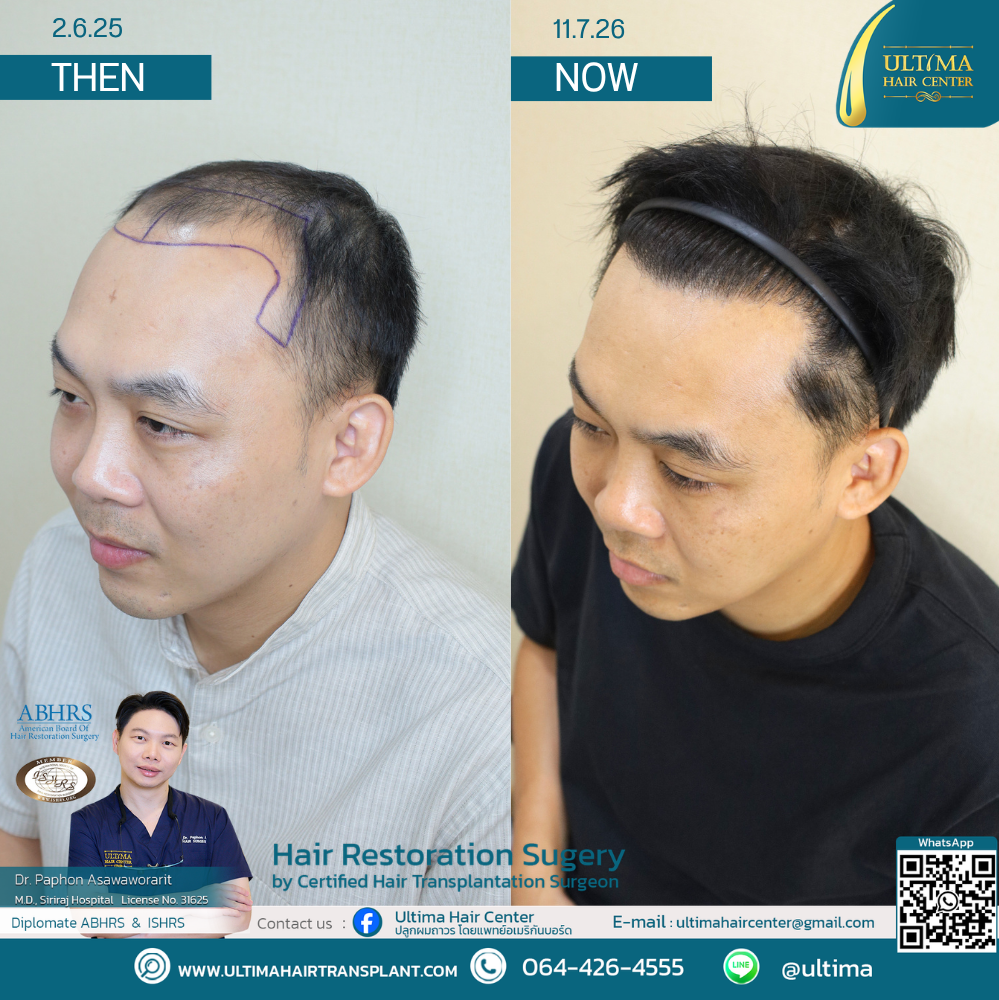
Temple hair transplantation may help fill recessed areas, improve facial balance, and create a more gradual connection between the frontal hairline and the sides of the head
However, the temples require particular attention to hair direction and angle. Hair in this area does not always grow upward in the same way as hair in other parts of the scalp. Its direction varies according to the precise location
If the transplanted hairs are not placed in a direction that matches the surrounding hair, they may look different even when the graft count is sufficient
An assessment should therefore consider how much temple filling is needed, how the temples should connect with the frontal hairline, and how grafts should be allocated in balance with other areas
 3. Hair Transplantation for the Mid-Scalp
The mid-scalp is another area where men may experience thinning, particularly those with male pattern hair loss. In some cases, thinning begins at the frontal hairline and gradually extends toward the middle of the scalp
Hair transplantation in this area aims to increase hair coverage where density has decreased. The potential result depends on the size of the target area, the amount of existing hair, hair characteristics, and the number of grafts available for allocation
If native hair is still present in the mid-scalp, the physician must carefully assess whether transplantation is appropriate and how the procedure can be planned to minimize the risk of damaging existing hair
It is also important to distinguish male pattern hair loss from hair loss caused by other conditions, such as certain illnesses, scalp inflammation, or alopecia areata. Not every cause of hair loss is suitable for immediate hair transplantation
Identifying the cause and assessing whether the hair loss is stable are therefore important steps before treatment planning
 4. Hair Transplantation for the Crown
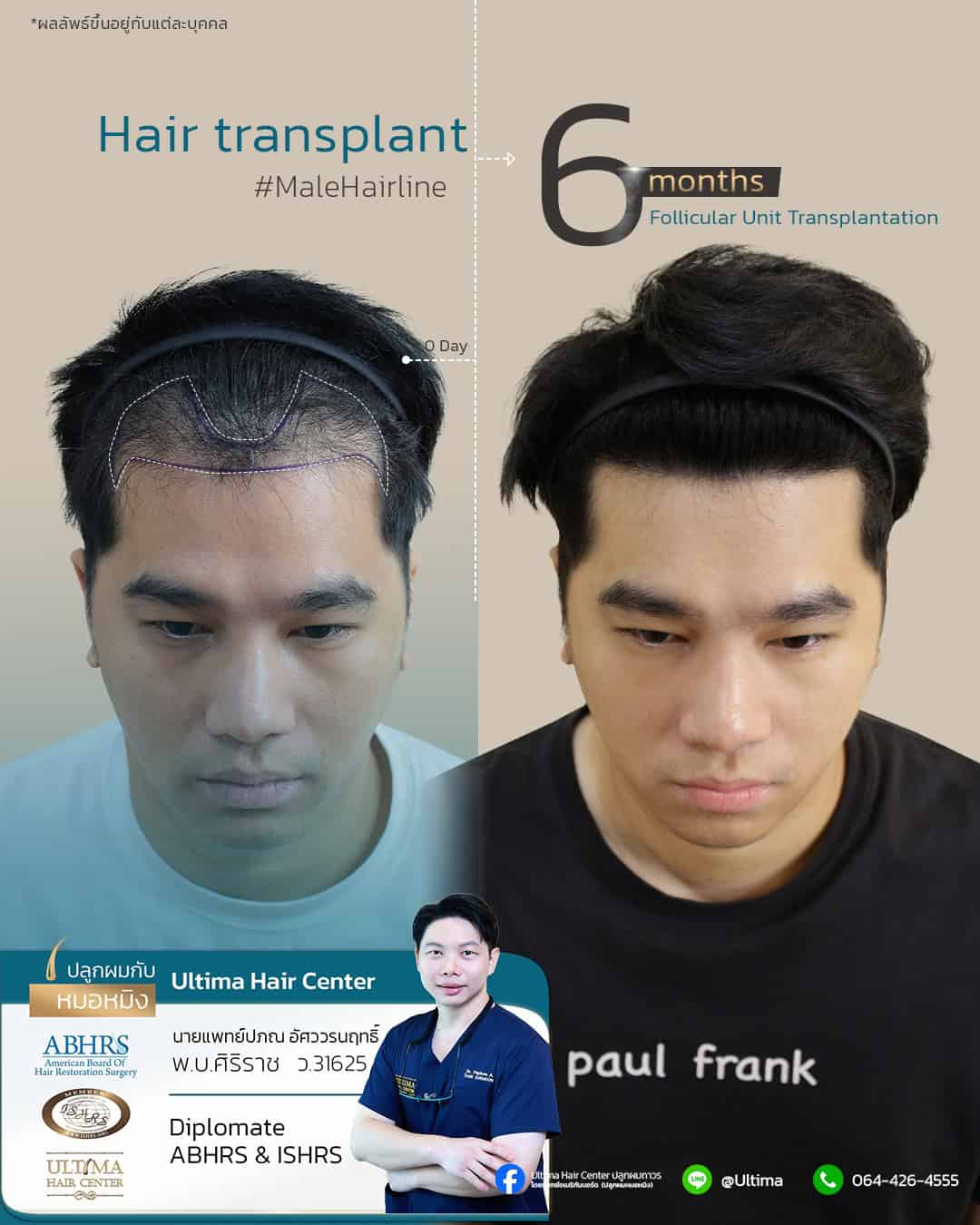
The crown is a common area of concern for men, particularly those with male pattern hair loss. Thinning may begin around the natural hair whorl, gradually making the scalp more visible under bright lighting or when viewed from above
Crown hair transplantation involves specific planning considerations because the hair in this area often follows a whorl pattern, with direction changing according to its position. The placement of transplanted grafts should therefore be planned to follow the natural pattern of the existing hair
Another consideration is the number of grafts required. A large crown area may require substantial graft resources. Men with thinning across the frontal hairline, mid-scalp, and crown should not plan treatment for the crown in isolation. Instead, the priorities across all affected areas should be considered together
In some cases, transplantation can improve hair coverage, but it cannot guarantee that every area will achieve the same density as the hair before thinning began
The physician should assess the Donor Area, the size of the thinning area, and the likelihood of future hair loss to establish a treatment goal appropriate to each patient’s available hair resources
 5. Hair Transplantation for the Sides and Back of the Scalp
In some men, transplantation to the sides of the scalp may be considered to improve coverage in localized areas, such as areas affected by specific patterns of hair loss, accidents, or surgical scars
However, transplantation in these areas is not suitable for everyone. The underlying cause of hair loss must be considered. If hair loss is still progressing or the recipient area has a skin condition, these issues should be assessed and managed before treatment
For the back of the scalp, it is important to distinguish between transplanting hair into that area and harvesting hair from it for transplantation elsewhere. In general, hair from the Donor Area at the back and sides of the scalp is an important source of grafts for hair restoration
Overharvesting can make the areas from which hair is taken appear thinner. Careful planning is therefore essential, rather than focusing only on the number of grafts required in the recipient area
 6. Moustache Transplantation
Moustache transplantation may be considered for men with sparse moustache growth, uneven coverage, gaps between hairs, or areas where facial hair has been damaged by an accident or scarring
This procedure requires precision because the area above the upper lip is relatively small and the hairs grow in specific directions. Planning should account for the moustache outline, continuity of hair growth, and the relationship between the transplanted hairs and the shape of the lips
Before treatment, patients should clearly discuss their desired appearance. Their goals may include increasing density in selected areas, filling gaps, or creating a more defined moustache shape
Hair taken from the scalp may grow differently from the original facial hair when transplanted to the face. Patients should therefore ask their physician about postoperative grooming and trimming requirements
 7. Beard and Chin Hair Transplantation
Men who want fuller facial hair may consider transplantation to the cheeks, jawline, chin, or areas with gaps between existing beard hairs
Beard transplantation may help fill areas where facial hair has been sparse since development or add coverage to areas affected by an accident or scarring
However, beard hair does not grow in the same way across every part of the face. The cheeks, jawline, and chin may have different hair densities and growth directions. The treatment plan should therefore be designed to suit the patient’s facial structure and desired beard style
Before deciding on treatment, consider how you typically want to wear your beard. A design intended for a long beard may differ from one intended for someone who prefers to keep facial hair closely trimmed
Patients with gaps in several areas may not need every area to be treated at once. A physician can help assess which areas are the highest priority and what density may be appropriate. The potential result depends on the skin condition, graft availability, and individual hair characteristics
 8. Sideburn Transplantation
The sideburns form the transition between the hair on the sides of the scalp and facial hair. Some men have sparse or incomplete sideburns, or notice differences in shape between the two sides
Sideburn transplantation may help improve density or adjust the shape to better complement the hairstyle and facial features. However, the position, width, length, and direction of the hair must be planned carefully
A natural-looking result depends on more than the number of grafts. The transplanted hairs should blend with the hair on the sides of the scalp and the facial hair below
Men who regularly wear very short hairstyles should mention this before treatment so the physician can assess a sideburn design that suits their everyday appearance
 9. Eyebrow Transplantation
Although eyebrows may not be the first area that comes to mind when men consider hair transplantation, eyebrow transplantation may be an option in selected cases to fill sparse areas or restore missing eyebrow hairs
Examples include men with partially sparse eyebrows, gaps caused by scarring, or eyebrow hair loss following an accident or surgery
Eyebrow transplantation requires careful planning of both shape and hair direction because eyebrow hairs follow specific growth patterns and directly affect facial appearance
If the eyebrows have been affected by scarring, the skin and underlying tissue should be assessed before treatment. Results in scar tissue may differ from those achieved in normal skin
 10. Hair Transplantation to Help Camouflage Scars
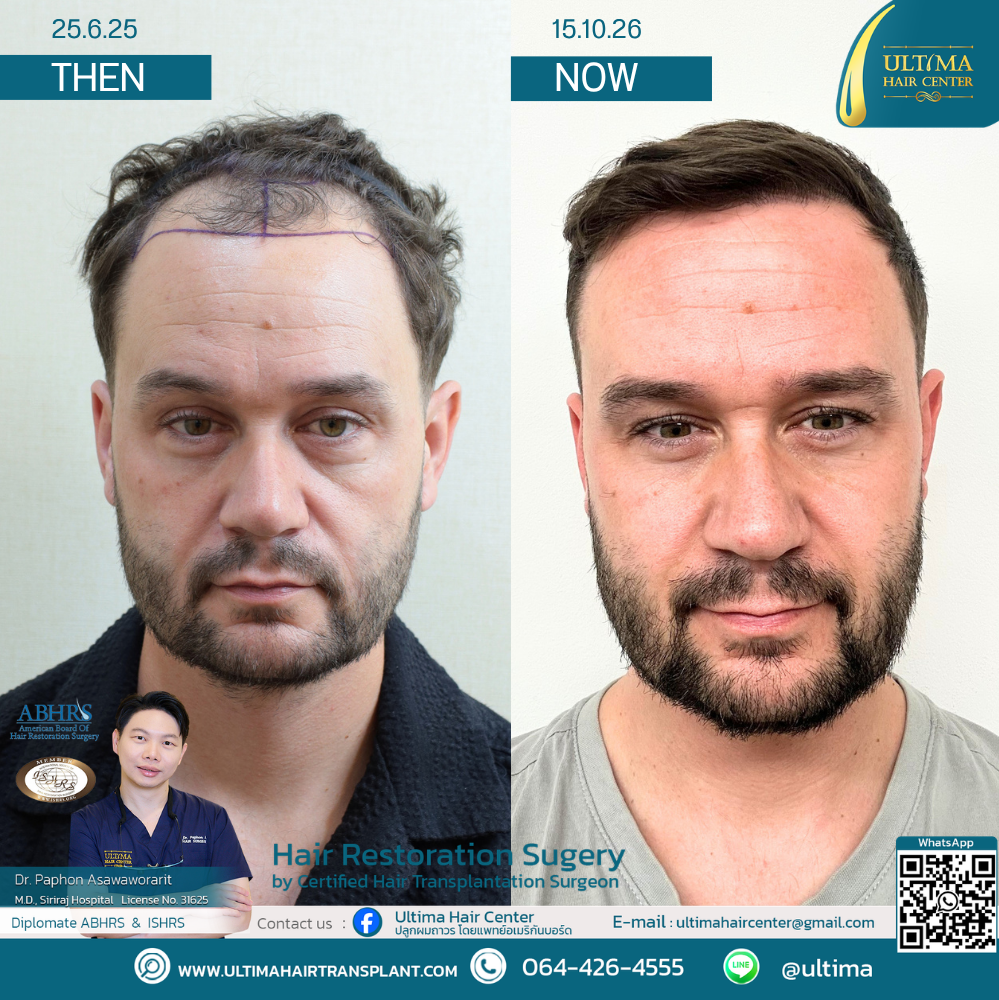
Some men have scars on the scalp caused by accidents, surgery, burns, or complications from a previous hair transplant. In selected cases, hair may be transplanted into the scarred area to help it blend more closely with the surrounding hair
Scars may also occur around the sideburns, moustache, beard, or eyebrows
However, not every scar is suitable for hair transplantation. Scar tissue may differ from normal skin in thickness, flexibility, and blood supply. These factors can influence the survival and growth of grafts placed in the area
The physician should assess the characteristics of the scar, its cause, and the condition of the surrounding skin before determining whether transplantation is appropriate and what level of improvement may reasonably be expected
 11. Can Multiple Areas Be Transplanted During the Same Procedure?
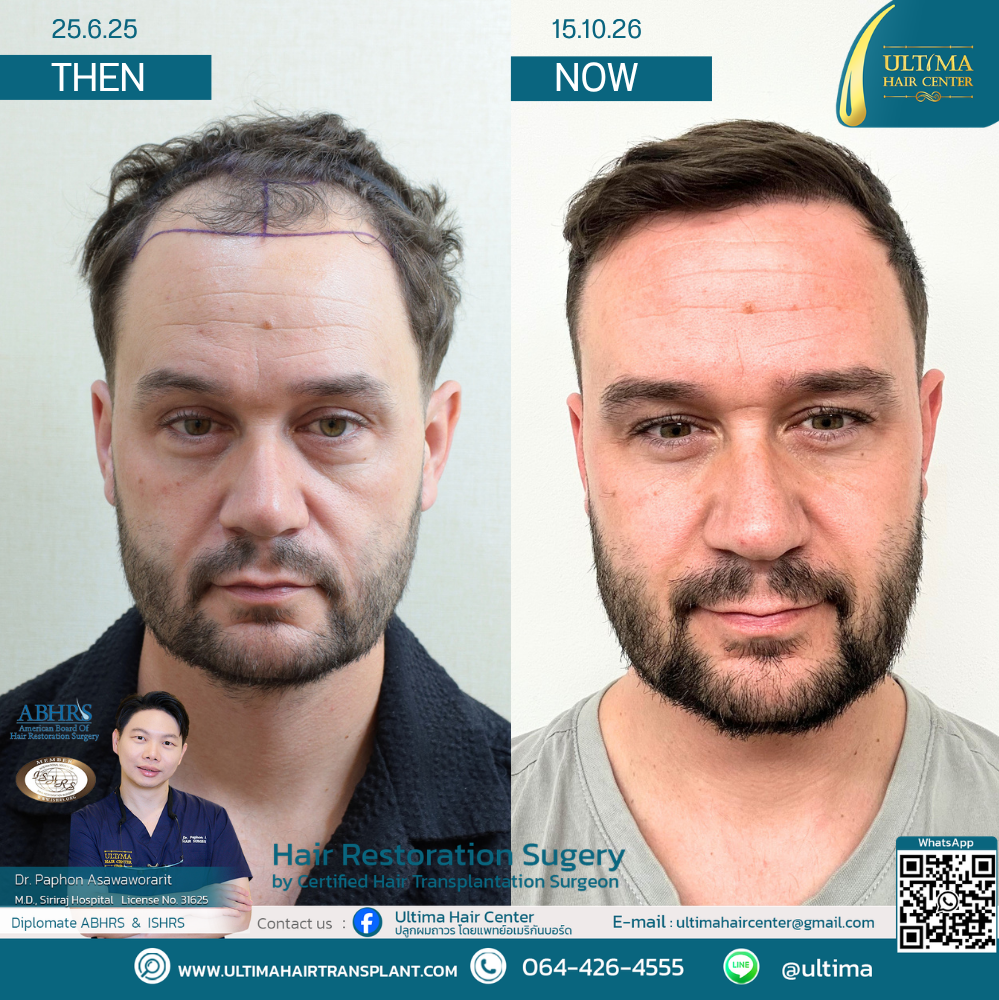
In selected cases, more than one area can be included in the same hair transplant plan. Examples include transplanting the frontal hairline and temples together, or considering scalp hair transplantation alongside a Moustache or Beard Transplant. However, not everyone is a suitable candidate for treating multiple areas in one session
The decision depends on several factors, including:
- The total area to be transplanted
- The number of grafts required and the number available
- The strength and density of the Donor Area
- The expected duration of the procedure
- The patient’s general health and readiness for surgery
- The priority of each treatment area
- Postoperative care requirements and follow-up
For example, if a man has thinning at both the frontal hairline and crown but has a limited graft supply, the physician may need to prioritize certain areas rather than spreading the grafts too thinly across all areas
Appropriate planning should focus on the overall balance of the result rather than trying to treat every area in a single procedure
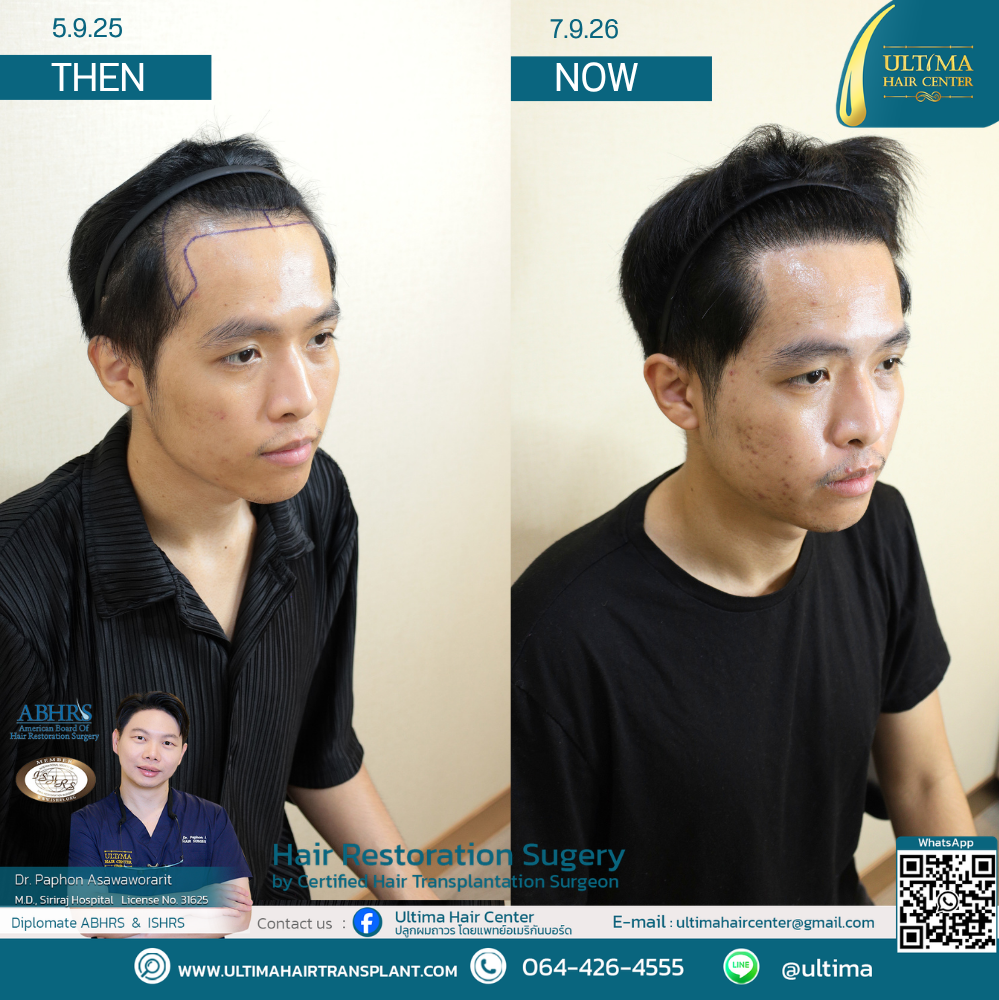 12. Which Techniques Are Used for Different Hair Transplant Areas?
The technique depends on the patient’s condition, the recipient area, the number of grafts required, and the physician’s assessment. The two main hair transplantation techniques are:
FUE (Follicular Unit Excision) involves extracting individual follicular grafts from the Donor Area. It can be suitable when the treatment plan calls for small extraction sites distributed across the donor region, while still requiring careful planning to avoid excessive harvesting from any one area
FUT (Follicular Unit Transplantation) involves removing a strip of scalp tissue from the Donor Area and dissecting it into individual grafts under magnification. Considerations include the linear scar and the flexibility of the scalp
Both techniques have different advantages, limitations, and suitability considerations. The choice should not be based on the technique’s name alone, and there is no single technique that must be used for every patient or every recipient area
The important factors are medical assessment and treatment planning, including how grafts from the Donor Area should be used to meet current goals while preserving resources for potential future needs
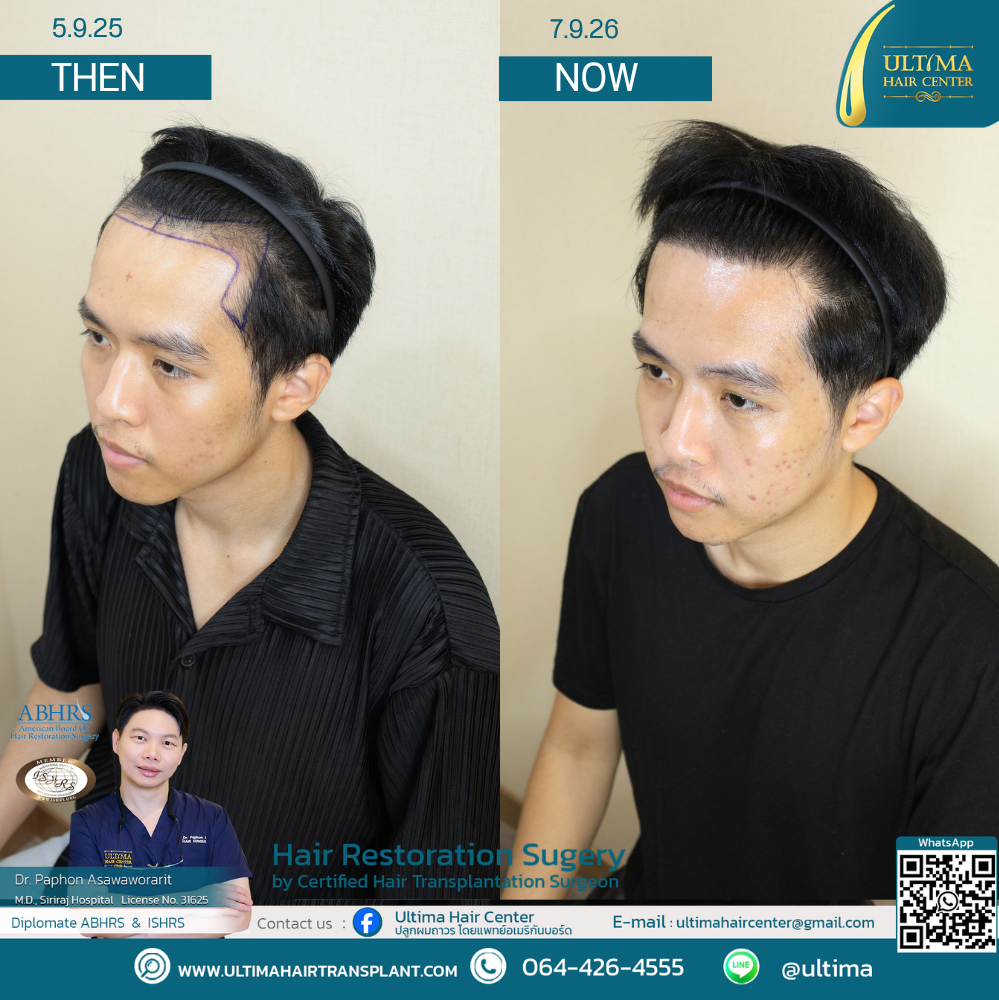 13. Can Every Man Get a Hair Transplant?
Although hair transplantation may be considered for several areas, this does not mean that every man is suitable for surgery immediately
Before deciding on treatment, several factors should be assessed
1. The cause of hair loss or thinning
If the cause is unclear, medical evaluation should come first. Some conditions may need to be treated at their source before surgery is considered
2. The condition of the Donor Area
If the donor hair has low density or is itself affected by hair thinning, there may be limitations on the number of grafts that can be harvested
3. The condition of the recipient skin
Inflammation, infection, or an uncontrolled skin condition in the target area should be assessed and managed before transplantation
4. Expectations for the result
Patients should understand that transplantation can add hair to a target area, but the final density or shape cannot be guaranteed to match a reference photograph or another person’s result
5. Long-term planning
This is particularly important for men with male pattern hair loss because native hair that has not been transplanted may continue to thin. Treatment planning should therefore consider the overall appearance of the scalp over time
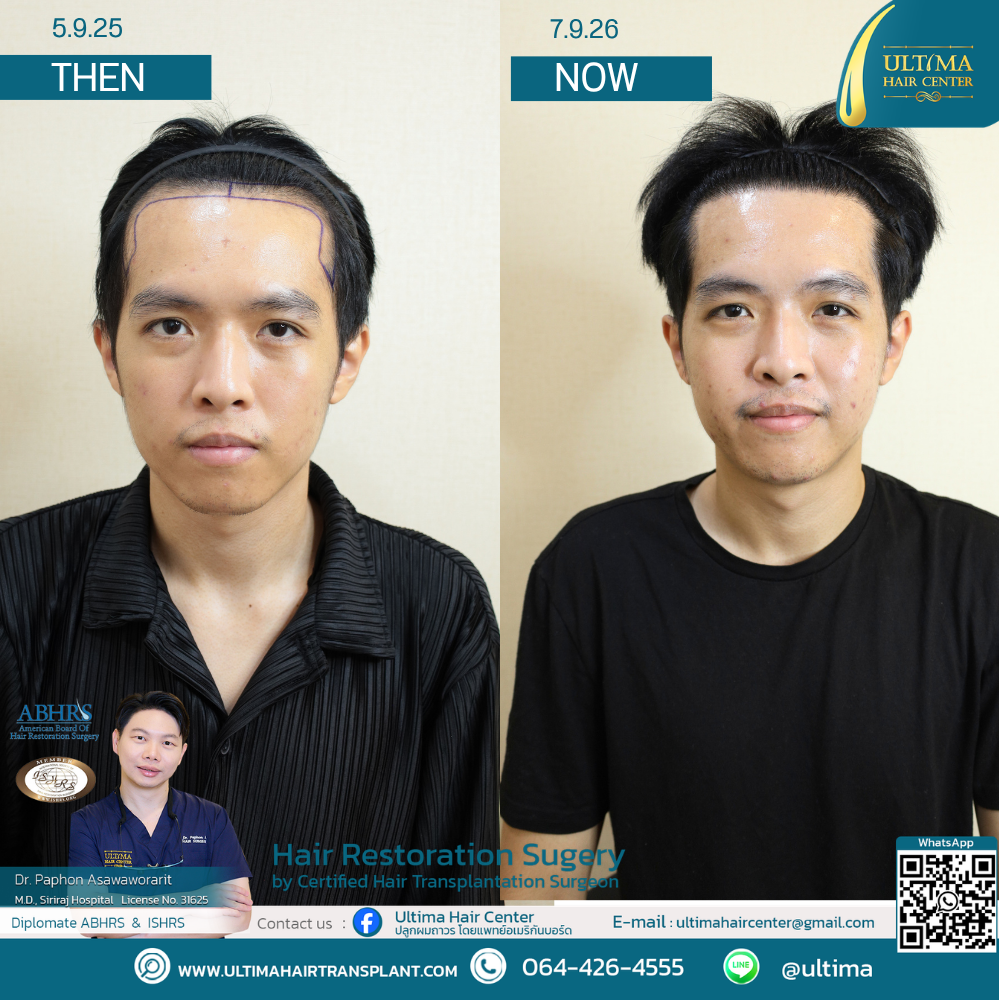 14. How Should You Choose a Hair Transplant Clinic?
If you are looking for a hair transplant clinic in Bangkok, compare more than the price, the number of grafts offered, or before-and-after photographs alone
Important considerations include:
- Checking the physician’s license and professional credentials
- Finding out whether you can discuss your concerns directly with the physician
- Asking for an explanation of the benefits, limitations, and risks of the proposed plan
- Ensuring that the Donor Area and graft allocation are assessed carefully
- Reviewing before-and-after cases with concerns similar to your own
- Asking about follow-up and postoperative care
- Confirming the costs and scope of services before making a decision
If you are reading hair transplant reviews, pay attention to the length of follow-up, photographs taken under comparable lighting and from similar angles, and details about the patient’s original condition. Do not base your decision solely on immediate postoperative photographs or a single brief review
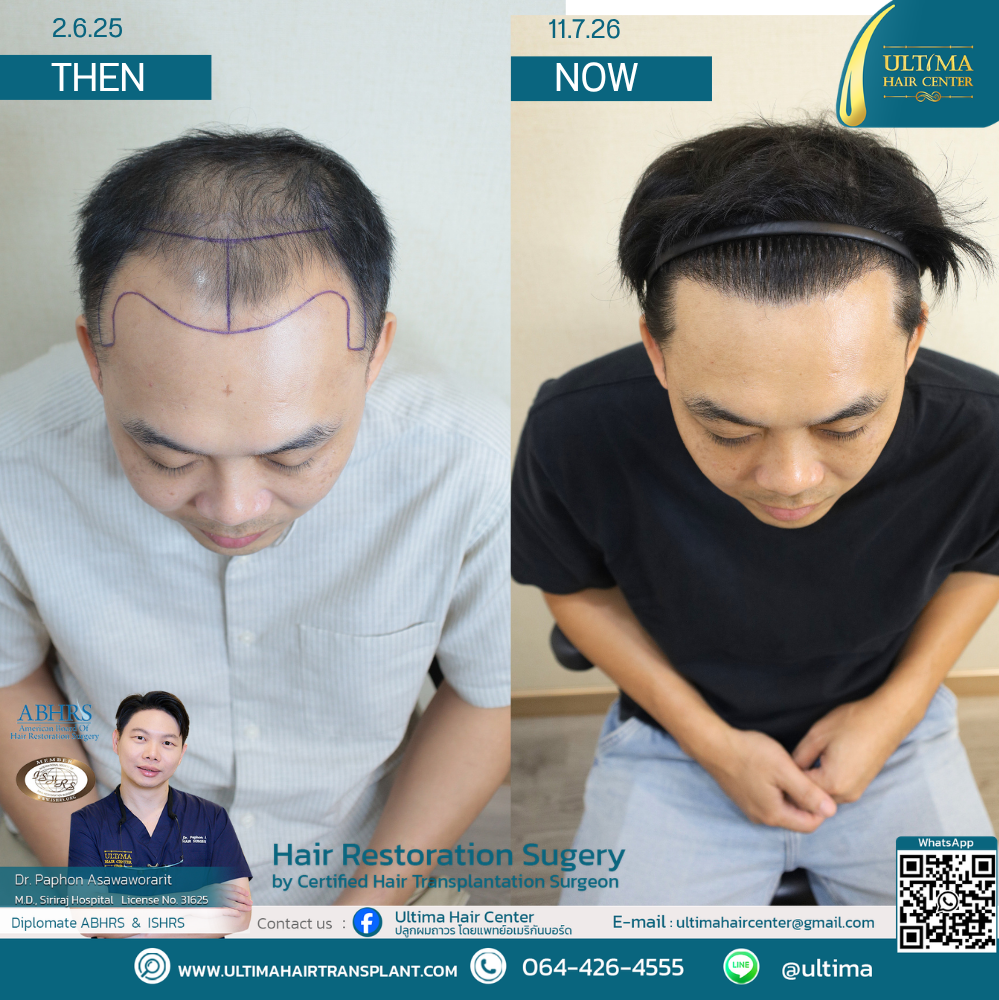 15. Why Should You Consult a Physician Before Choosing a Transplant Area?
Sometimes, the area a patient wants to treat may not be the area that needs to be addressed first. For example, a man who feels that his forehead is too wide may want to lower the frontal hairline. However, after assessment, filling in the temples or making a more limited adjustment to the hairline may provide a more suitable approach
Similarly, men with thinning in several areas may need treatment for the underlying hair-loss condition alongside transplant planning to help manage their existing hair appropriately
A consultation should therefore be an opportunity to understand the problem, available options, and limitations clearly. It should not simply involve choosing a graft count or selecting a package based on price
At Ultima Hair Center, our approach emphasizes individualized assessment and planning. Dr. Ming’s hair transplant approach focuses on the patient’s existing condition, facial features, hair characteristics, and realistic long-term possibilities
Patients seeking a quality-focused hair transplant can ask preliminary questions about hair thinning and the areas they wish to treat. Dr. Ming personally responds to patient messages, allowing patients to discuss their concerns before arranging a medical assessment. The final treatment decision should still be based on an appropriate clinical evaluation
For those considering a hair transplant with an American Board-certified ABHRS physician, it is important to verify the physician’s credentials and relevant professional information, as well as to ask clear questions about each stage of treatment
Patients who have experienced problems with a previous procedure and are looking for a clinic that corrects hair transplant cases performed elsewhere should bring previous treatment records, before-and-after photographs, and any available details to the consultation. Revision treatment may be limited by the remaining graft supply, the condition of the Donor Area, and existing scars
 Conclusion: Where Can Men Get a Hair Transplant?
Men may consider hair transplantation in several areas, including:
- The frontal hairline and forehead
- The temples
- The mid-scalp
- The crown
- The sides of the scalp in selected cases
- The moustache
- The beard and chin
- The sideburns
- The eyebrows
- Scarred areas of the scalp or face in suitable cases
However, choosing a transplant area should begin with identifying the underlying problem, assessing the Donor Area, and planning graft allocation appropriately. The decision should not be based on cosmetic preferences alone
The goal is to create an individualized plan that considers facial balance, existing hair characteristics, scalp health, and the potential progression of hair loss. These factors help establish realistic expectations and aim for a natural-looking result
 Frequently Asked Questions (FAQ)
1. How many areas can men get hair transplants in?
Men may consider hair transplantation in several areas, including the frontal hairline, temples, mid-scalp, crown, Moustache, Beard, sideburns, eyebrows, and selected types of scars. Suitability depends on the cause of the concern, skin condition, and individual circumstances
2. Can men with a wide forehead get a hair transplant?
Hair transplantation may be considered to adjust the frontal hairline to better suit the face. However, the design should account for age, hair characteristics, and the potential progression of future hair loss. Lowering the hairline excessively may not be appropriate
3. Can I get a hair transplant only at the temples?
Yes, temple-only transplantation may be considered if the physician determines that it is appropriate. Planning should account for hair direction and the transition to the frontal hairline so that the transplanted area blends with the existing hair
4. Can the crown be treated with a hair transplant?
Yes, in suitable cases. The physician should assess the size of the thinning area, available grafts, and the natural hair whorl. Because the crown may require many grafts, it may need to be planned alongside other areas if thinning affects several parts of the scalp
5. Can men get a Moustache or Beard Transplant?
Moustache or Beard Transplantation may be considered to fill sparse areas or gaps in facial hair. Careful design of the shape and hair direction is essential, and the skin condition and Donor Area should be assessed before treatment
6. Can I get a sideburn transplant?
Sideburn transplantation may be considered for men with sparse or incomplete sideburns or scars in the area. The design should complement the hair on the sides of the scalp, facial shape, and the hairstyle the patient prefers
7. Can hair be transplanted into a scar?
In selected cases, hair may be transplanted into scars caused by accidents, surgery, or a previous hair transplant. The type of scar, tissue thickness, and skin condition should be assessed first because results may differ from transplantation into normal skin
8. Can multiple areas be transplanted during the same procedure?
In selected cases, more than one area can be treated in the same session. However, the total area, number of grafts, procedure duration, and the patient’s readiness must be considered. The physician may recommend prioritizing areas or dividing treatment into stages
9. Which is better for different transplant areas: FUE or FUT?
Both FUE and FUT are techniques used to prepare grafts for transplantation, but they differ in how grafts are harvested and in their respective limitations. The choice should consider the Donor Area, graft requirements, hair characteristics, and the overall treatment plan rather than the recipient area alone
10. Will transplanted areas have the same density as my original hair?
The same density as the original hair cannot be guaranteed in every area. Results depend on the number and quality of grafts, hair characteristics, the recipient area, and individual healing and growth. Realistic goals should be discussed before treatment
11. If I have thinning at both the frontal hairline and crown, which area should be treated first?
This depends on the degree of thinning, the patient’s priorities, and the number of available grafts. A physician should assess the overall scalp to prioritize treatment and allocate grafts appropriately rather than considering one area in isolation
12. Can a previous hair transplant be corrected if I am dissatisfied with the result?
Some cases may be assessed for revision. The physician needs to evaluate the cause of the problem, the remaining graft supply, the condition of the Donor Area, and any existing scars. Revision may involve more limitations than a first hair transplant
13. What should I look for in hair transplant reviews before choosing a clinic?
Look for before-and-after photographs taken under similar lighting and from comparable angles, the length of follow-up, details of the original concern, physician credentials, and information about postoperative care. Do not rely only on review scores or photographs taken early after surgery
14. How can I consult Dr. Ming at Ultima Hair Center?
You can contact Ultima Hair Center to ask preliminary questions about hair thinning and the areas you are considering for transplantation. Dr. Ming personally responds to patient messages. An appropriate treatment plan requires a medical assessment of the hair and Donor Area
 Contact Us:
