

Can a Hair Transplant Help Reshape Your Frontal Hairline?
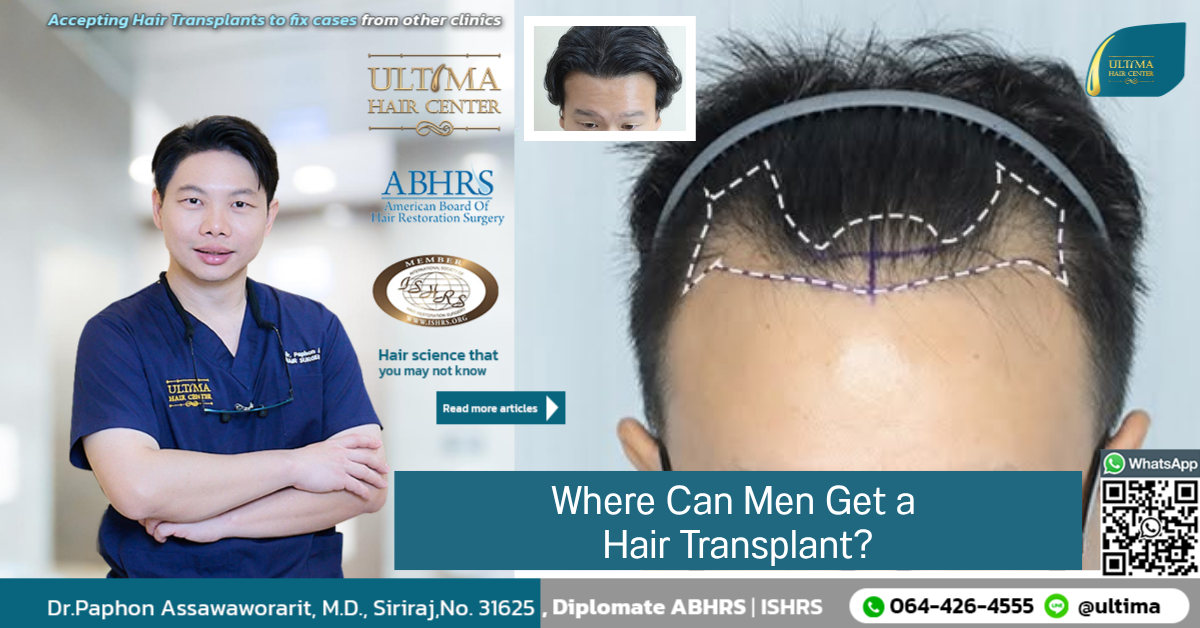
Hairline Transplantation for a Natural-Looking Hairline
The frontal hairline is one of the most important features affecting the overall appearance of the face. It is clearly visible when looking straight ahead and in photographs. When the hairline recedes, the forehead appears wider, or an M-shaped hairline becomes more pronounced, many people begin considering a hair transplant to create a hairline that better suits their facial features
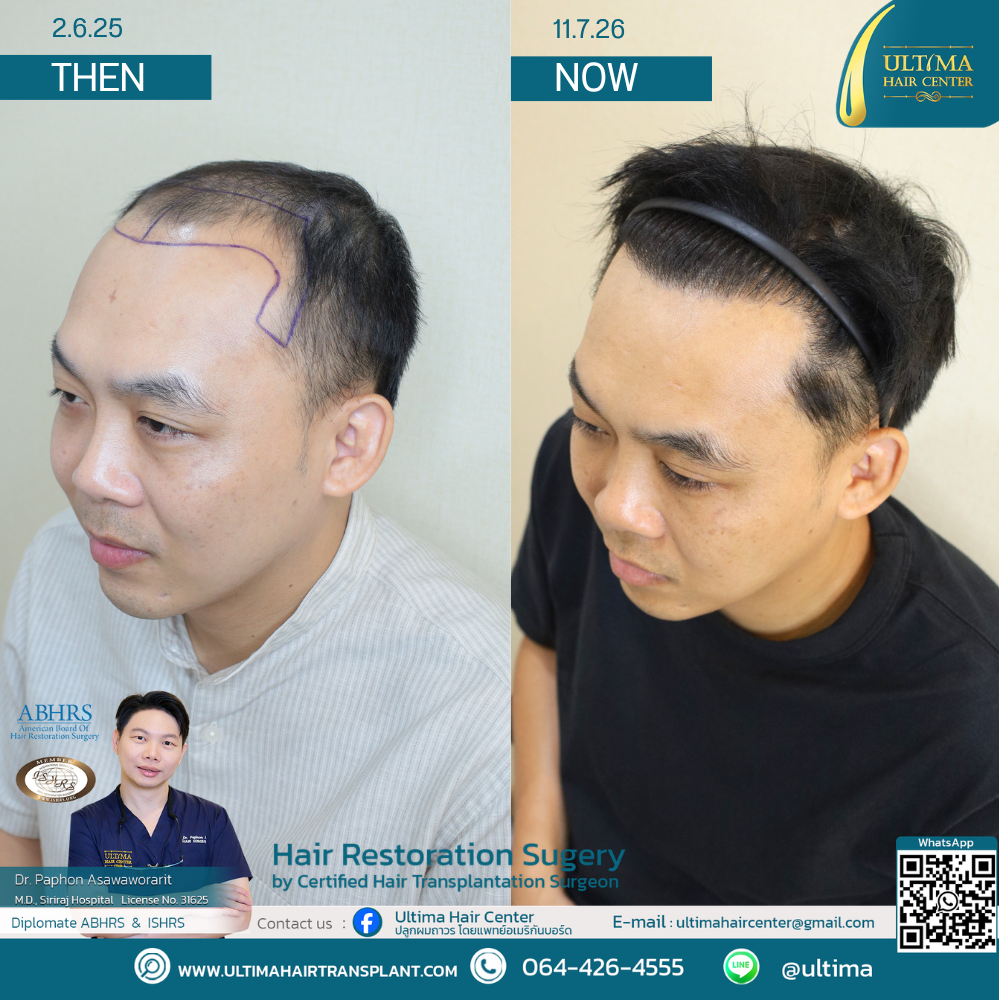 A common question is: “Can a hair transplant help reshape my frontal hairline?”
In many cases, the answer is yes. However, this does not mean that everyone should undergo a hair transplant to lower their hairline as much as possible. Good Hairline design involves more than assessing the current position of the forehead. It also requires consideration of age, facial shape, hair characteristics, the degree of hair thinning in other areas, the likelihood of future hair loss, and the quality and availability of the Donor Area
Modern hair transplantation therefore places considerable emphasis on designing a hairline that suits each individual and remains balanced over time, rather than simply making the forehead appear as narrow as possible on the day of surgery
Hairline design is also an important consideration in hair restoration practice. Factors such as age, facial features, hair characteristics, and anticipated changes in the face and hair over time should all be considered. The design of the frontal hairline plays a major role in the aesthetic outcome
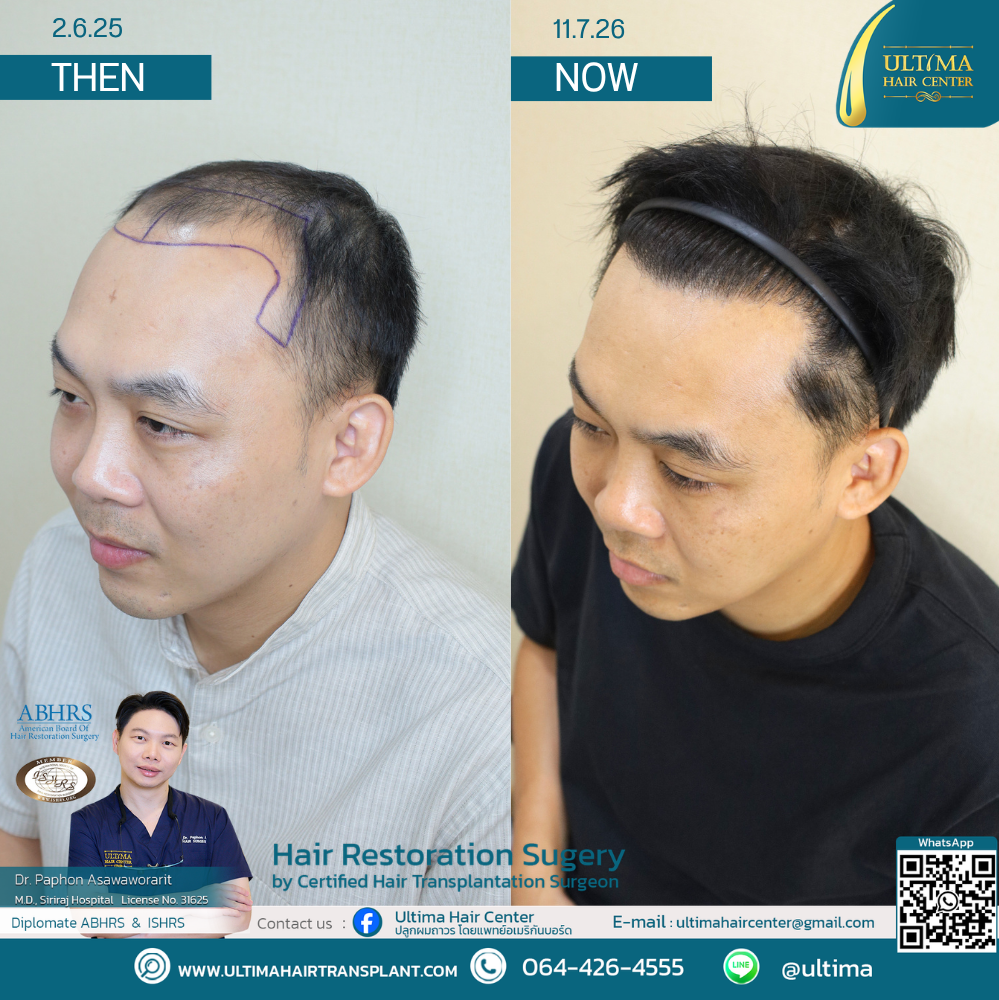 What Is the Frontal Hairline?
The frontal hairline is the boundary at the front of the scalp where the hair begins to grow along the forehead. It forms the transition between the forehead and the hair-bearing scalp
The hairline is not simply a straight line separating areas with hair from areas without hair. It consists of several features, including:
- The central frontal hairline
- The lateral hairline
- The frontotemporal angle, where the frontal hairline meets the sides
- The temporal area, which contains hair along the sides of the head
- Hair density
- Hair direction and angle
In most people, the natural hairline is not a perfectly straight line. It usually contains subtle irregularities. Creating a hairline that is too straight or unnaturally symmetrical may make it obvious that the hairline has been surgically restored
Therefore, the goal of a frontal hair transplant is not to create a “perfect hairline,” but to create a hairline that looks natural and suits the patient’s facial features
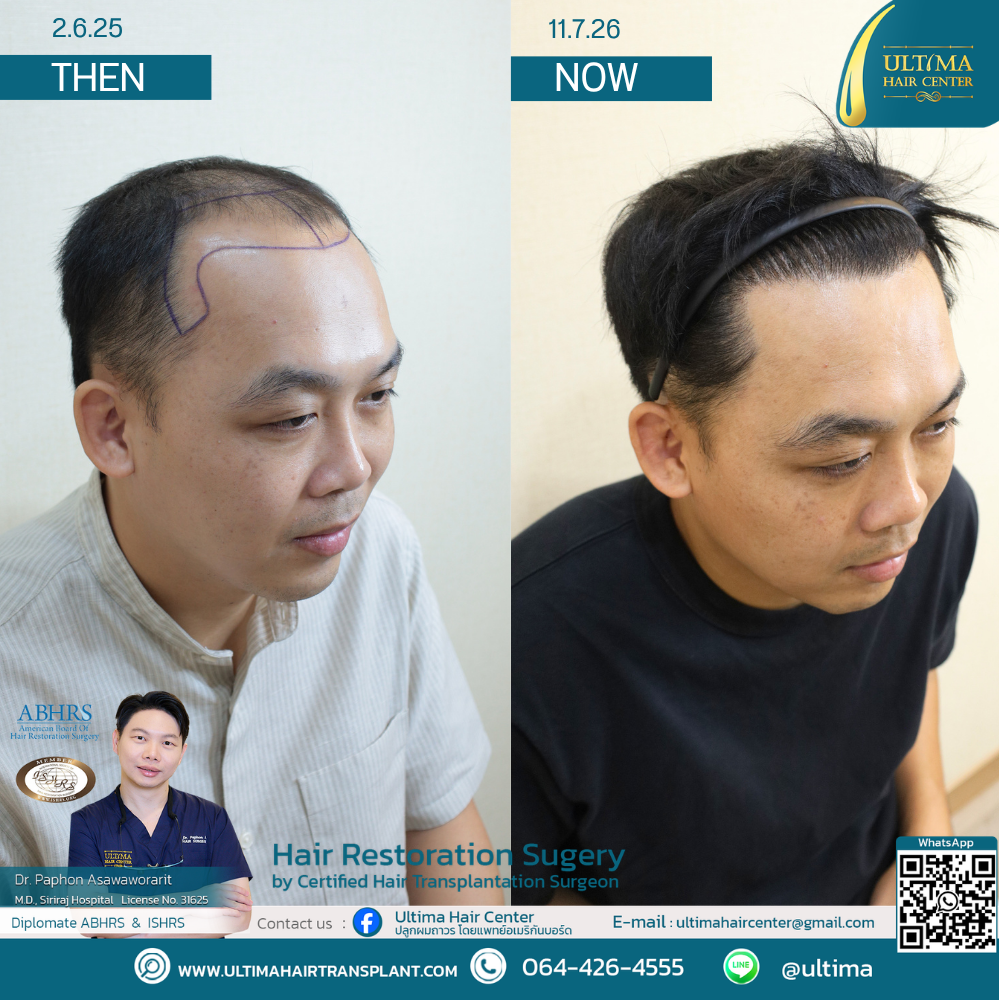 How Can a Hair Transplant Help Reshape the Frontal Hairline?
A hair transplant can involve transferring grafts from the Donor Area to the frontal hairline to increase hair coverage in areas where hair is sparse or absent. It can also be used to reshape the hairline
For example:
1. Restoring a Receding Hairline
People whose frontal hairline has receded may benefit from transplantation along the front of the scalp to help reduce the visible area of the forehead
2. Filling in the Frontal Corners
For individuals with an M-shaped hairline or pronounced temporal recession, transplantation may be considered to fill in the frontal corners in a way that suits the face
3. Correcting an Uneven Hairline
Some people naturally have an uneven hairline, while others experience hair loss that affects the left and right sides differently. Hair transplantation may help create a more balanced overall appearance
4. Restoring a Hairline Affected by Surgery or Scarring
In some cases, the hairline may have changed because of an accident, scarring, or previous surgery. Hair transplantation may be one of the options considered for restoring hair in these areas
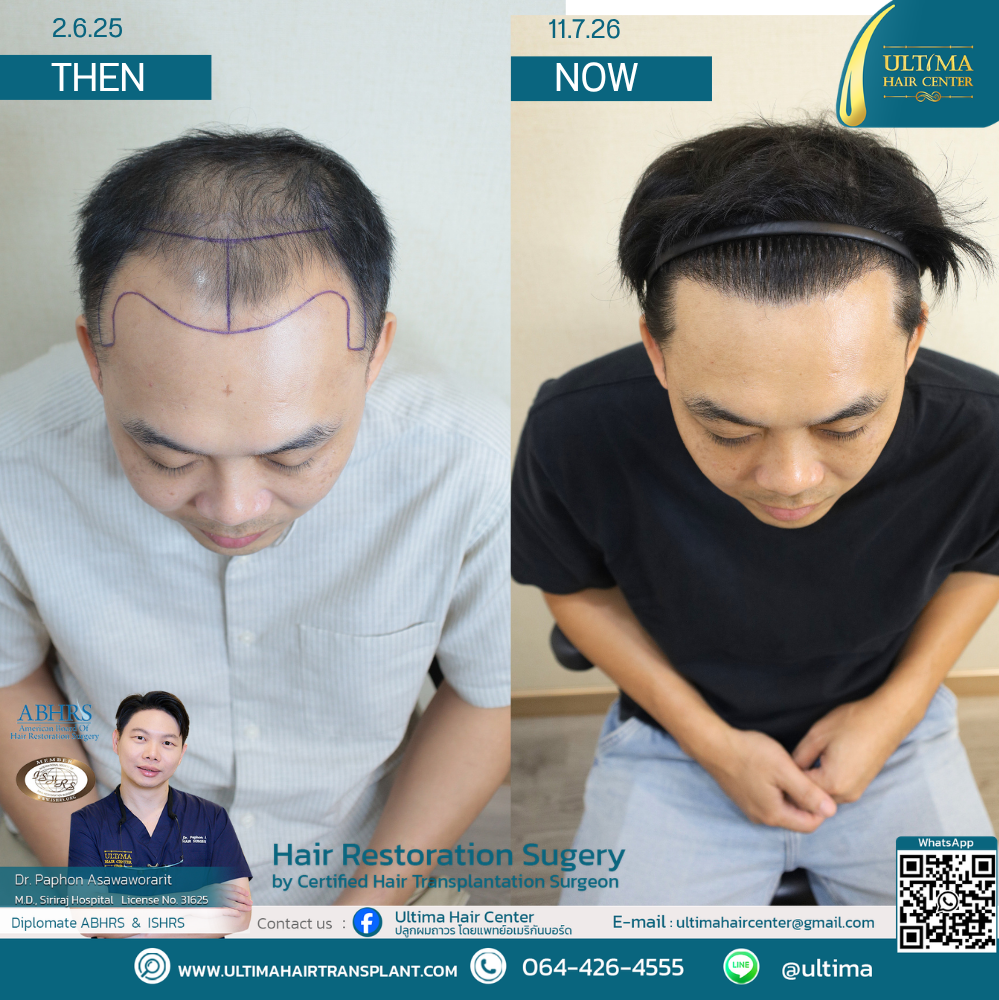 How Low Should the Hairline Be Placed to Reduce the Forehead?
This is one of the most important considerations when planning a hair transplant to reshape the hairline
Many people want a hairline similar to the one they had during their teenage years because it appeared fuller and made the forehead look smaller. However, hairlines naturally change with age, and creating a very low hairline may require a large number of grafts
More importantly, if the existing hairline is likely to recede further in the future, creating a very low new hairline may leave thinning areas behind the transplanted hairline. This can result in an imbalanced appearance
Hairline design should account for the future, not just how the hairline looks on the day of transplantation
In simple terms:
The lowest possible hairline is not necessarily the best hairline
A suitable hairline should complement the face while allowing for future changes in hair density and distribution
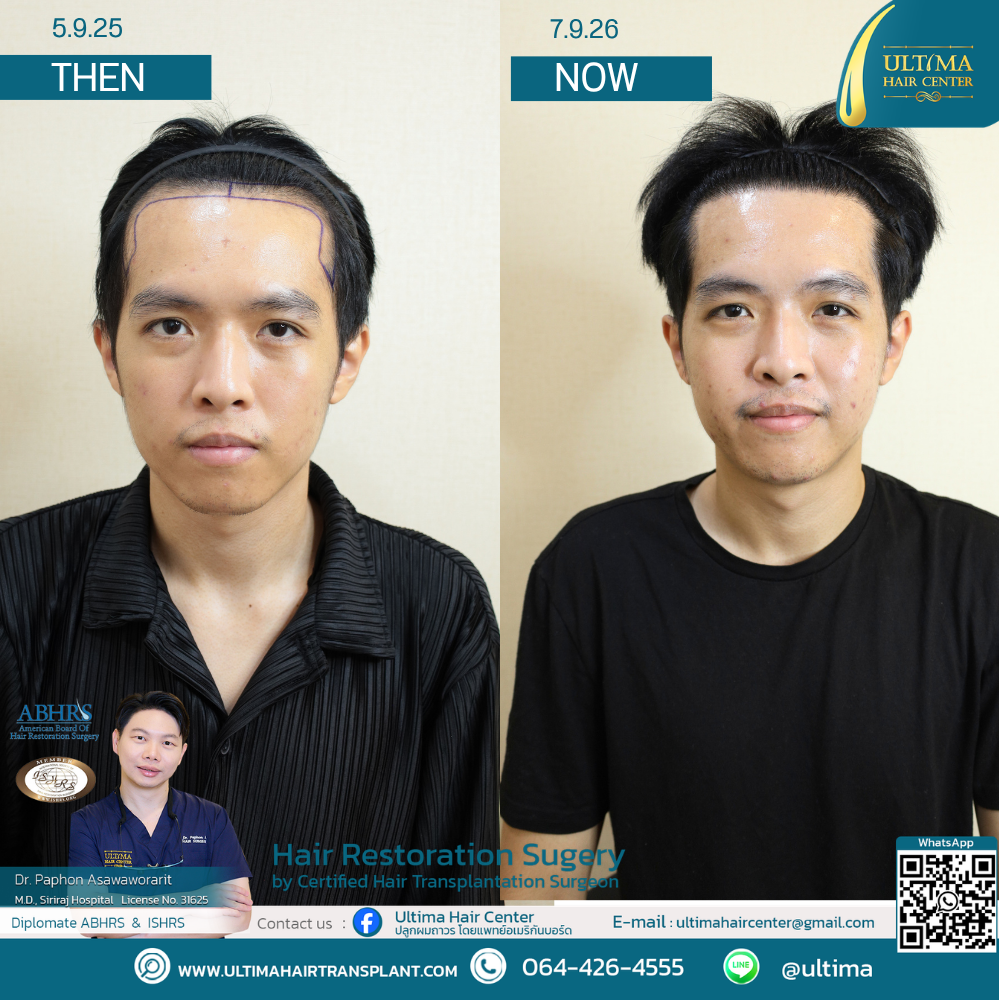 Why Should You Avoid Lowering the Hairline as Much as Possible?
Lowering the hairline too aggressively has several limitations
It may affect facial proportions
If the forehead becomes too narrow, the overall proportions of the face may appear unbalanced
It Requires More Grafts
The farther forward the desired hairline is placed, the larger the area that may need to be filled. This can require a substantial number of grafts
Grafts are a limited resource obtained from the Donor Area. Using a large number of grafts at the frontal hairline may leave fewer available for other areas that may require treatment in the future
It May Become Less Suitable as You Age
A teenage-style hairline may suit some faces at a particular age. However, facial proportions and hair characteristics change over time. A very low hairline may eventually look inconsistent with the person’s overall appearance
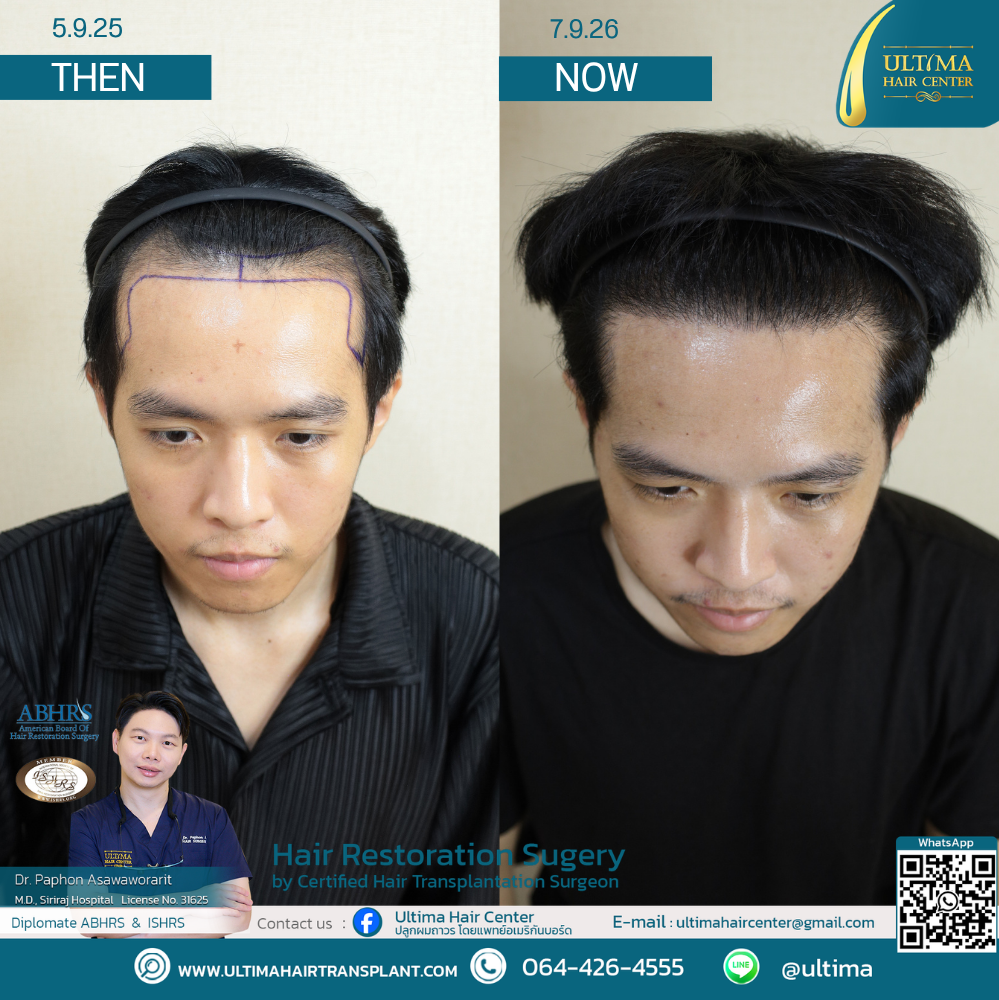 Further Hair Thinning Behind the Hairline May Create an Imbalance
If the mid-scalp or top of the head continues to thin while the frontal hairline remains very low and dense, the result may resemble a separate “band of hair” at the front
For this reason, good treatment planning should consider the long-term use of available grafts
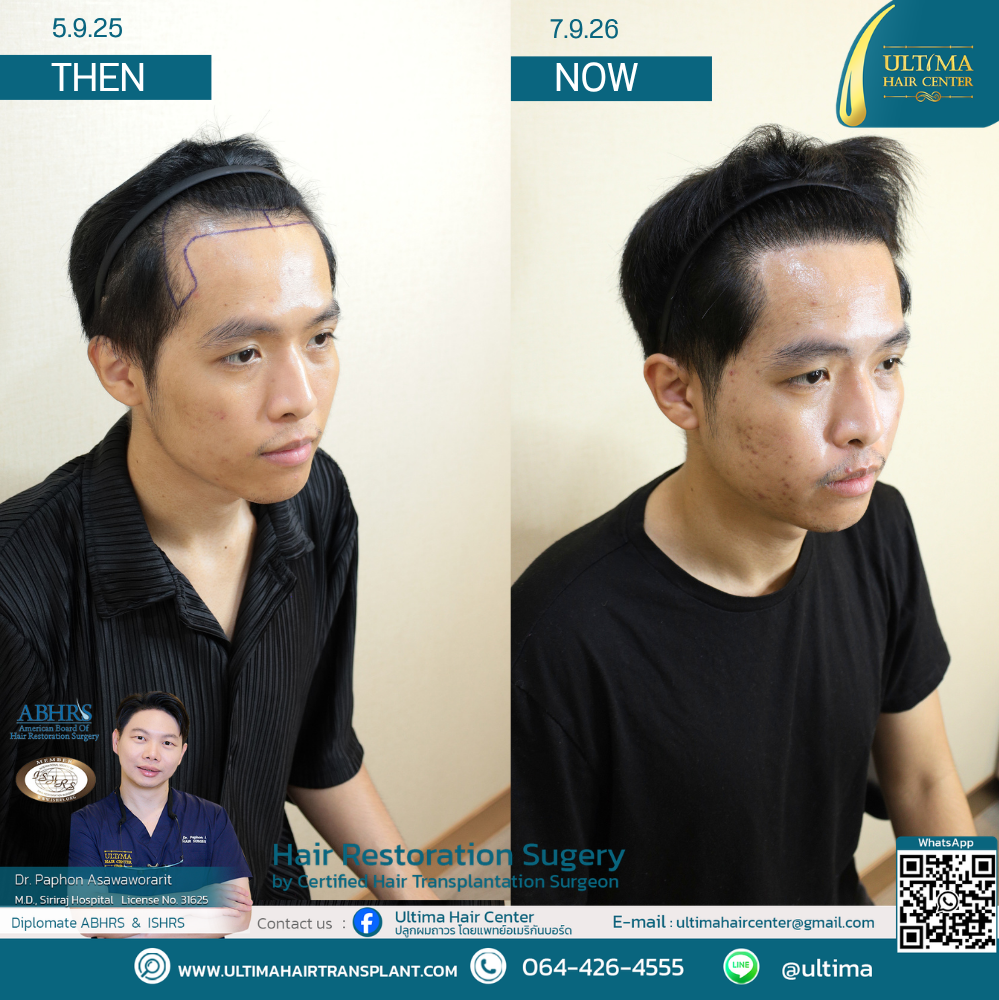 What Makes a Hairline Look Natural?
A natural-looking hair transplant at the frontal hairline depends on more than the position of the hairline alone
Important elements include:
1. Subtle Irregularities
Natural hairlines are not perfectly sharp, straight lines. Introducing appropriate irregularities can help the transplanted hairline blend more convincingly with natural hair
2. A Gradual Transition Zone
The frontmost part of the hairline should transition gradually from the forehead into the hair-bearing area. It should not begin with excessive density all at once
3. Appropriate Graft Selection
The frontmost hairline is often designed using grafts containing fewer hairs to create a softer appearance. Density can then gradually increase behind the leading edge
4. Hair Direction and Angle Appropriate to the Area
Hair transplantation is not simply a matter of creating openings and inserting grafts. Hair direction and angle must also be considered. Incorrectly oriented hairs may stick out or look inconsistent with the surrounding hair
5. Symmetry Is Not Always Necessary
Human faces are naturally asymmetrical. Hairlines and hair direction can also differ slightly from one side to the other. Trying to make both sides identical in every detail may not produce the most natural-looking result
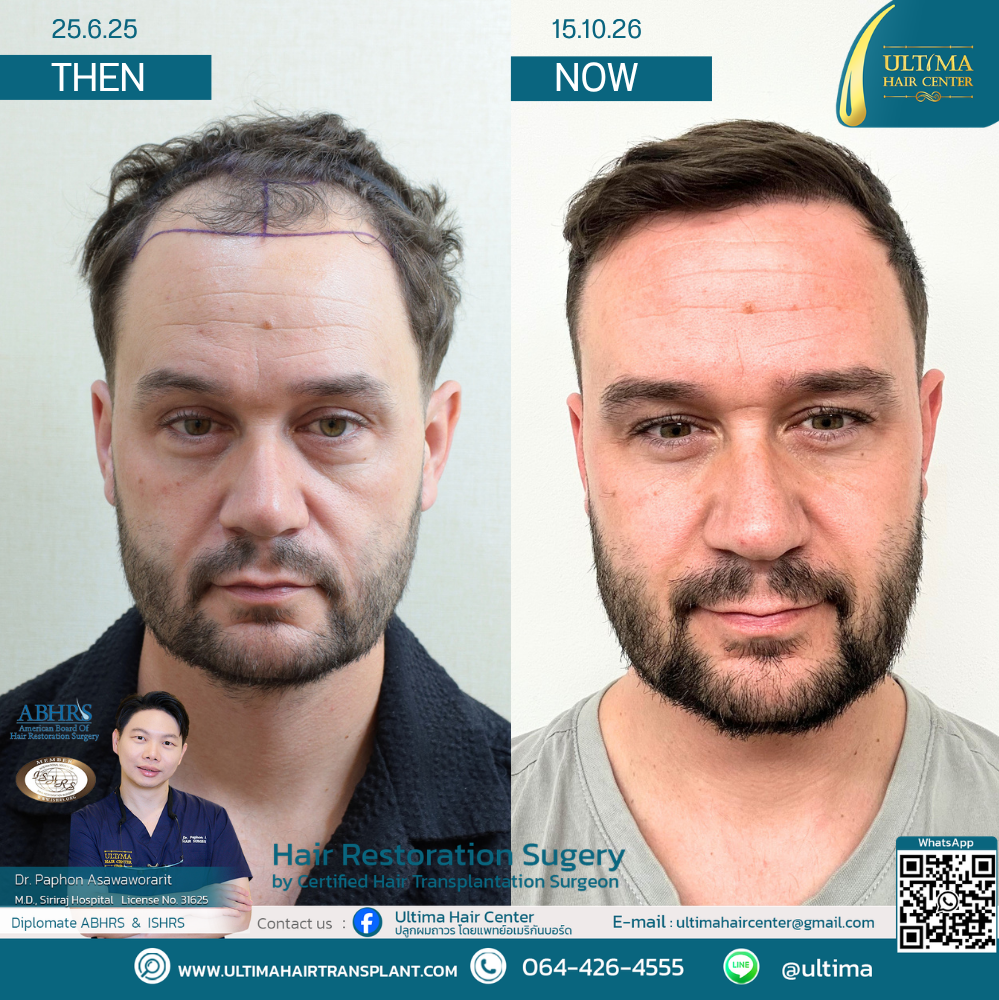 How Does Face Shape Affect Hairline Design?
A hairline that suits one person may not suit another because forehead and facial proportions vary considerably
A physician should assess the overall facial structure, including:
- Forehead width
- Facial length
- Face shape
- Eyebrow position
- Temple width
- Characteristics of the temporal area
- Hair thickness and color
- The contrast between hair color and skin tone
Guidelines for designing the anterior hairline emphasize considering factors such as age, hair characteristics, facial shape, and the individual features of the patient together
For this reason, it is not advisable to copy a celebrity’s, actor’s, or another person’s hairline and expect the same design to suit everyone
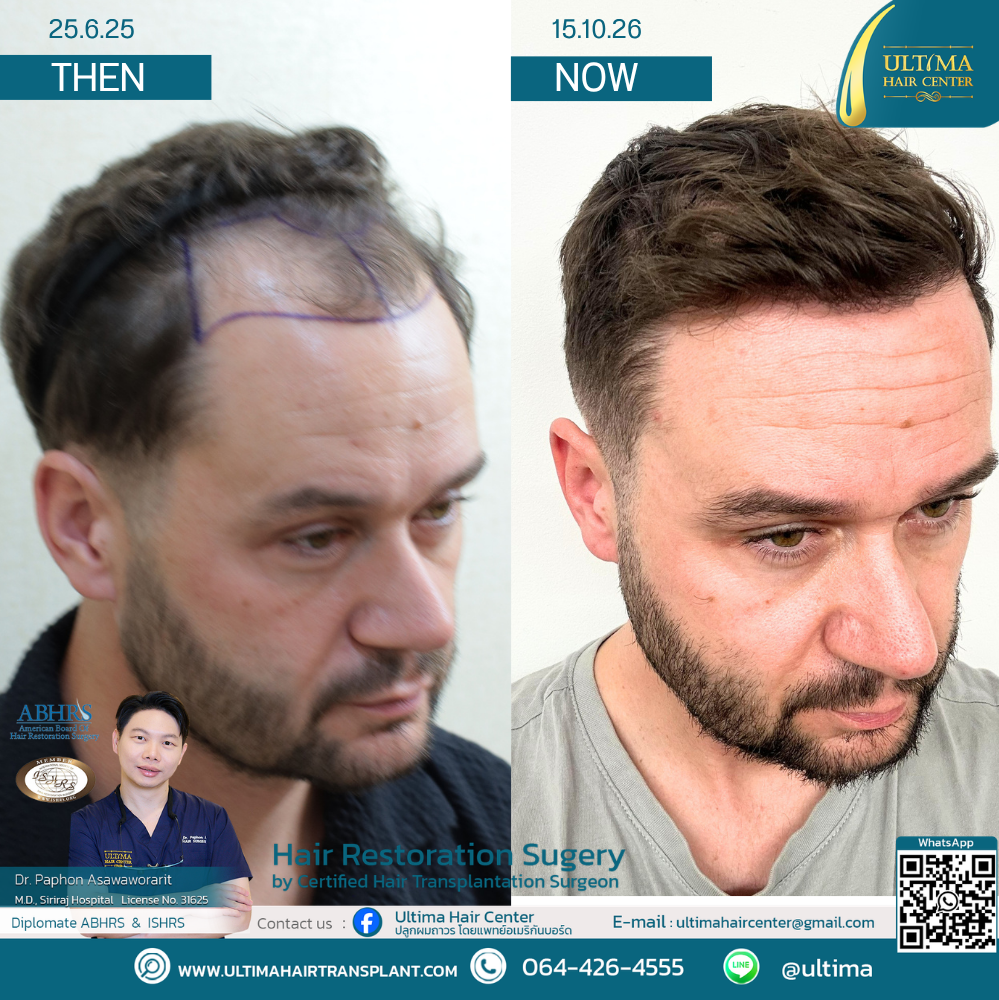 Can a Hair Transplant Correct an M-Shaped Hairline?
In many cases, it can be considered, but the underlying cause and severity of the M-shaped hairline need to be assessed
For some people, an M-shaped hairline is simply a natural feature and does not necessarily indicate abnormal hair loss
However, if the frontal corners gradually recede and thinning also develops at the front or mid-scalp, the condition may be associated with androgenetic alopecia, a form of patterned hair loss that progresses over time
Before deciding on transplantation, it is important to distinguish between:
“Wanting to reshape the hairline”
and
“Treating an ongoing hair-loss condition”
These two situations may require different treatment-planning approaches
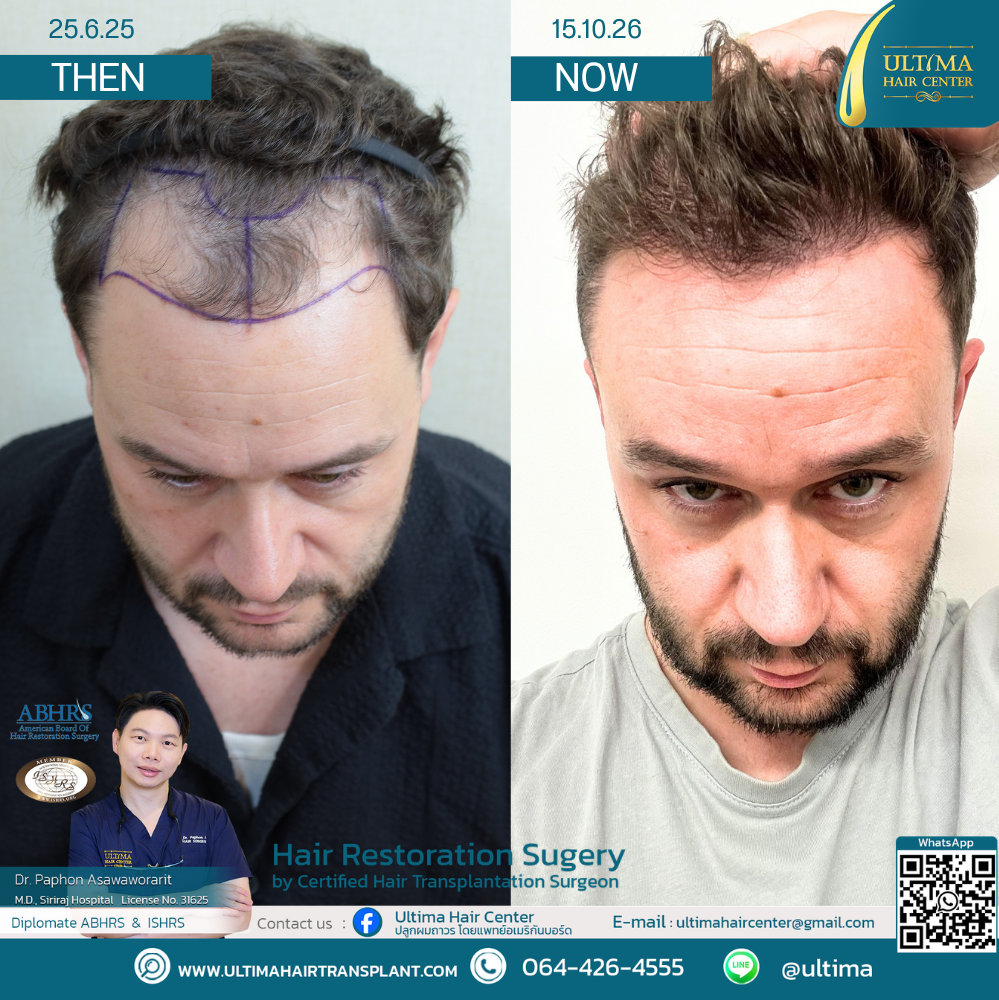 Should Younger People Consider Hairline Transplantation?
Younger individuals experiencing a receding hairline should be assessed carefully because it may not yet be possible to predict how far their hair loss will progress in the future
Creating a very low hairline at a young age may use a substantial number of grafts early on, while the native hair behind the transplanted area may continue to thin
A physician may therefore need to assess family history, the pattern of hair loss, the degree of thinning, and the quality of the Donor Area before determining whether transplantation is appropriate
The key point is not that younger people cannot undergo hair transplantation, but that the treatment plan should account for the likely long-term progression of hair loss
 Can You Reshape Your Hairline If Your Existing Hair Is Not Significantly Thinning?
This may be considered, but the reasons for wanting the change and the suitability of the procedure need to be evaluated carefully
Some people do not have obvious hair loss but feel that their forehead is too wide or dislike the shape of their existing Hairline. They may wish to adjust it to better complement their face
In such cases, hair transplantation is primarily a cosmetic procedure rather than treatment for an existing hair-loss condition
The physician should discuss the patient’s expectations in detail, including how much they want to lower the hairline, whether they want to adjust only the central area or also the temples, and whether sufficient grafts are available in the Donor Area
In some cases, lowering the hairline slightly may create a more balanced overall appearance than attempting to make the forehead as narrow as possible
 How Many Grafts Are Needed for Hairline Transplantation?
There is no single graft count that is suitable for everyone
The number of grafts depends on:
- The area to be transplanted
- The existing hairline
- The desired density
- The quality of the Donor Area
- Hair characteristics
- Hair color and skin tone
- The planned hairline design
- Whether the temples also need to be filled in
- Whether native hair is present in the recipient area
Therefore, the question “How many grafts are needed for a hairline transplant?” cannot always be answered accurately without assessing the actual area
What matters more than the total number of grafts is allocating them appropriately according to the location and treatment goals
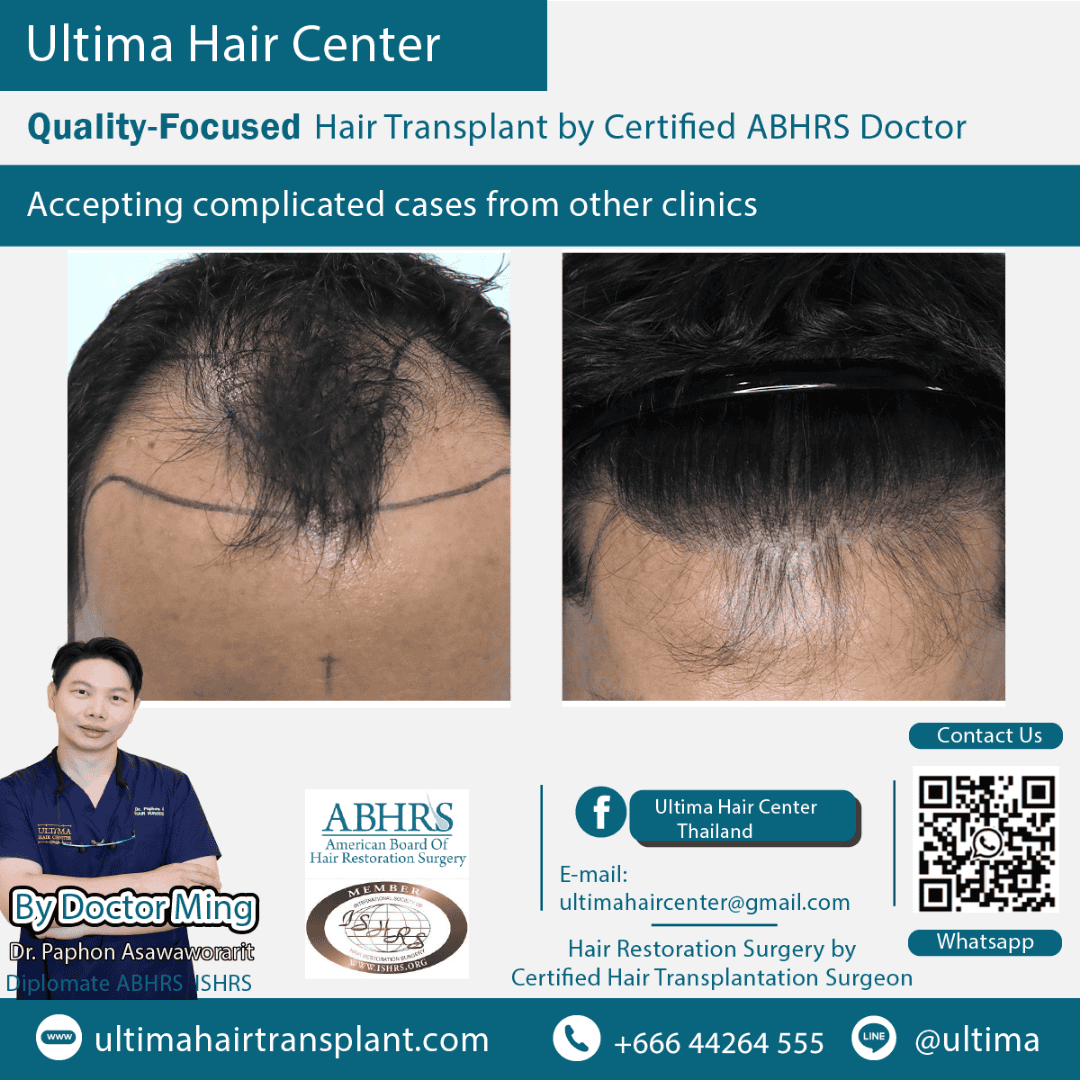 Is FUE or FUT Better for Hairline Transplantation?
Both FUE and FUT are established hair transplantation techniques. The choice should depend on the patient’s characteristics and the treatment plan for the Donor Area
FUE, or Follicular Unit Excision, involves extracting individual follicular grafts from the Donor Area
FUT, or Follicular Unit Transplantation, involves removing a strip of tissue from the Donor Area and then dissecting it into individual grafts for transplantation
For the frontal hairline, the important considerations are not limited to the name of the technique. Graft quality, treatment planning, graft numbers, hairline design, and the placement of grafts in the recipient area are all important
It is therefore not appropriate to conclude that one technique is best for everyone without first assessing the patient’s Donor Area and individual goals
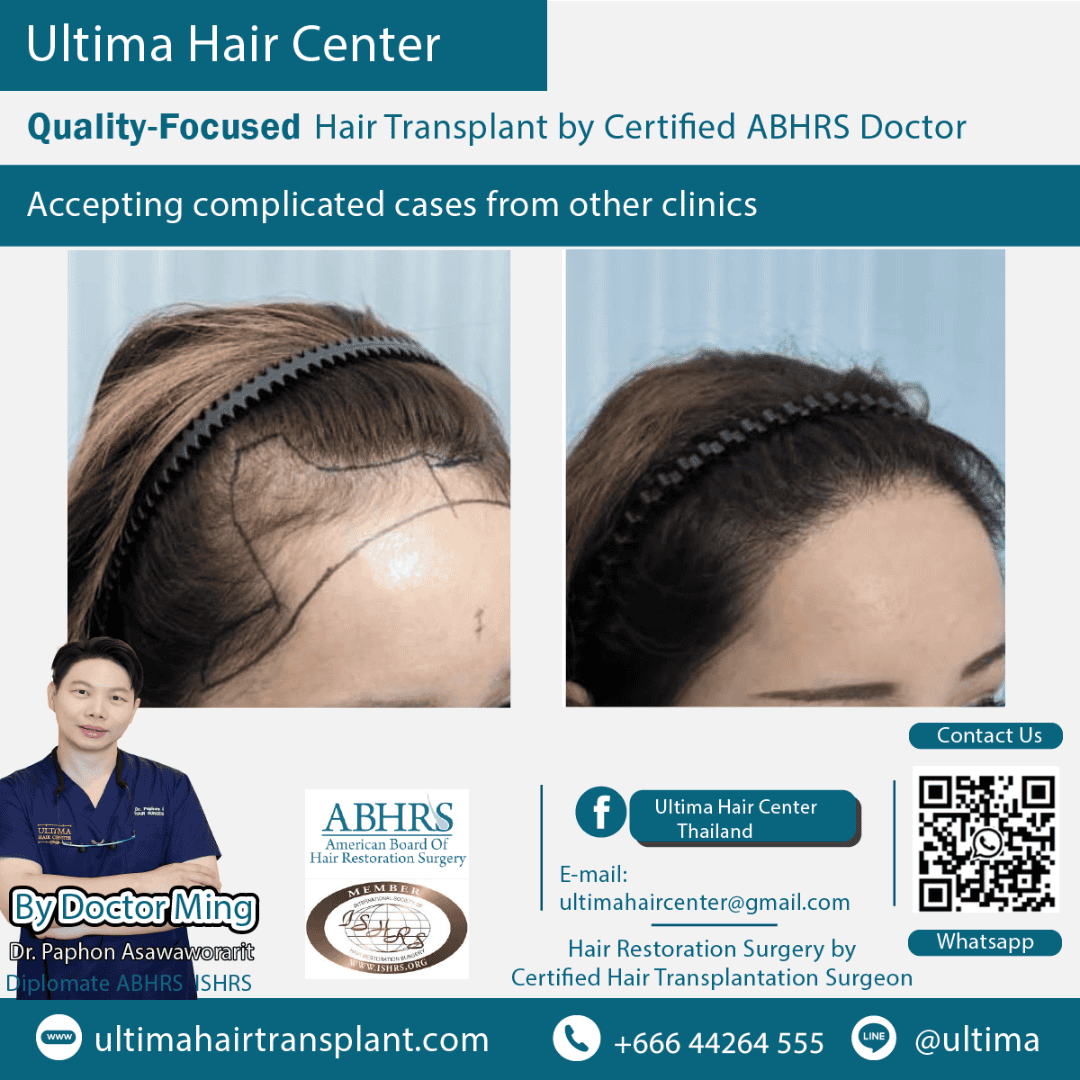
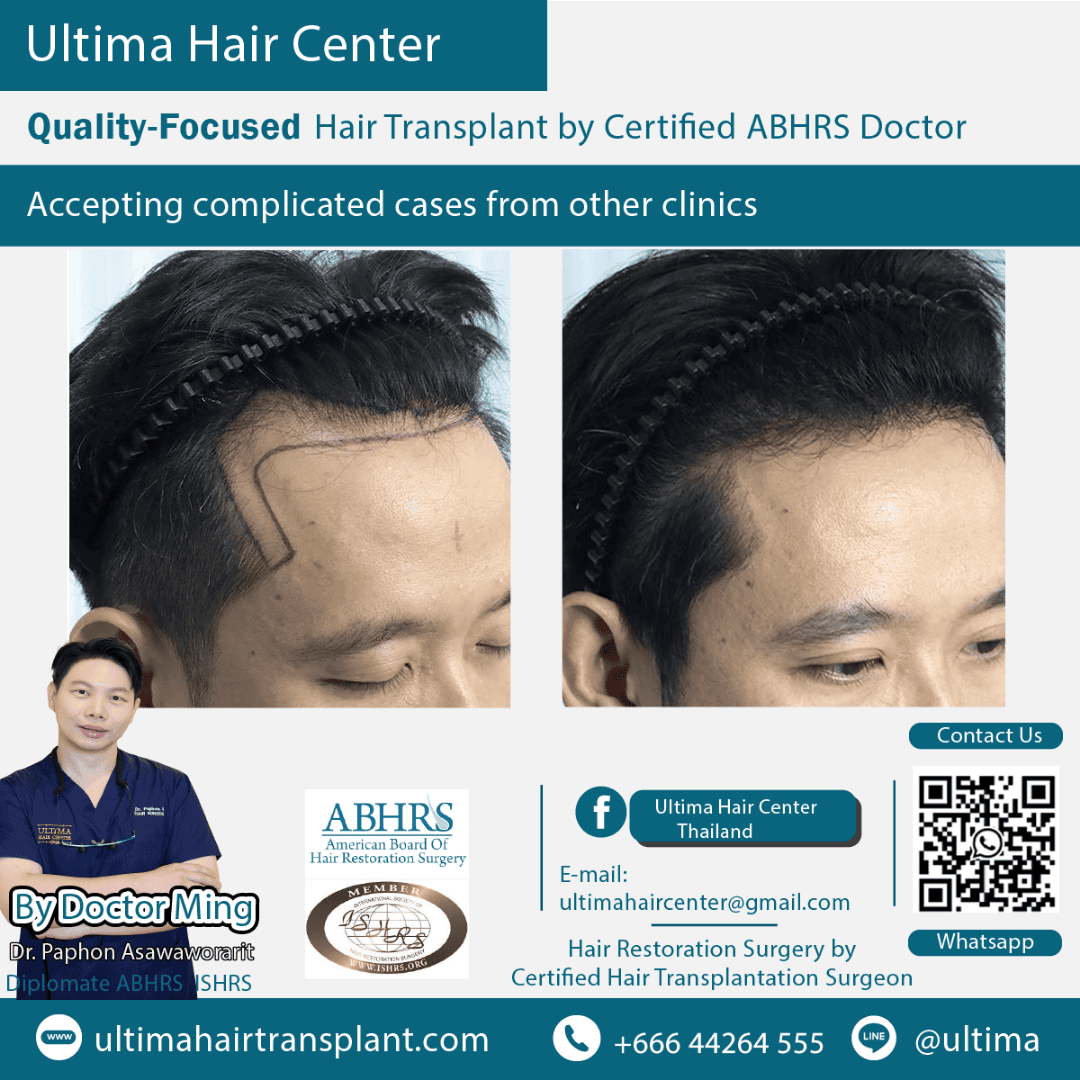 Can a Poorly Designed Hairline from a Previous Transplant Be Corrected?
In some cases, a previously transplanted hairline can be assessed for possible revision
Some patients seek correction after an earlier hair transplant because of issues such as:
- A hairline that is too low
- A hairline that is too straight
- A hairline that is too rounded
- An overly distinct frontal hairline
- Excessive use of multi-hair grafts along the leading edge
- An asymmetrical hairline
- Temple angles that do not suit the face
- Inappropriate frontal density
- A hairline that no longer suits the patient’s age or facial features
Revision cases require careful planning because grafts from the Donor Area have already been used. Some patients may also have scarring or existing grafts in the areas that need correction
Hairline revision is a complex procedure that requires an individualized assessment. It is important to consult a hair restoration physician who can evaluate both FUE and FUT and determine which technique, if either, is appropriate for the specific case
If you are looking for a clinic that corrects hair transplant cases performed elsewhere, bring your previous treatment records, preoperative and postoperative photographs, and any available information about the original graft count and technique to your consultation
 Why Is Hairline Revision More Difficult Than a First Hair Transplant?
During a first transplant, the physician can plan the use of the Donor Area from the beginning
Revision cases may involve additional limitations, such as:
Grafts Have Already Been Used
The Donor Area has limited resources, and the original procedure may have used a substantial number of grafts
Scarring May Be Present
Both the Donor Area and the recipient area may contain scars from the previous procedure
Existing Grafts May Be Poorly Positioned
If the original hairline is too low or too dense, the physician must determine whether new grafts can help camouflage the problem or whether the existing grafts need to be addressed in another way
Native Hair May Continue to Thin
If the underlying hair-loss condition is still progressing, correcting only the frontal hairline without considering the overall scalp may not be the best long-term plan
For these reasons, revision treatment should begin with an analysis of the original problem before an appropriate corrective approach is selected
 What Should You Look for in Hair Transplant Reviews About Hairline Design?
If you are searching for hair transplant reviews to evaluate hairline results, look beyond before-and-after photographs alone
Consider the following:
1. Check the Time Since Transplantation
Photographs taken only a few months after surgery do not necessarily represent the final growth outcome
2. Look at Multiple Angles
Review frontal, oblique, and side views because the temples and temporal area contribute to the overall appearance
3. Examine the Hairline Close Up
The frontal edge should show a gradual transition zone rather than an obvious, thick, straight line
4. Assess How Well the Hairline Suits the Face
A hairline that looks good on one person does not necessarily suit another
5. Look for Follow-Up Assessments
Reviews with updates over time can provide a more complete picture of the changes than photographs taken only during the early stages
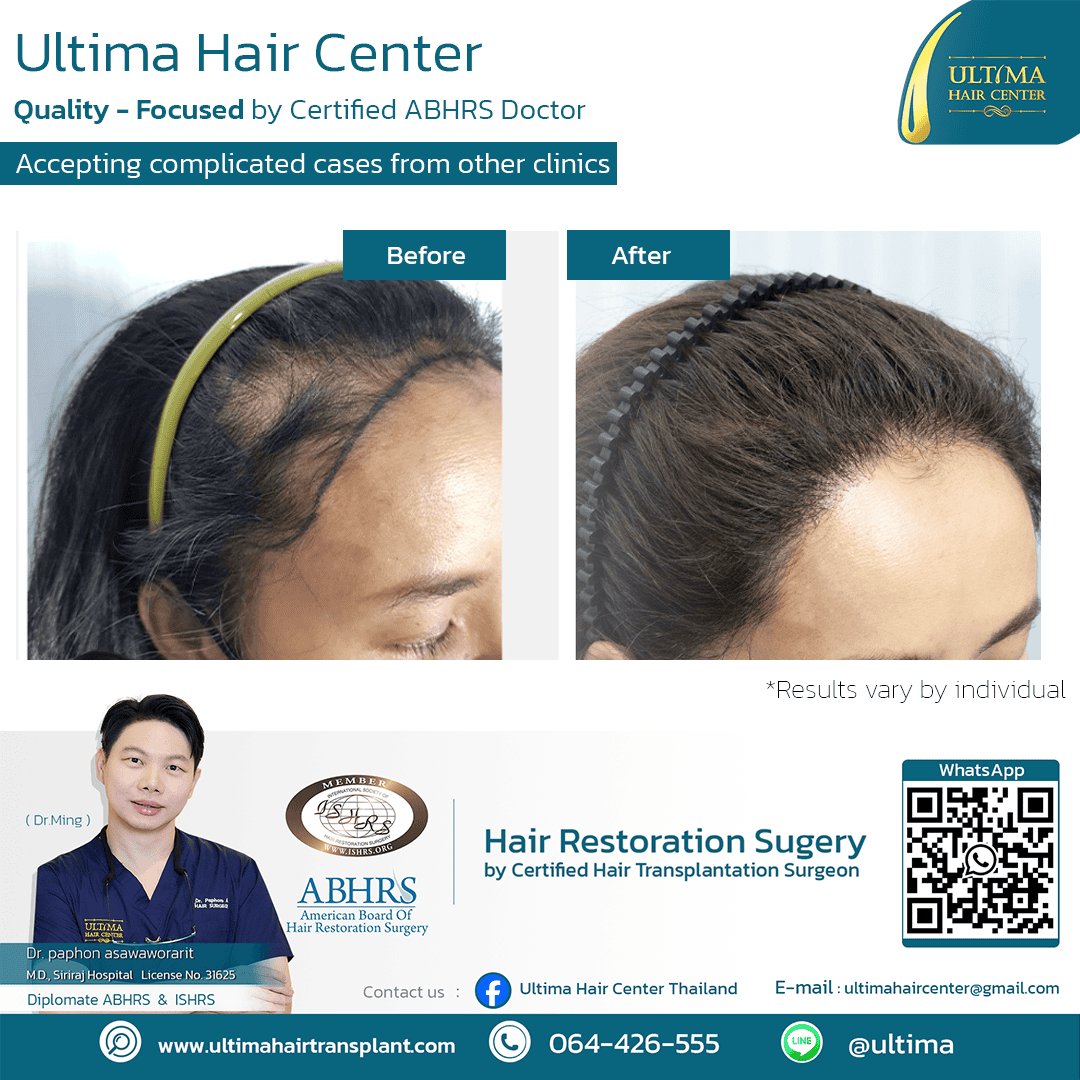 Why Does Ultima Hair Center Emphasize Hairline Design?
At Ultima Hair Center, we view hair transplantation as a process involving assessment, planning, design, graft management, and follow-up—not simply a matter of asking how many grafts are needed or how much the procedure costs
For people considering a frontal hairline adjustment, the first step is to assess:
- The appearance of the current hairline
- Whether the concern is hair thinning or the original shape of the Hairline
- How much adjustment is desired
- Which hairline design suits the patient’s facial features
- The quality and capacity of the Donor Area
- The likelihood of future hair loss in other areas
- Whether grafts should be reserved for future treatment needs
Patients searching for Dr. Ming hair transplant services can discuss their concerns and goals before making a decision. Dr. Ming personally responds to patient messages, helping patients access medical information before committing to treatment rather than relying solely on sales staff
Choosing a hair transplant with an American Board-certified ABHRS physician should involve attention to assessment, planning, and follow-up—not simply using a credential as a marketing claim
For patients seeking a quality-focused hair transplant, an important consideration is whether the Hairline is designed to suit their individual features rather than simply being made as low or dense as possible
Who May Be Suitable for Hairline Transplantation?
Hairline transplantation may be considered for people with concerns such as:
- A receding frontal hairline
- Deep frontal corners
- A desire to adjust the Hairline to better suit their facial features
- A need to fill in the temporal area
- An asymmetrical hairline
- Scarring along the hairline
- Dissatisfaction with the hairline from a previous transplant
- Sufficient Donor Area capacity following medical assessment
However, not everyone needs a hair transplant
Some people may benefit from treating hair loss first, while others may need monitoring to understand how their hair loss is progressing. In some cases, expectations about the desired Hairline may also need to be adjusted
An individualized assessment is therefore an important step before deciding on treatment
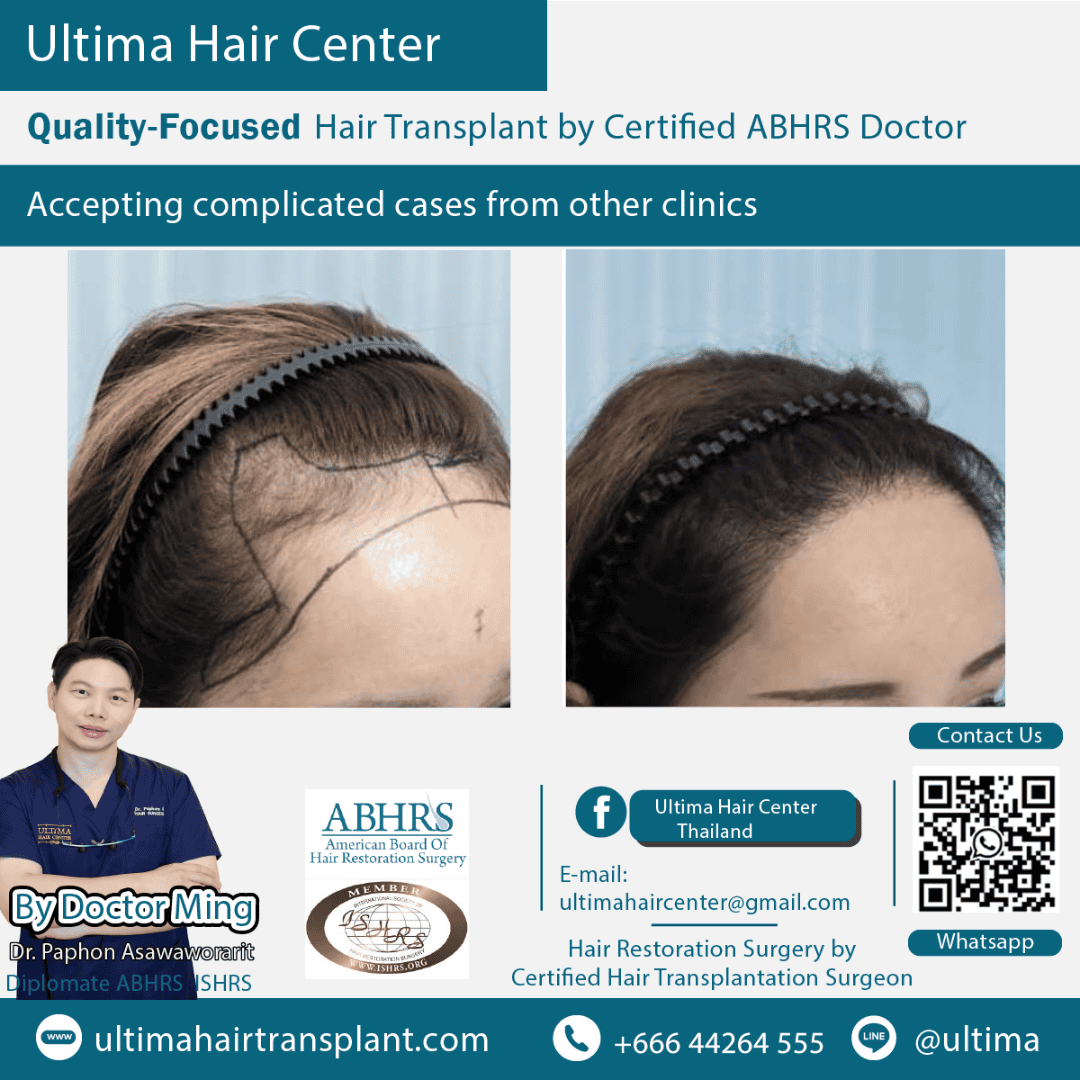 Conclusion: Can a Hair Transplant Help Reshape Your Frontal Hairline?
A hair transplant can help reshape the frontal hairline in many cases. Grafts can be transferred from the Donor Area to areas where additional hair is needed, helping adjust the hairline, fill in the frontal corners, or create a better balance with the patient’s facial features
However, the goal should not be to create the lowest possible hairline
Good Hairline design should take into account age, facial shape, hair characteristics, the likelihood of future hair loss, the quality and capacity of the Donor Area, the available graft supply, and the direction, angle, and density of the transplanted hairs
The frontal hairline is one of the most visible areas of a hair transplant. Careful design and an appropriate transition zone are therefore important for achieving a natural-looking hair transplant
If you are considering hair transplantation or looking for a clinic that corrects hair transplant cases performed elsewhere, consult a physician who can assess whether your desired hairline is appropriate for your facial structure and the available resources in your Donor Area
The best Hairline is not necessarily the lowest one. It is the one that suits your face today while allowing for a sensible plan for the future
Frequently Asked Questions About Frontal Hairline Adjustment
1. Can a hair transplant reduce the appearance of a wide forehead?
In many cases, yes, provided that the patient has a suitable Donor Area and a physician determines that lowering the hairline is appropriate. The design should complement the face and account for future hair changes rather than focusing only on creating the lowest possible Hairline
2. How many grafts are needed for a frontal hairline transplant?
There is no fixed number. The graft count depends on the area to be treated, the hairline shape, the desired density, the quality of the Donor Area, and the patient’s hair characteristics. An assessment of the actual area is more reliable than estimating graft numbers from the question alone
3. Can an M-shaped hairline be corrected with a hair transplant?
It may be possible. The physician needs to determine whether the recessed corners are part of the patient’s natural hairline or the result of progressive hair loss. If androgenetic alopecia is present, other areas of the scalp may also need to be assessed before planning treatment
4. Can a hair transplant recreate a teenage hairline?
The hairline may technically be lowered, but this does not mean that a teenage-style design is always appropriate. A very low hairline may require many grafts and may become less suitable as the patient ages. Hairline design should therefore take the future into account
5. Should the hairline be straight or curved?
There is no single design that suits everyone. The Hairline should complement the patient’s facial features, age, hair characteristics, and original hairline. A natural-looking hairline generally includes subtle irregularities rather than forming a perfectly straight edge
6. Why is the frontal hairline so important in hair transplantation?
The frontal hairline is highly visible. If its position, shape, density, or hair direction is poorly planned, the result may look unnatural. Hairline design is therefore an important part of the overall transplantation plan
7. Can a hairline that was placed too low during a previous transplant be corrected?
Some cases can be assessed for revision, but the physician must evaluate the existing hairline, previously transplanted grafts, scarring, and the remaining Donor Area capacity. Correcting a previous Hairline often involves more limitations than planning a first transplant
8. Can I reshape my Hairline if I do not have significant hair loss but have a wide forehead?
This may be considered, but the physician should assess whether the adjustment is appropriate and necessary, as well as the available Donor Area and the desired hairline shape
9. Is FUE suitable for frontal hairline transplantation?
FUE, or Follicular Unit Excision, can be used for frontal hairline transplantation. However, the choice of technique should be individualized based on the Donor Area, graft requirements, and the overall treatment plan
10. How long after a hair transplant should I wait before evaluating reviews and results?
Look for results documented over an appropriate follow-up period rather than relying only on early photographs. Hair growth takes time, and longer-term images provide a more informative view of the outcome
11. Why should the frontal hairline not have the same density everywhere?
Natural hairlines transition gradually from the front into areas of greater density. Using the same density throughout may create a distinct edge that looks unnatural. Density and the transition zone should therefore be planned appropriately
12. Can I consult a physician about hairline adjustment before deciding on a transplant?
Yes. A consultation is an important step in determining whether your goals are suitable for your facial features, Donor Area, and the likely progression of hair loss before choosing a treatment approach
 Contact Us:
