

What Should Be Considered for a Natural-Looking Hair Transplant?
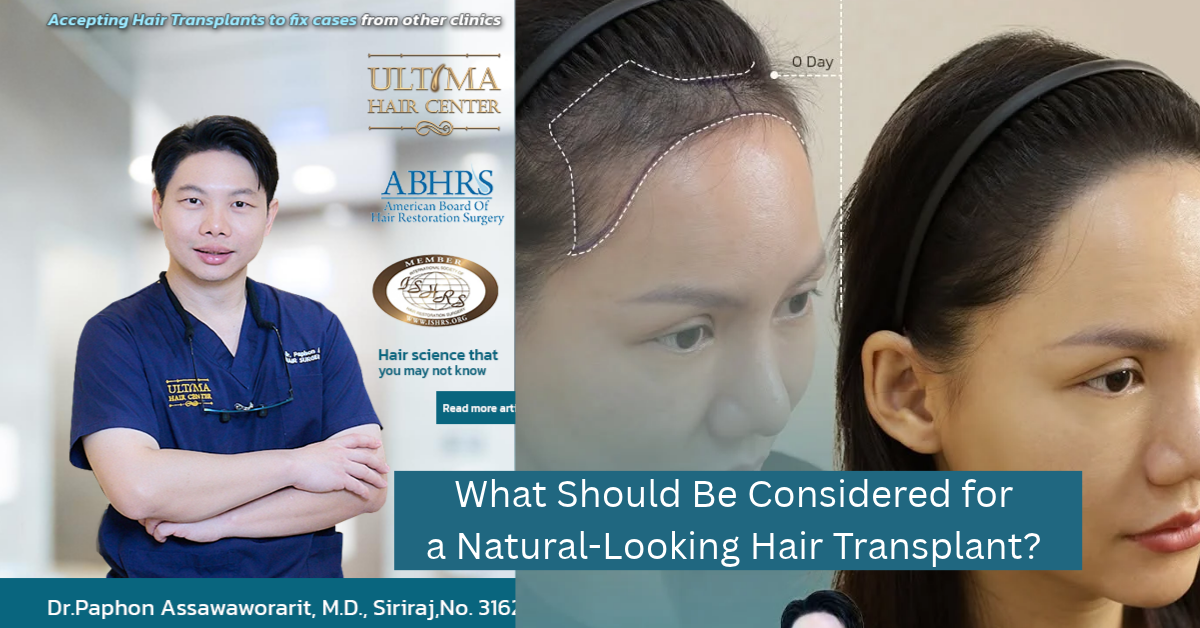
A natural-looking hair transplant does not depend solely on the number of grafts
Important factors include:
Hairline Design
The frontal hairline should be designed according to the patient’s age, facial structure, and individual hair characteristics
Graft Selection
At the Hairline, the characteristics of the grafts and the number of hairs within each graft should be considered to create an appropriate transition in density
Hair Direction and Angle
Hair direction should be consistent with the existing direction of hair in that area so that the overall appearance blends well with the original hair as it grows longer
Density Planning
It is not always necessary to create the same density throughout every area. Density should be planned according to each patient’s specific concerns and available donor resources
These are some of the reasons why quality-focused hair transplantation should place emphasis on planning and detail throughout every stage rather than focusing only on the number of grafts
 How Should You Care for Your Hair After a Hair Transplant?
Postoperative care should follow the instructions provided by the physician who performed the procedure, because specific recommendations can vary depending on the technique and individual patient characteristics
In general, patients should:
- Clean the scalp according to the doctor’s instructions
- Avoid scratching or hitting the transplanted area
- Avoid removing scabs themselves
- Avoid certain activities for the period specified by the doctor
- Take medications as prescribed
- Attend scheduled follow-up appointments
- Inform the doctor if any unusual symptoms occur
Postoperative care does not make hair grow immediately faster, but it can help minimize factors that may interfere with recovery of the transplanted area
 When Should You Return to the Doctor for Follow-Up?
Regular follow-up can be useful, especially when there are concerns about hair growth
Typical follow-up periods may include:
Around 1–3 months: Assess recovery and the shedding phase
Around 3–4 months: Begin monitoring new hair growth
Around 6 months: Assess the growth trend and developing density
Around 9 months: Evaluate more noticeable changes
Around 12 months: Assess the overall result in greater detail
This does not mean that every patient needs to wait until 12 months before seeing a doctor. If there are concerns or unusual symptoms, the patient should contact the treating physician earlier
 How Should You Choose a Hair Transplant Clinic to Improve the Chances of an Appropriate Result?
When choosing a hair transplant clinic in Bangkok, price should not be the only consideration
You should consider:
- Is the patient evaluated and the treatment plan developed by a physician?
- Is the Donor area assessed in detail?
- Is the Hairline designed specifically for the individual?
- Are the number of grafts and limitations clearly explained?
- Are realistic expectations discussed?
- Is postoperative follow-up provided?
- Are real patient results available for review?
- Are the grafts handled appropriately throughout every stage?
- Can the physician directly answer questions and follow up with the patient?
For people researching hair transplantation, checking a physician’s qualifications through professional organizations can also provide useful information when making a decision
According to information from the American Board of Hair Restoration Surgery, or ABHRS, Dr. Paphon Asawaworarit is listed in the Physician Directory at Ultima Hair Center in Bangkok, with a Verified status and certification year of 2019
 Why Is Pre-Transplant Assessment More Important Than Looking Only at the Number of Grafts?
Every patient has a different pattern of hair loss
Some people have concerns mainly around the Hairline
Others have thinning in the mid-scalp
Some experience diffuse thinning across the scalp
Others have undergone a previous hair transplant and are seeking revision treatment
Therefore, the appropriate number of grafts should not be based on a single standard number for everyone
The physician should assess both the recipient area and the Donor area, together with the potential progression of existing hair loss, in order to develop a plan that is appropriate for the available hair resources
This approach is particularly important for people seeking quality-focused hair transplantation, because the goal is not simply to add more hair. The treatment should be planned according to each person’s individual hair characteristics and long-term needs
 Ultima Hair Center Focuses on Post-Transplant Follow-Up
At Ultima Hair Center, the hair transplant approach emphasizes individual assessment before developing a treatment plan rather than applying the same graft number or treatment approach to every patient
Treatment planning considers the recipient area, existing hair characteristics, Donor area quality, Hairline, and the patient’s individual goals
The goal is to design a hair transplant plan that is appropriate for each individual so that as the transplanted hair gradually grows, the overall result blends well with the existing hair and looks natural
Another approach at Ultima Hair Center is allowing patients to communicate directly with the physician. Dr. Ming personally responds to patient messages, allowing patients to ask questions and understand the treatment approach before making a decision
For those looking for a hair transplant clinic in Bangkok and wanting to determine whether hair transplantation may be appropriate for them, an individual consultation can help assess the hair-loss problem and develop a treatment plan before making a decision. Patients can consult Dr. Ming for free
Choosing a hair transplant with an American Board-certified ABHRS physician is another factor that patients may consider when evaluating a doctor. According to ABHRS information, Dr. Paphon Asawaworarit is listed in the ABHRS Physician Directory at Ultima Hair Center in Bangkok with Verified status
 Summary: When Will Hair Start Growing Well After a Hair Transplant?
If the question is “When will my transplanted hair start growing well?”, the general timeline can be summarized as follows:
Months 0–1: Focus on recovery and caring for the transplanted area
Month 2: The area may still look thin and shedding may occur
Months 3–4: New hair may begin to appear in many patients
Months 5–6: Changes become increasingly noticeable
Months 7–9: Hair density and length gradually become more apparent
Months 10–12: The overall result can be assessed more clearly
However, the actual timeline varies from person to person. Hair does not begin growing from all grafts simultaneously, and some individuals may continue to see changes after 12 months
Therefore, if you have undergone a hair transplant and only 2–3 months have passed, you should not judge the final result based on this early period alone
The most important approach is to monitor changes over time and have the physician evaluate both the transplanted area and the Donor area
For people considering a natural-looking hair transplant, preoperative planning, graft selection, Hairline design, hair direction and density, and appropriate graft handling throughout the procedure can all contribute to the overall result
If you would like information about an individualized hair transplant plan, you can consult Dr. Ming for free and speak directly with the physician before making a decision
 Frequently Asked Questions About Hair Growth After a Hair Transplant
How Many Months Does It Take for Transplanted Hair to Start Growing?
New hair can generally begin to appear around months 3–4, although the timing varies between individuals. During the early stage, newly emerging hairs may still be fine and short
Is It Abnormal If Hair Has Not Grown 3 Months After a Hair Transplant?
Not necessarily. Three months is still an early stage of the growth process. Many people begin to see more noticeable changes from around month 4 onward
Will I See Results After 6 Months?
In general, changes can become more noticeable around 6 months, but this may not yet represent the final result. Continued follow-up through months 9–12 is recommended
How Many Months Until the Full Result Is Visible?
Many people can assess the overall result around 9–12 months, although the actual timeline varies. Some areas may develop more slowly than others
Why Does Hair Shed During the Early Period After a Hair Transplant?
Early shedding can occur because the transplanted hairs enter a resting phase before new growth begins
The hairs attached to transplanted grafts may shed after the procedure. This does not necessarily mean that the entire graft has been lost. New growth can occur later according to the natural hair cycle
Why Doesn’t Every Transplanted Graft Grow at the Same Time?
Each graft has its own hair-growth cycle, so different grafts can begin growing at different times. This can result in density increasing gradually rather than all at once
What Should I Do If My Hair Is Growing Slowly After a Hair Transplant?
Follow-up photographs should be taken at regular intervals and scheduled appointments should be attended. If there are concerns, a physician can evaluate both the transplanted area and the Donor area to assess the growth trend
Why Is the Donor Area Important in Hair Transplantation?
The Donor area is the source from which hair grafts are harvested for transplantation. Its density, hair quality, available graft supply, and potential for future thinning should therefore be evaluated before developing a hair transplant plan
Does a Natural-Looking Hair Transplant Depend Only on the Number of Grafts?
No. The number of grafts is only one important factor. Hairline design, graft selection, hair direction, angle, density, and graft distribution should also be considered according to each individual patient

Contact Us:
Dr. Paphon Asawaworarit (Dr. Ming)
Physician Directory ABHRS
Ultima Hair Center (Thailand Website)
Ulitma Hair Transplant (English Website)
Line: @ultima
E-mail: ultimahaircenter@gmail.com
