

When Will Hair Start Growing After a Hair Transplant? When Does New Hair Start Growing and When Will the Results Become Noticeable?
Many people who decide to undergo a hair transplant have an important question after the procedure:
“When will my transplanted hair start growing well?”
Some people become concerned during the first month because the transplanted area still looks thin, or because hairs that were visible immediately after the procedure begin to shed. Others reach 3–4 months after the procedure and feel that not much hair has grown yet, leading them to wonder whether the hair transplant will achieve the expected results
In reality, hair growth after a hair transplant takes time. The hair grafts transplanted into the recipient area do not immediately become thicker or produce mature hair after surgery. During the early stage, the visible hair shafts may shed before new hairs begin entering the growth phase. The overall result then gradually becomes more noticeable over the following months
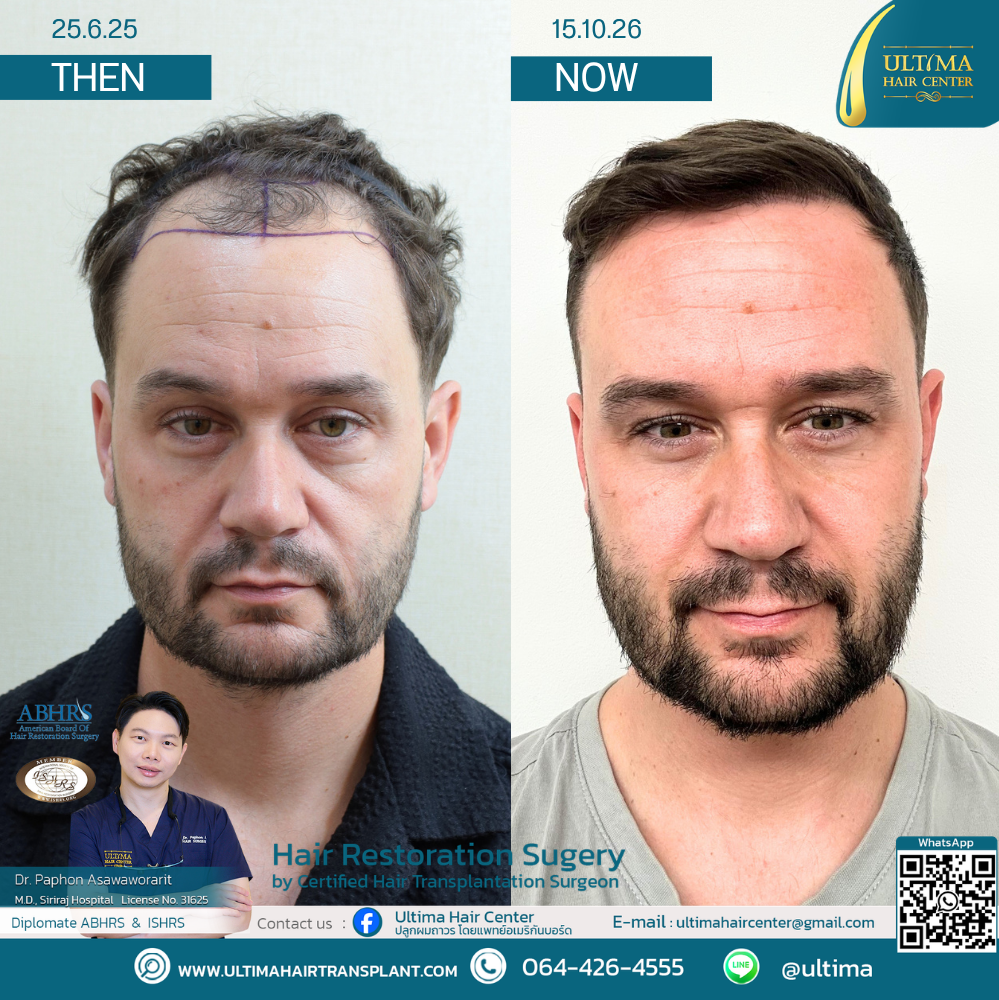
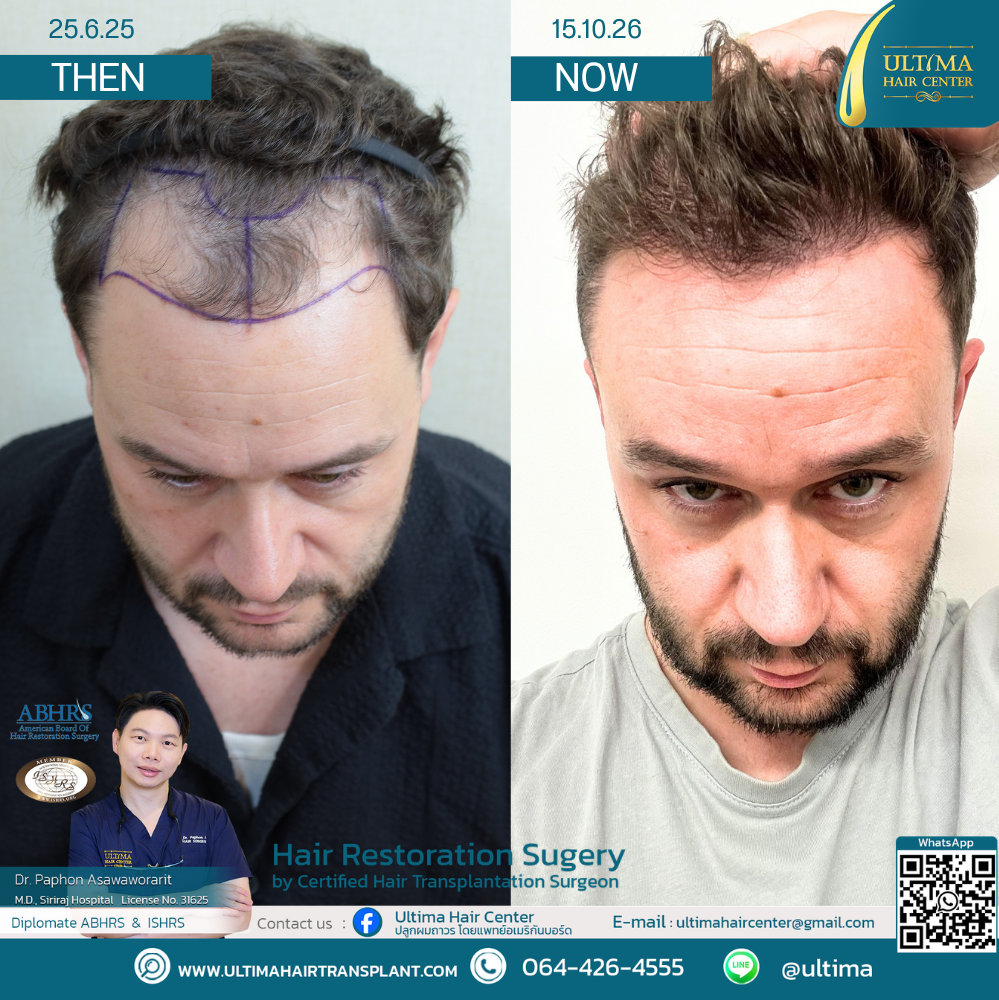
In general, newly transplanted hair may begin to show new growth around 3–4 months after a hair transplant. However, the speed and pattern of growth vary from person to person. Overall results usually require several months to become clearer, with approximately 9–12 months often needed before the outcome can be evaluated more clearly
Therefore, if you have undergone a hair transplant only 1–3 months ago and feel that “nothing is growing yet,” you should not immediately conclude that the procedure has been unsuccessful
 When Will Hair Start Growing Well After a Hair Transplant?
New hair often begins to emerge around months 3–4 and then gradually increases in length and density over the following months
However, the meaning of “growing well” can differ from person to person
For some people, it may mean:
- New hairs have started to appear
- The transplanted area is beginning to look fuller
- The hairs have grown long enough to style
- Hair density is becoming more noticeable
- Or the result is beginning to approach the final outcome
 Each of these stages occurs at a different time
The hairs attached to transplanted grafts may shed during the early period. In general, it can take approximately 3 months before new growth begins, while the overall result may take up to around 1 year to become much clearer
Therefore, follow-up after a hair transplant should be assessed according to the timeline of hair growth. Images taken during the first few months should not be used alone to judge the final result
 How Does Hair Growth Progress After a Hair Transplant?
Months 0–1 After a Hair Transplant
The first month after a hair transplant is primarily a recovery period for the scalp. It is not the stage when patients should expect to see a large amount of new hair growth. During this period, it is possible to experience:
- Redness in the transplanted area
- Small scabs
- Swelling in some patients
- Visible hairs attached to the transplanted grafts
- Some shedding of the transplanted hairs
- The transplanted area still appearing relatively thin
An important point is that shedding of some hairs during the early period does not mean that all of the hair grafts have been lost
After the grafts have been transplanted, the visible hair shafts above the skin may shed as part of the natural hair cycle, while the graft structures beneath the skin can remain in place and enter a resting phase before producing new hair
Therefore, during the first month, the priority should be following the doctor’s postoperative instructions and avoiding unnecessary disturbance to the transplanted area
 Months 2–3 After a Hair Transplant: Why Does the Transplanted Area Still Look Bare?
Around months 2–3, many patients begin to wonder:
“Why hasn’t my hair grown after the transplant?”
One important reason is that the transplanted grafts may still be in a resting phase of the hair cycle
After the original hairs attached to the grafts shed, the transplanted area may even appear thinner than it did immediately after the procedure. This can understandably cause concern
At this stage, some people may begin to notice very small hairs emerging, while others may not see obvious growth yet
Therefore, months 2–3 are generally still too early to determine whether a hair transplant has produced a good or poor result
Hair does not grow from all grafts simultaneously on the same day because each graft has its own growth cycle
 Months 3–4 After a Hair Transplant: New Hair Starts to Appear
Around 3–4 months after a hair transplant, many patients begin to notice new hairs appearing
Some may look like very fine, short hairs or small, soft strands
At this stage, the hair may still be:
- Fine
- Short
- Growing at different rates
- Not yet dense
- Growing in directions that are not yet fully uniform
These characteristics can occur during the early stage of new hair growth
According to information from the International Society of Hair Restoration Surgery, or ISHRS, transplanted hair can take several months before the final result becomes apparent. Individual differences also mean that there is no single exact timeline that applies to everyone
Therefore, when new hairs begin appearing around months 3–4, this should be viewed as the beginning of visible change rather than the final result
 Months 5–6 After a Hair Transplant: Hair Becomes More Noticeable
Around months 5–6, changes often become easier to notice
The newly growing hairs gradually become longer, and in many patients, the number of visible hairs becomes more noticeable compared with months 2–3
However, hair density may still not have reached its final level
Some areas may appear to grow faster than others, such as:
- The frontal area
- The Hairline
- The mid-scalp
Therefore, one particular area should not be used alone to judge the overall result
Another factor affecting how “well” the hair appears to have grown is the original hair characteristics. Thicker or naturally curly hair may create the appearance of greater density compared with fine, straight hair, even when the number of grafts is similar
 Months 7–9 After a Hair Transplant: The Results Become More Noticeable
Around months 7–9, many patients begin to see a much clearer difference compared with their appearance before the hair transplant
The newly grown hairs become longer, and some begin to develop characteristics that look more similar to mature hair
At this stage, it becomes easier to assess:
- The appearance of the Hairline
- Density in the frontal area
- Graft distribution
- Density in the mid-scalp
- Whether the existing hair around the transplanted area is maintaining its density
However, some patients may continue to experience changes after month 9
This can be particularly relevant in the mid-scalp area, which may appear to develop more slowly than the frontal area in some individuals
 Months 10–12 After a Hair Transplant: The Overall Result Becomes Clearer
Around months 10–12, the overall result of a hair transplant can usually be assessed much more clearly
The full outcome of a hair transplant may take approximately 1 year to become apparent
However, 12 months should not be treated as an absolute rule for everyone. Hair growth depends on multiple factors
Some patients may achieve a very good-looking result before 12 months, while others may continue to experience changes afterward, particularly in areas where density is higher or the growth cycle progresses more slowly
Therefore, the result should be evaluated based on:
Number of grafts + hair growth + hair shaft caliber + density + design + distribution + condition of the existing hair
rather than simply asking whether hair has grown or not
 Why Does Hair Grow Faster in Some People but More Slowly in Others?
This is a very common question because patients can have different outcomes even when they undergo a hair transplant around the same time. Important factors include:
1. Individual Hair Growth Cycles
Hair naturally goes through different growth phases, and individual grafts do not necessarily enter the growth phase at the same time
Therefore, some hairs growing earlier than others is a normal possibility
2. Graft Quality
The grafts used for transplantation need to be handled appropriately from the moment they are harvested from the Donor area, through graft storage and preparation, until they are transplanted into the recipient area
These factors are important for graft survival and subsequent hair growth
3. Donor Area Quality
Not everyone has the same quality of Donor area
A physician should therefore assess:
- Hair density
- Hair shaft caliber
- Number of hairs per graft
- Hair characteristics
- The area from which grafts can be safely harvested
- The potential for future thinning of the Donor area
before developing a hair transplant plan
4. Number of Grafts and Overall Planning
Hair transplantation is not simply about increasing the number of grafts. The grafts need to be planned according to the areas that require treatment
If the recipient area is extensive but the available graft supply is limited, the physician may need to prioritize the areas that should receive grafts
5. Hairline Design and Graft Distribution
Creating the appearance of greater density does not simply mean placing as many grafts as possible into one area
Appropriate graft distribution, together with hair direction and angle, plays an important role in the overall result
6. Condition of the Existing Hair
If the existing hair around the transplanted area continues to thin, the overall appearance may change even when the transplanted grafts are growing well
This is why evaluating the overall hair-loss pattern is important rather than focusing only on the transplanted area
 Is Hair Shedding After a Hair Transplant Normal?
Shedding of the hairs attached to transplanted grafts can occur during the early period after a hair transplant
This phenomenon is sometimes referred to as shock loss or shedding, although it should be distinguished from actual damage to the grafts
The shedding of hair above the skin does not necessarily mean that the graft beneath the skin has been completely lost
Therefore, patients should not become overly concerned if the transplanted area appears thinner during the early period after initially showing visible hairs
However, if unusual symptoms occur, such as progressively increasing pain, abnormal swelling, pus, wounds, or any other issue that causes concern, the patient should contact the treating physician directly
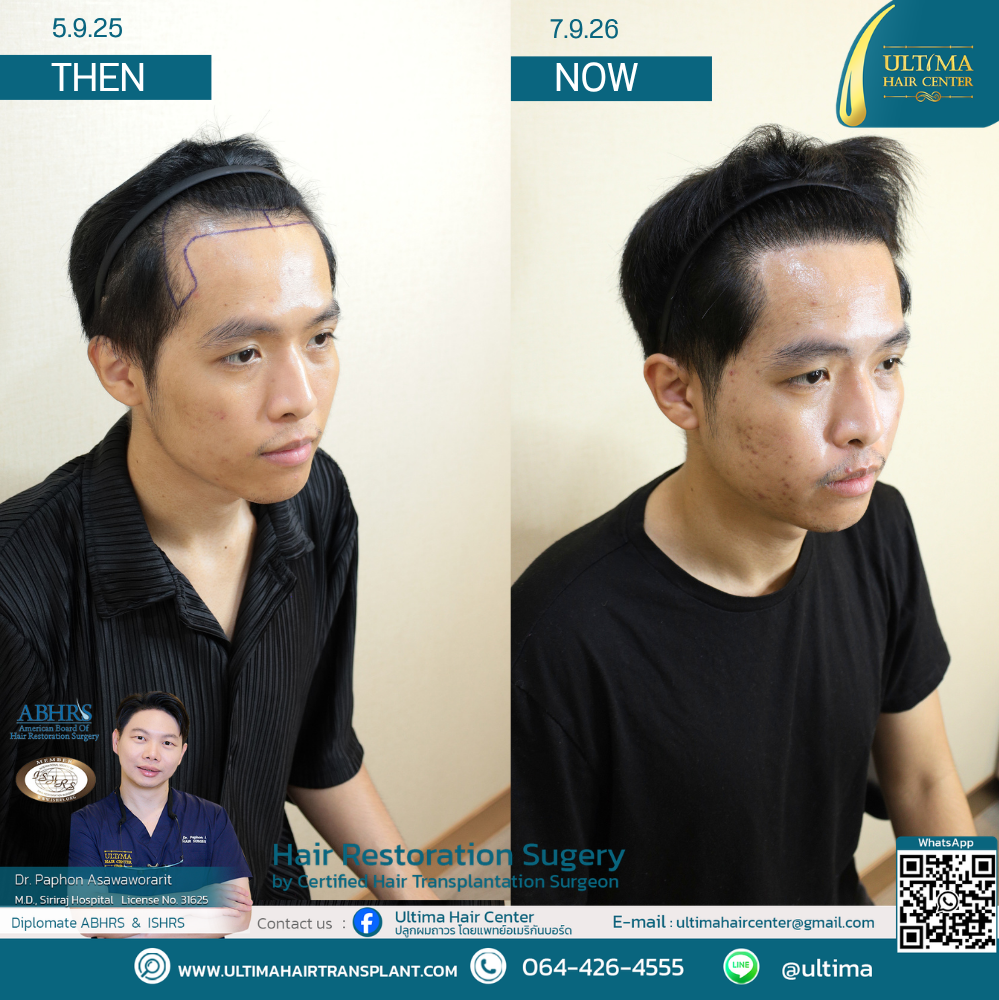 What Should You Do If Your Hair Has Not Grown 3 Months After a Hair Transplant?
If you are 3 months after a hair transplant and feel that your hair has not started growing, the first thing to remember is do not immediately conclude that the hair transplant has produced a poor result, because 3 months is still an early stage of the growth process
It can be helpful to take follow-up photographs at regular intervals, such as:
- Before the hair transplant
- 1 month
- 3 months
- 6 months
- 9 months
- 12 months
Taking photographs from similar angles, under similar lighting, and at a similar distance makes comparison more useful than relying only on what you see when looking in the mirror
If you have concerns, a physician can evaluate both the transplanted area and the Donor area to determine whether the growth pattern is progressing appropriately or requires further monitoring
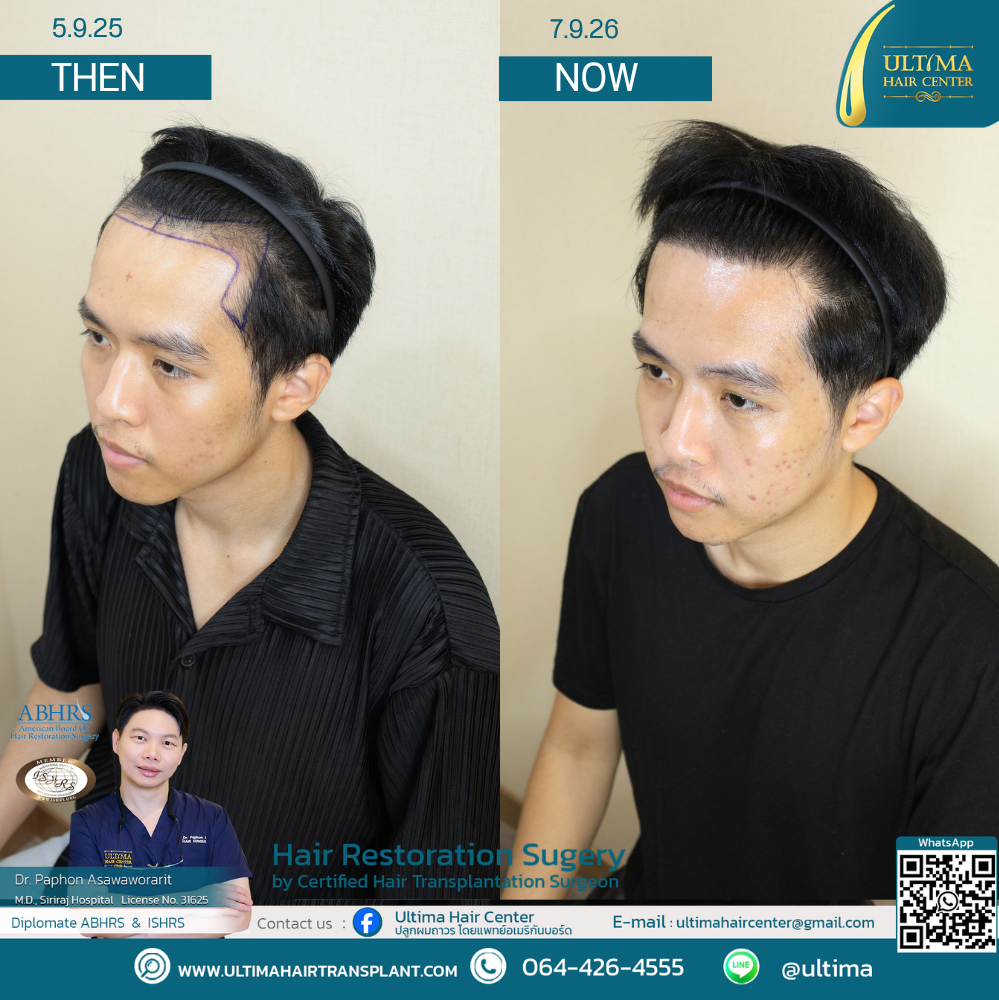 If Hair Is Still Not Dense at 6 Months, Is That Normal?
Month 6 is a stage when many people begin to see clearer changes, but it does not necessarily represent the final result
The key factor is the trend of change
If new hairs are continuing to emerge but the area has not yet reached its full density, the hair may still be developing
Evaluation should therefore involve comparison between pre-transplant and follow-up photographs rather than directly comparing the density at month 6 with another person’s result
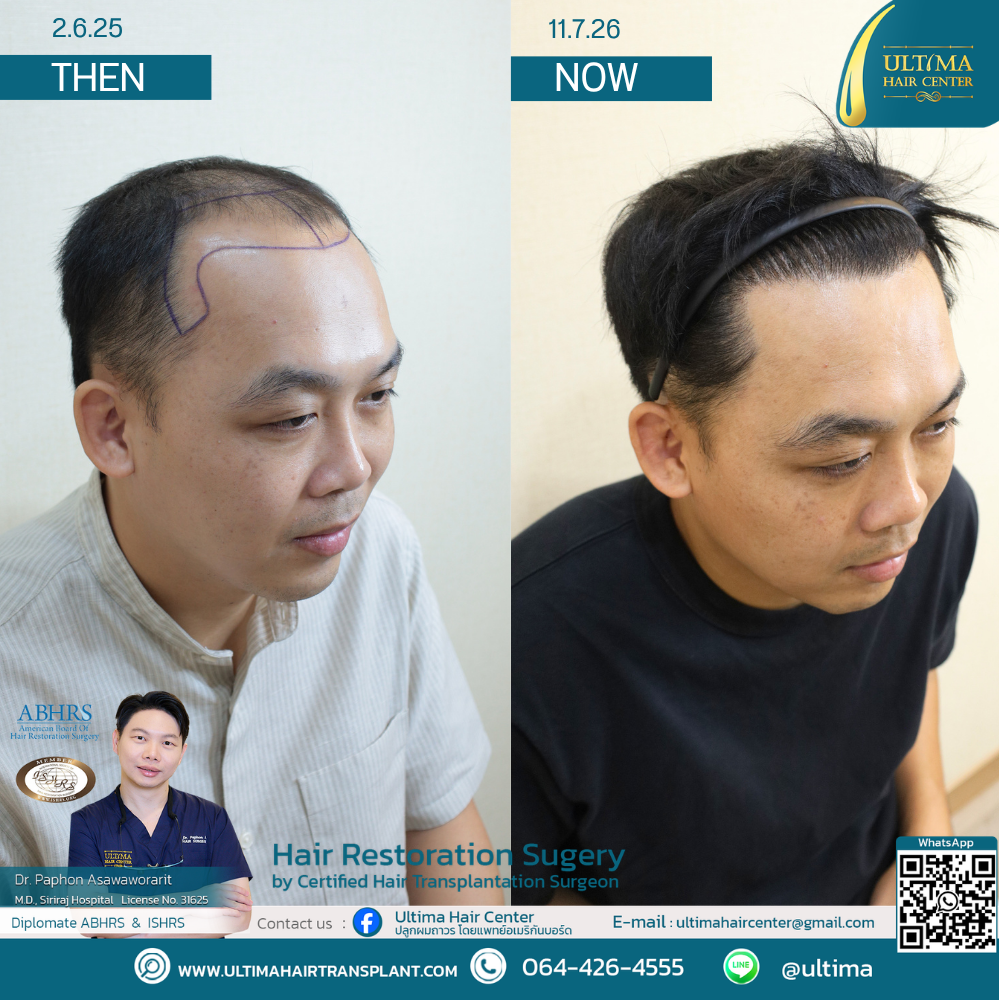
Contact Us:
Dr. Paphon Asawaworarit (Dr. Ming)
Physician Directory ABHRS
Ultima Hair Center (Thailand Website)
Ulitma Hair Transplant (English Website)
Line: @ultima
E-mail: ultimahaircenter@gmail.com
