

Why Do Many Patients Choose Dr. Ming at Ultima Hair Center?
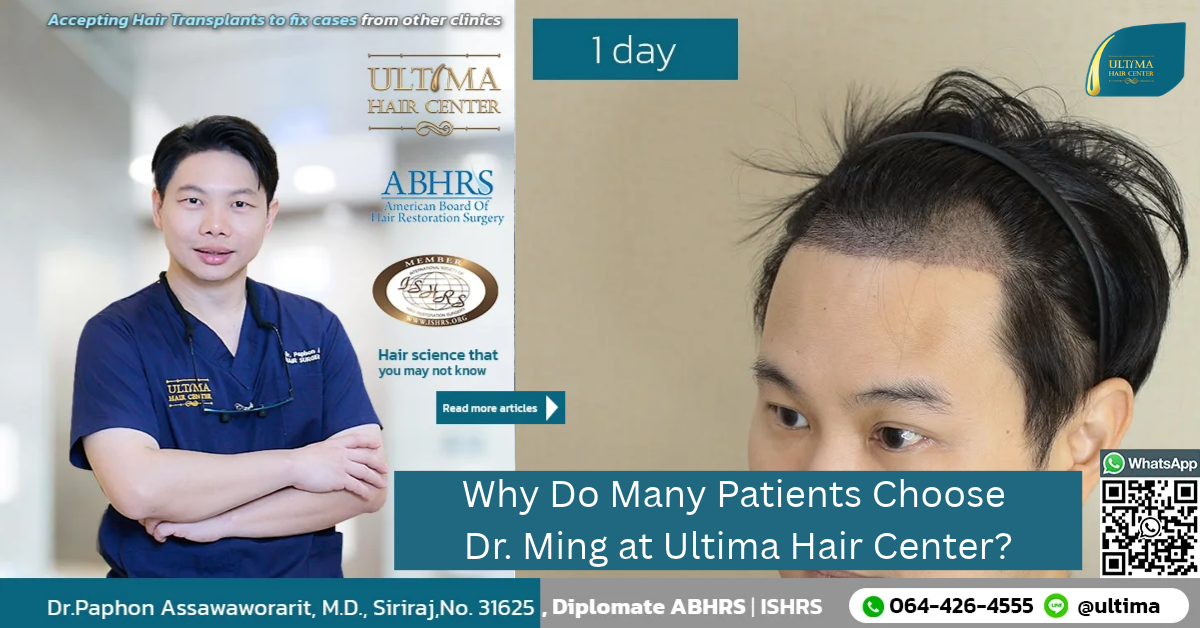
Learn about the key reasons, from ABHRS certification and Donor area planning to hair transplant reviews and patient care
For many people, deciding to undergo a hair transplant is not simply a matter of finding the lowest price. Hair transplantation involves several important factors, including scalp and hair health, Hairline design, Donor area management, the number of available grafts, and long-term treatment planning
Therefore, before choosing a hair transplant clinic in Bangkok, many patients do not simply ask, “How much does a hair transplant cost?” They also want to know who will evaluate their hair loss, who will develop the treatment plan, what qualifications the physician has, whether they can communicate directly with the doctor, and whether there will be follow-up care after the procedure
These are some of the reasons why Ultima Hair Center places strong emphasis on the idea that good hair transplantation should begin with medical evaluation and treatment planning by a physician, rather than starting with a predetermined graft number or price alone
For people who are searching for hair transplant reviews or comparing several clinics, this article explains why some patients choose to consult with and undergo hair transplantation with Dr. Ming at Ultima Hair Center, as well as the factors that should be considered before choosing a clinic
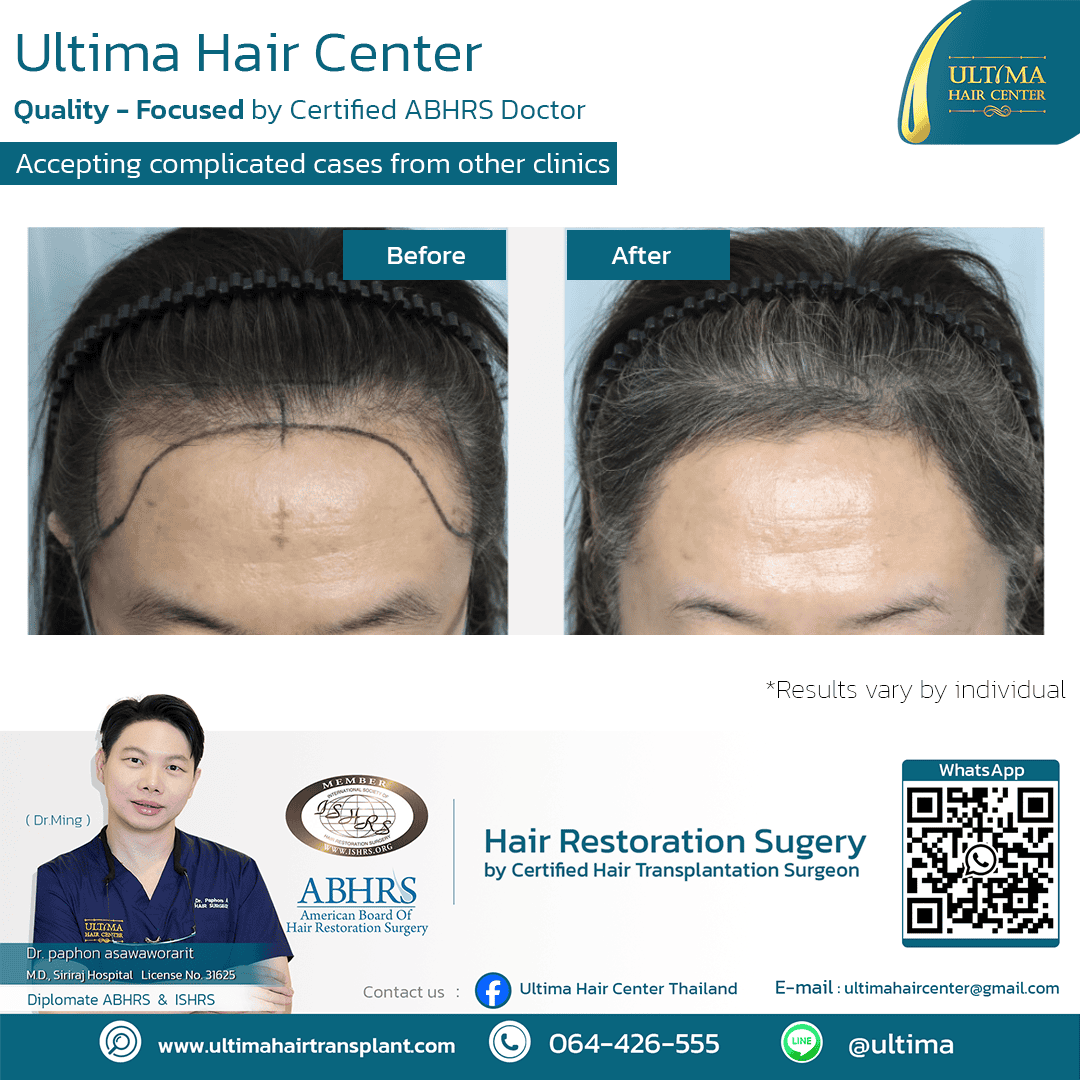 1. Hair Transplantation Should Start with the “Physician,” Not the Number of Grafts
One of the most important questions before deciding to undergo a hair transplant is: Who will evaluate the problem and develop the treatment plan?
Guidance for patients from the International Society of Hair Restoration Surgery (ISHRS) emphasizes that consultation with a hair restoration physician is an important part of the process, as patients should discuss their goals, expectations, and treatment options in detail before making a decision
Hair transplantation should therefore not be viewed simply as a question of “How many grafts do I need?” Instead, several factors should be considered:
- What is causing the hair loss?
- Which areas should be treated?
- How should the Hairline be designed?
- What is the potential of the Donor area?
- How many grafts should be used?
- How should the Donor area be managed?
- Is there existing hair that may continue to thin?
- How should the treatment be planned for the long term?
For this reason, allowing patients to communicate directly with a physician before making a decision is an important part of the approach at Ultima Hair Center
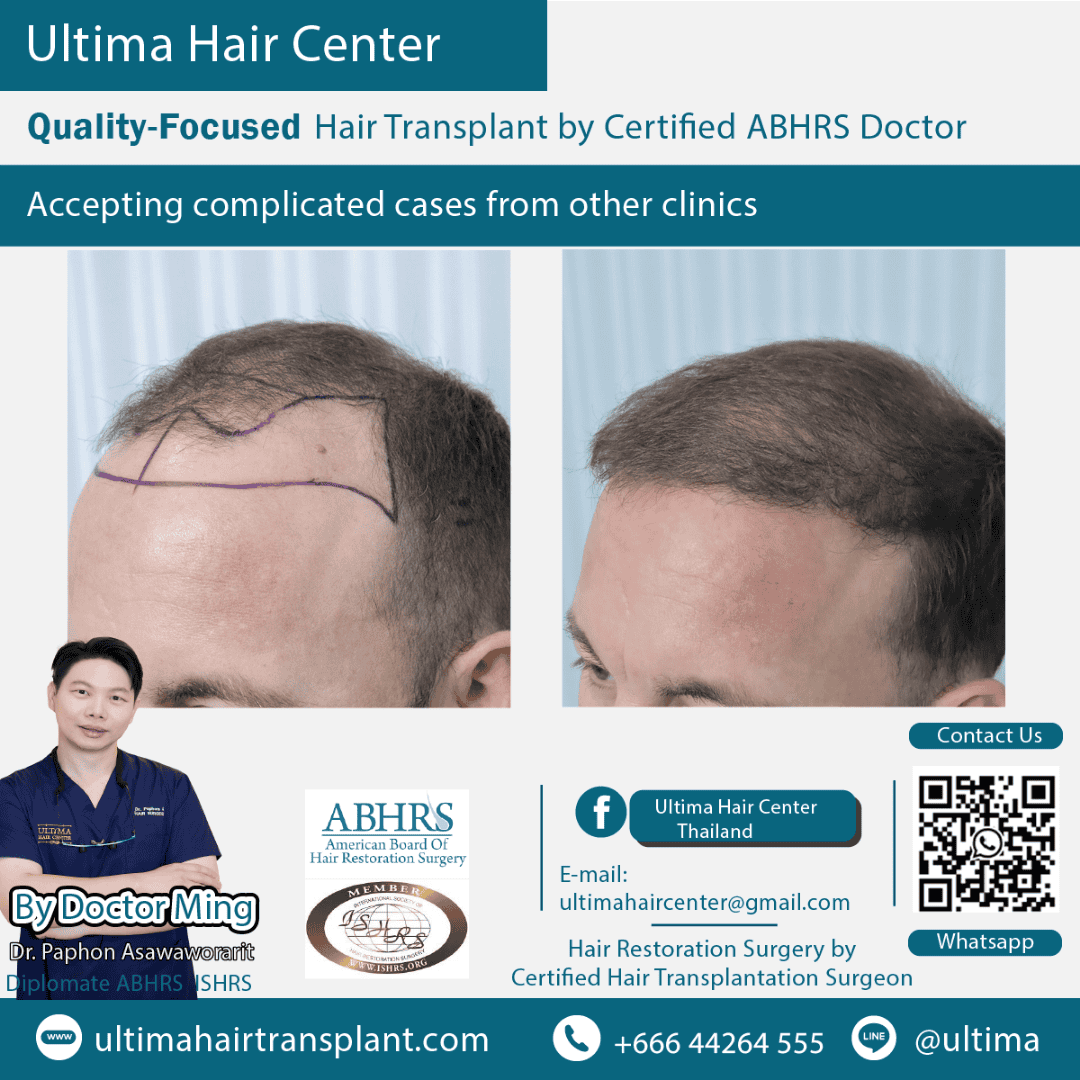 2. Dr. Ming Places Importance on Direct Communication with Patients
One aspect that patients at Ultima Hair Center value is the opportunity to communicate with the physician before deciding to undergo a hair transplant
The clinic’s approach is that patients should have an opportunity to explain their concerns directly to the doctor and receive information about possible treatment approaches from a physician
Dr. Ming personally responds to patient messages, so that communication before a hair transplant is not focused simply on making a sale, but on understanding the patient’s concerns and providing an initial assessment of the questions or issues they may have
Of course, communication through chat cannot completely replace an in-person medical examination. However, it can help patients better understand the process and prepare questions for their consultation with the physician
Patients can therefore consult Dr. Ming for free to discuss their concerns initially and determine whether a hair transplant may be appropriate or whether additional evaluation is needed
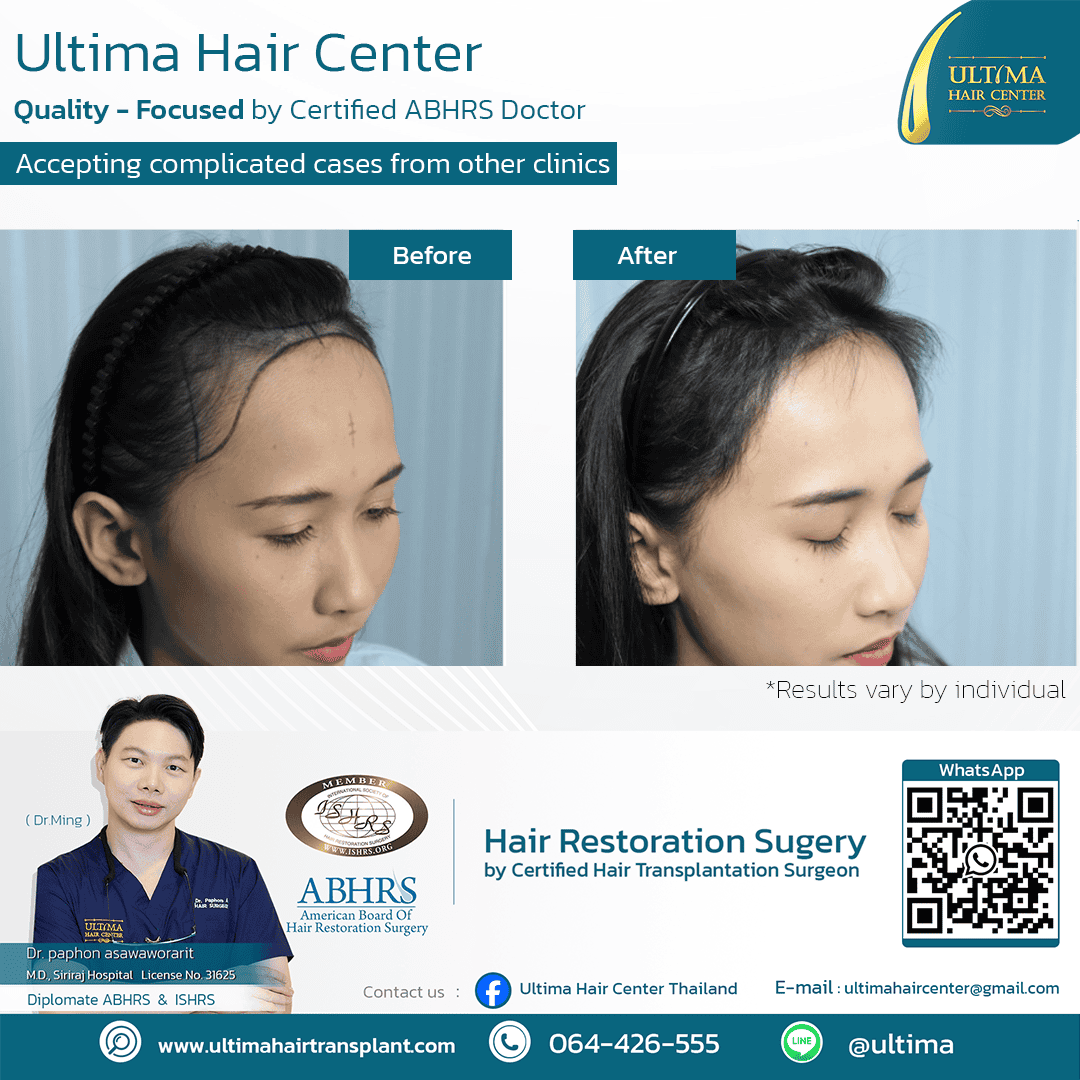 3. A Physician’s Qualifications Can Be Verified
Another factor patients consider when choosing a hair transplant clinic is the physician’s qualifications and professional certification
Dr. Paphon Asawaworarit, also known as Dr. Ming, is the physician at Ultima Hair Center and is listed in the Physician Directory of the American Board of Hair Restoration Surgery (ABHRS), with a Verified status and Certification Year 2019 shown on the profile
Therefore, communicating that patients can undergo a hair transplant with an American Board-certified ABHRS physician is not simply a marketing phrase. The physician’s information can be checked through the ABHRS database
ABHRS states that the Diplomate certification process involves requirements related to training, post-training experience, and written and oral examinations in hair restoration surgery
For patients, checking a physician’s qualifications is therefore another important step to take before choosing a clinic, regardless of which clinic they are considering
4. Hair Transplantation Does Not Have One Answer for Everyone
Every patient has different hair characteristics and different patterns of hair loss
Some people primarily have Hairline recession, while others have thinning in the mid-scalp area. Some patients may have concerns affecting several areas at the same time
The Donor area also varies from person to person in terms of the amount of available hair, density, hair characteristics, and the amount of hair that can be safely harvested for transplantation
Therefore, the number of grafts that may be appropriate for one patient may not be appropriate for another
Quality-focused hair transplantation should therefore emphasize individualized treatment planning based on the patient’s condition, rather than simply trying to maximize the number of grafts used
5. The Donor Area Should Be Considered Before the Hair Transplant Begins
The Donor area is the region from which hair grafts are harvested for transplantation
Many people focus mainly on the area where the hair will be transplanted. However, the Donor area is equally important and should be carefully planned because the available hair resources in this area are limited
Good treatment planning therefore needs to consider both “where the grafts will be placed” and “where the grafts will be harvested from”
Using more grafts than necessary during the first procedure may place greater limitations on future treatment planning
For this reason, evaluation of the Donor area should be an important part of preoperative planning rather than simply an additional step performed on the day of the procedure
 6. There Is No Single Hairline Formula for Everyone
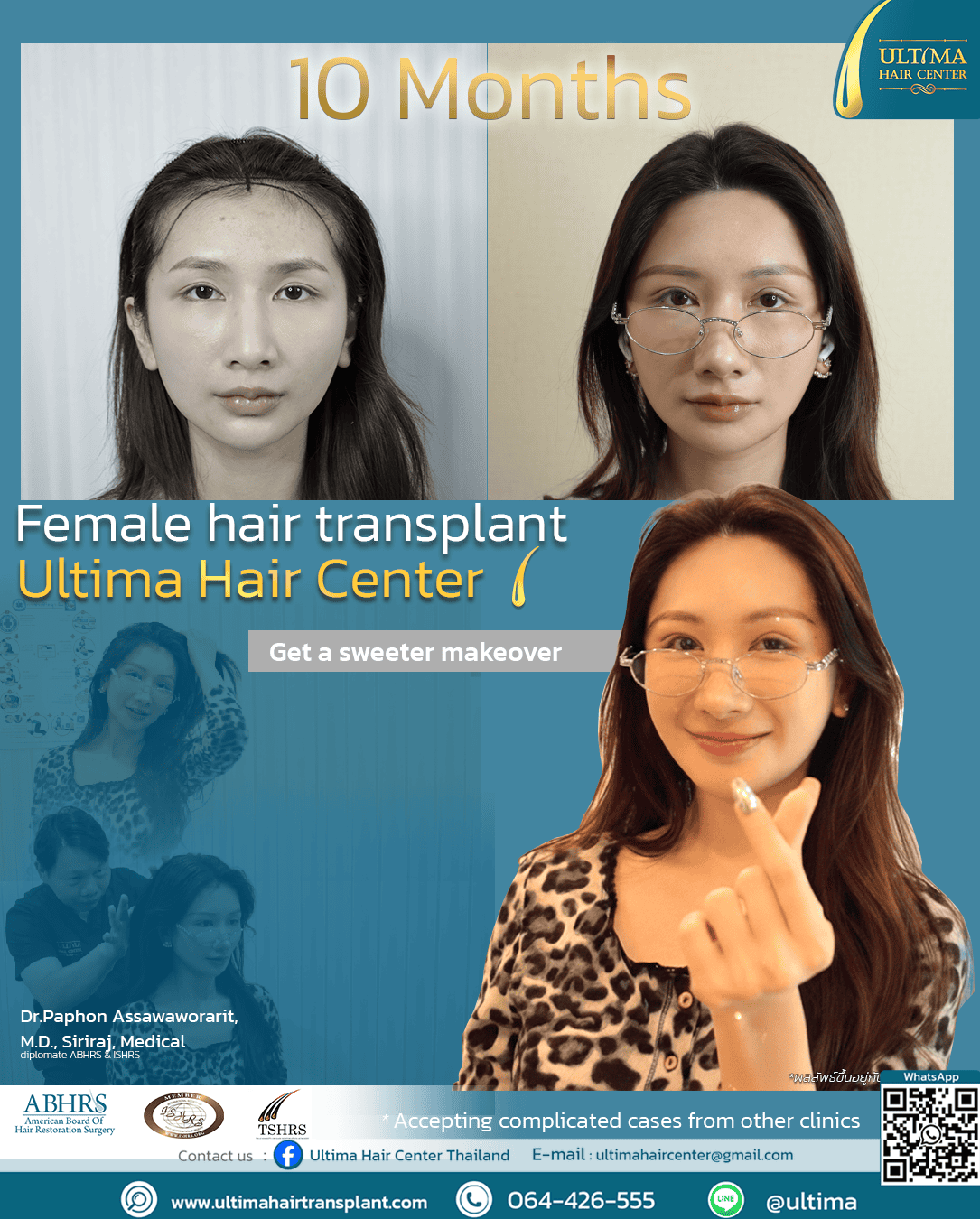
Hairline design is one of the factors that can significantly influence the overall appearance of a hair transplant result
A Hairline that is suitable for one person may not be suitable for another because several factors need to be considered, including facial structure, age, hair characteristics, the degree of hair loss, and how the hair may change in the future
Designing a very low Hairline may look attractive initially, but it may require more grafts and could affect the ability to plan other areas in the future
On the other hand, a Hairline that is appropriately designed according to the patient’s facial features and available grafts may allow the Donor area to be managed more efficiently
This is why achieving a natural-looking hair transplant does not simply mean creating the lowest possible Hairline or using the largest number of grafts. It means designing a result that is appropriate for the individual patient
7. Can You Ask the Physician Questions Directly?
Another point that should not be overlooked is: “Who will answer your questions?”
This is a question that can be asked of any hair transplant clinic, not just Ultima Hair Center
For patients comparing several clinics, it may be useful to ask a simple question:
“Can I communicate directly with the physician?”
Before or after a hair transplant, if you have questions or need additional information, can you speak directly with the physician? Or do you need to communicate through an administrator or sales representative who then passes the information to the doctor? Alternatively, will the administrator or sales representative answer the questions themselves?
This is another factor worth considering when choosing a hair transplant clinic
The answer may provide a clearer understanding of how each clinic approaches communication and patient care
 8. Treatment Planning Should Be More Important Than Package Sales
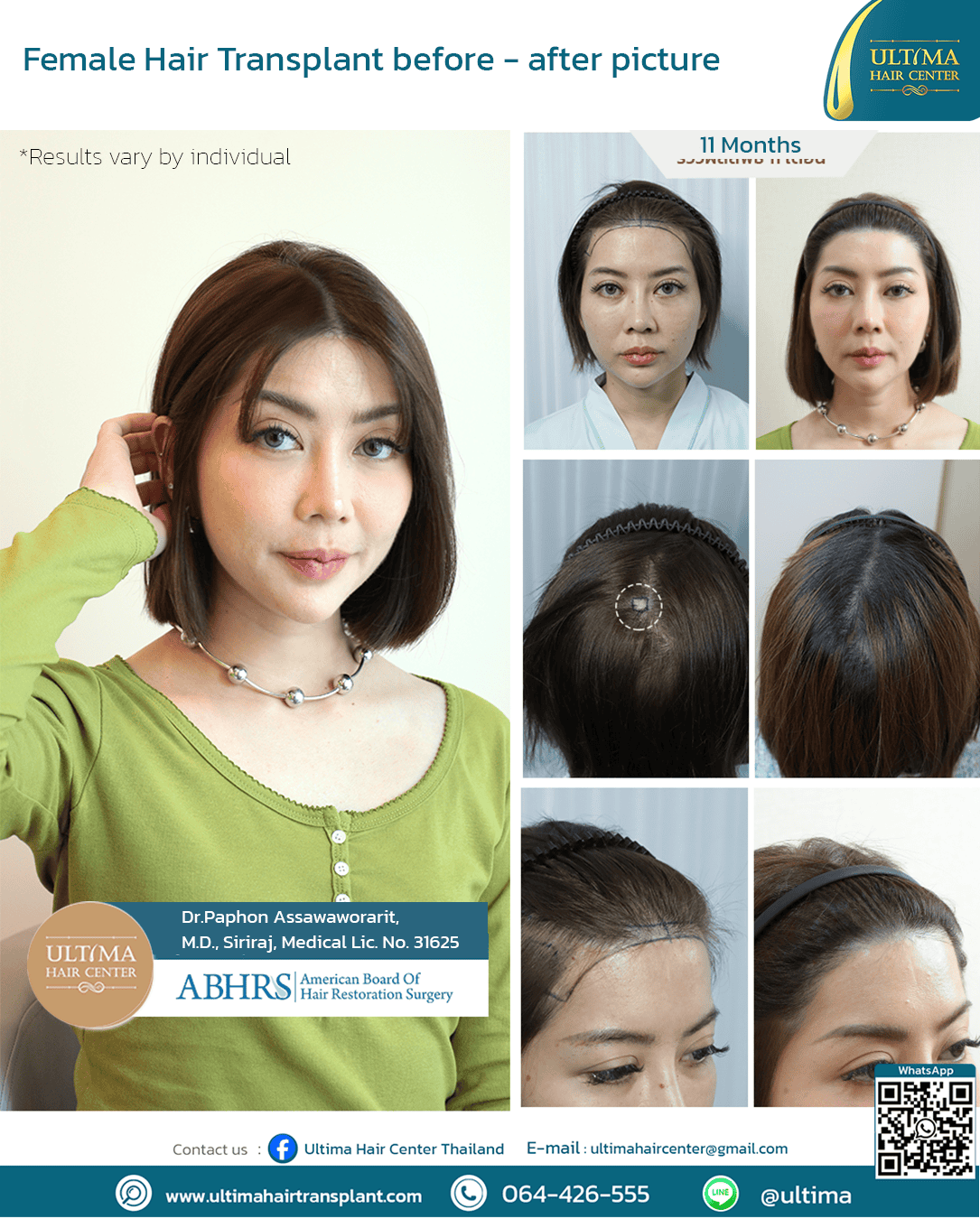
Hair transplantation is a process that requires consideration of multiple factors. Choosing a clinic should therefore not be based solely on promotions or price per graft
Before making a decision, patients may want to ask:
- Who evaluates the patient and develops the treatment plan?
- Approximately how many grafts will be used, and why?
- Which areas will be transplanted?
- How will the Donor area be managed?
- Why is the selected technique appropriate for the patient?
- What are the limitations and potential risks?
- What postoperative care is required?
- Will there be follow-up after the hair transplant?
This type of information can be more useful than simply comparing which clinic offers the lower price
 9. Hair Transplant Reviews Can Be Useful, but They Should Be Read Carefully
Before making a decision, many patients search for hair transplant reviews on Google, Facebook, YouTube, TikTok, or clinic websites
Reviews can provide insight into the experiences of other patients, but ratings and comments alone should not be the only basis for making a decision
Rather than focusing only on phrases such as “excellent” or “very impressed,” patients should look for information such as:
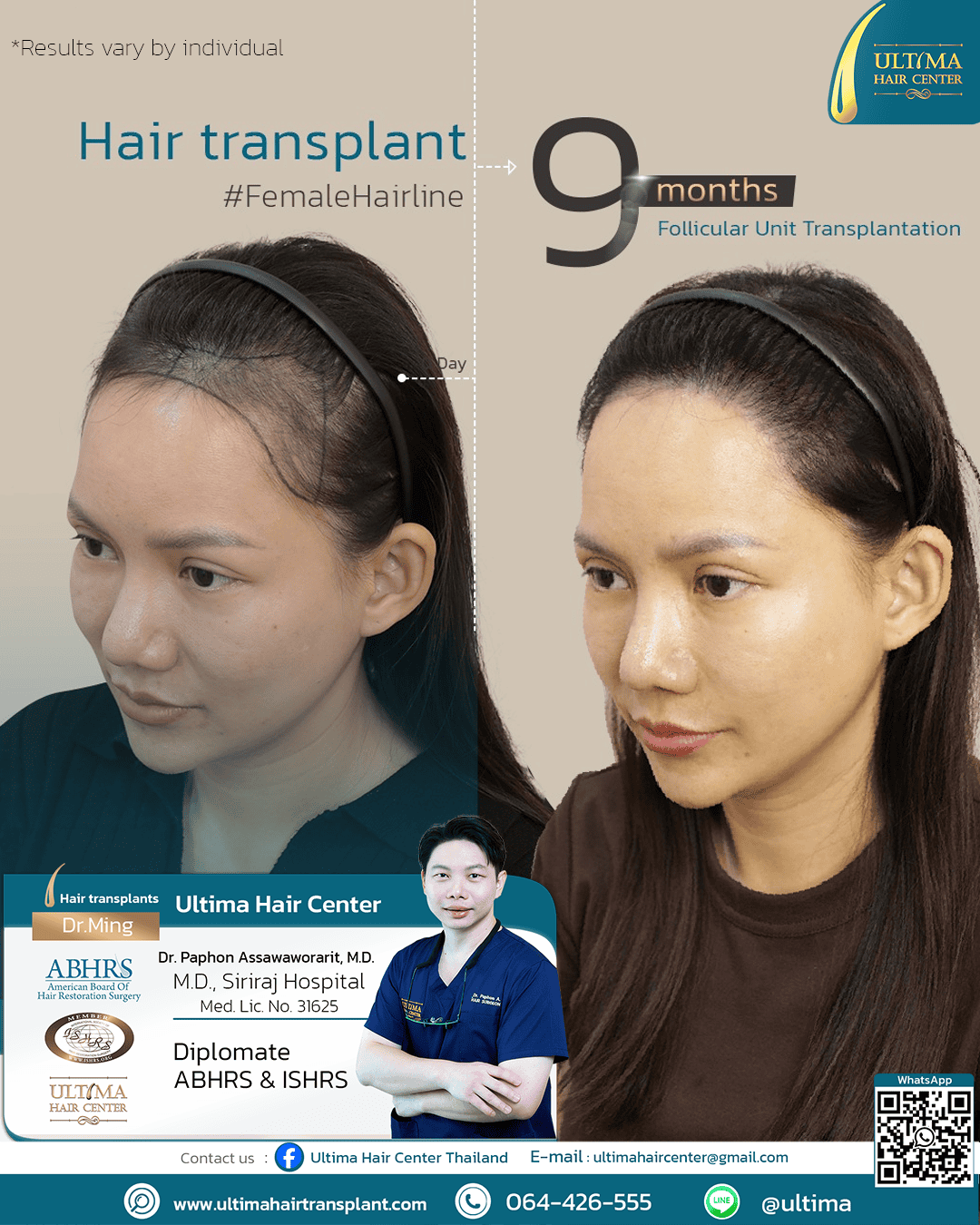
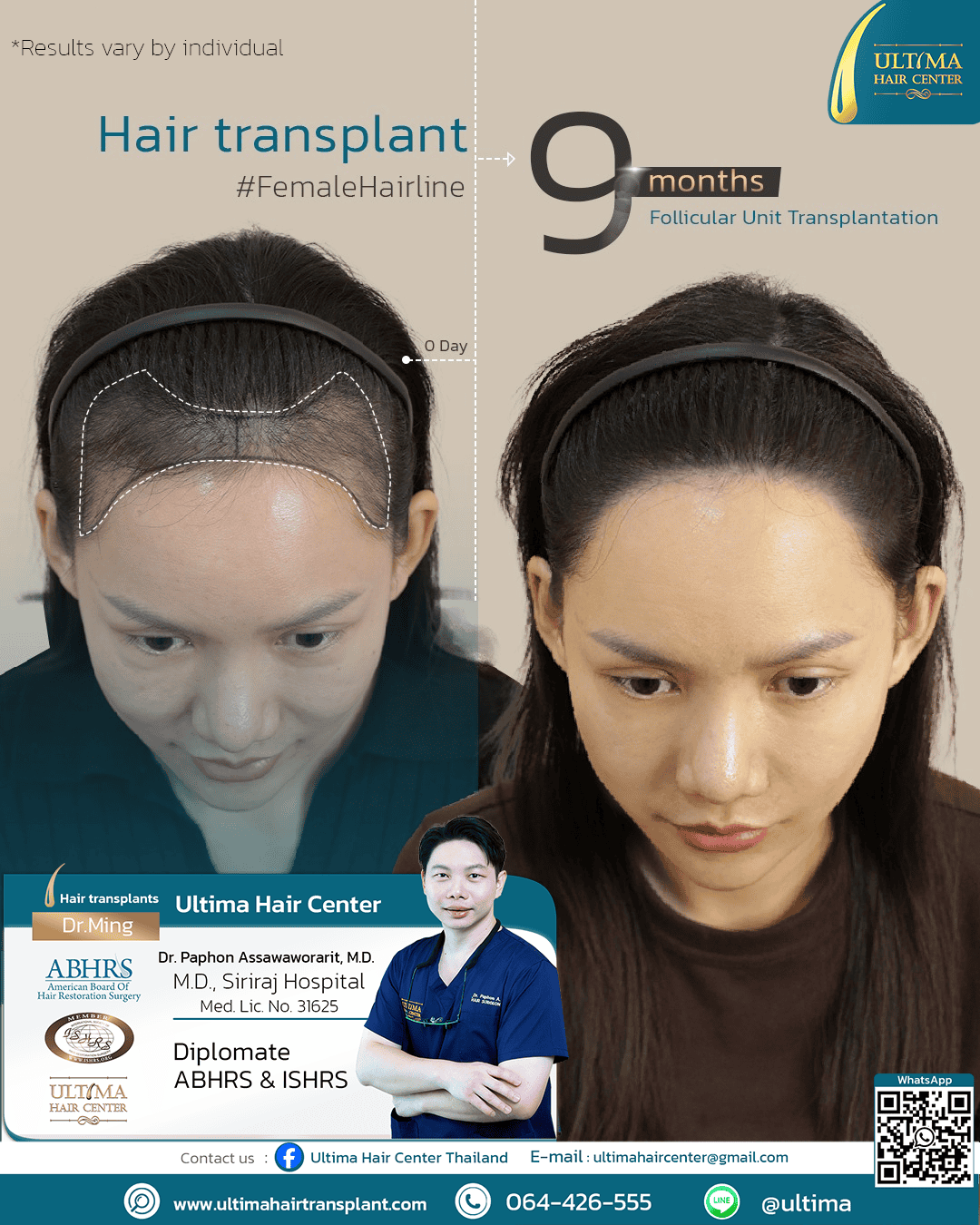
- Are Before & After photos provided?
- When were the photos taken?
- Are there photos from multiple angles?
- Is the number of grafts stated?
- Which areas were treated?
- Is there information about the Donor area?
- How long was the patient followed after the procedure?
- Is the patient’s situation similar to your own?
Reviewing multiple cases can help patients understand that hair transplant results vary from person to person. Another patient’s result should not be treated as a guarantee that you will achieve exactly the same outcome
 10. What You See in a Hair Transplant Review May Not Show the Entire Process
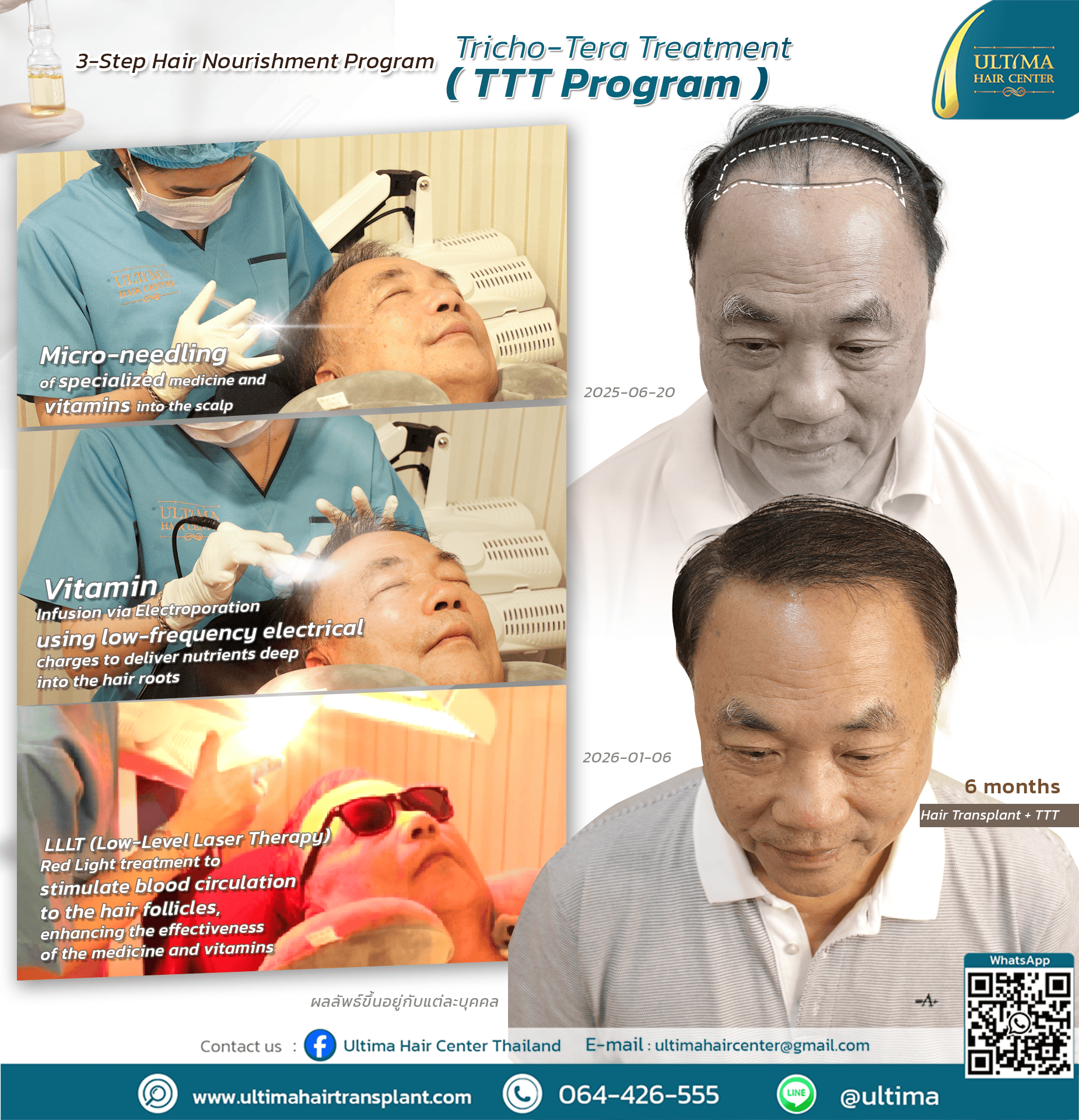
Before & After photos can be useful, but photographs alone may not answer every question about the treatment process
For example, a postoperative photograph may look very good, but patients should also consider:
- Who designed the Hairline?
- Who evaluated the Donor area?
- How many grafts were used?
- How long after the procedure was the photograph taken?
- Was more than one procedure performed?
- Did the patient use medication or receive other treatments?
ABHRS itself requires supporting documentation for certain certification pathways that includes information about cases, graft numbers, surgical details, and Before & After photographs. This reflects the importance of evaluating hair transplantation as a complete process rather than judging the outcome from a single photograph alone
 11. Ultima Hair Center Places Importance on Communication Between the Physician and Patient
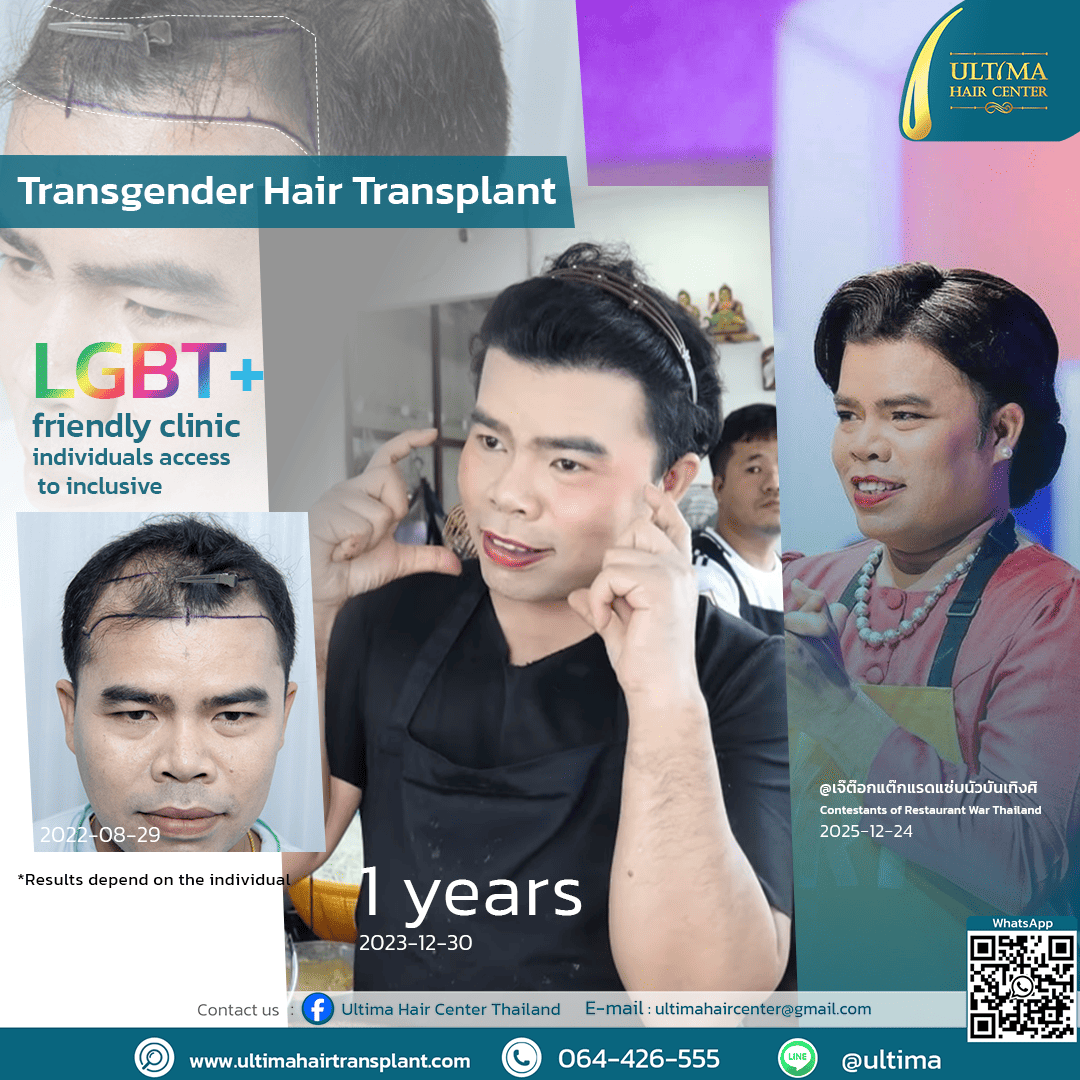
At Ultima Hair Center, an important part of the approach is helping patients understand their own hair loss before deciding whether to undergo a procedure
This is why Dr. Ming personally responds to patient messages, and patients can consult Dr. Ming for free to discuss their hair loss concerns and questions about hair transplantation
The goal is not to make every patient undergo a hair transplant. Instead, the goal is to provide enough information for patients to determine whether hair transplantation is appropriate for them
In some cases, a hair transplant may not be the most appropriate first option. It may be necessary to evaluate the cause of hair loss, consider other treatment options, or monitor changes in the hair before proceeding
This is why communication with the physician is important from the very beginning
 12. A Good Hair Transplant Is Not Measured by Graft Count Alone
Hearing statements such as “3,000 grafts” or “4,000 grafts” may sound impressive, but the number of grafts alone does not determine the quality of the final result
Each graft can contain a different number of hairs, and every patient’s hair characteristics are different
There are also important considerations involving graft placement, direction, angle, density, and how grafts are distributed across different areas
Therefore, quality-focused hair transplantation should consider whether the available grafts are being managed appropriately, rather than competing over who can use the largest number of grafts
 13. A “Natural-Looking” Result Comes from Multiple Factors Working Together
For many patients, the goal is a natural-looking hair transplant
This does not come from one technique alone. Instead, it involves multiple elements, including:
- Evaluation of the patient’s existing hair characteristics
- Hairline design
- Selecting appropriate grafts for each area
- Managing hair direction and angle
- Creating appropriate density
- Managing the Donor area
- Postoperative follow-up
ISHRS states that patients should consider a physician’s training, medical knowledge, and ability to develop an appropriate treatment plan. A detailed consultation before surgery is an important part of establishing realistic expectations
 14. Patients with Problems from a Previous Hair Transplant Can Also Seek a Consultation
Not every patient who comes to Ultima Hair Center is undergoing a hair transplant for the first time
Some patients have previously undergone hair transplantation but continue to have concerns such as an unsuitable Hairline, insufficient density, poor graft distribution, or limitations involving the Donor area
These cases require more than simply asking, “How many grafts are needed?”
The existing grafts, previously transplanted areas, current Donor area, and remaining native hair all need to be evaluated before developing an approach that is appropriate for the current situation
This is another reason why consultation with a physician before making a decision is particularly important, especially in revision cases
 15. Questions Patients Should Ask Before Choosing a Hair Transplant Clinic
Whether you choose Ultima Hair Center or another clinic, it is useful to prepare questions before your consultation
About the Physician
- Does the physician evaluate the patient’s hair loss?
- What qualifications or certifications can be independently verified?
- Does the physician develop the hair transplant and treatment plan?
About the Procedure
- Which technique will be used?
- Why is this technique appropriate for the patient?
- What are the limitations or potential risks?
About Treatment Planning
- How many grafts are needed?
- Why has this number been recommended?
- Which areas will be treated?
- What is the potential of the Donor area?
- How is the treatment being planned for the future?
About the Result
- When should the result be evaluated?
- Is postoperative follow-up provided?
- If the result does not develop as expected, how will the situation be evaluated?
These questions can help patients compare clinics based on meaningful information rather than simply comparing prices
 16. So Why Do Many Patients Choose Ultima Hair Center?
When all of these factors are considered together, the reasons patients choose Ultima Hair Center are not limited to the hair transplant technique or price. They also relate to the approach to patient care from the very beginning
Ultima Hair Center places importance on:
- Having a physician evaluate and develop the treatment plan
- Giving patients an opportunity to communicate before making a decision
- Dr. Ming personally responds to patient messages
- Patients can consult Dr. Ming for free
- Careful management of the Donor area
- Not focusing solely on graft numbers
- Paying attention to Hairline design and the overall appearance
- Focusing on results that provide a natural-looking hair transplant
- Caring for both first-time patients and patients seeking revision consultations
- Making the physician’s ABHRS credentials verifiable through the ABHRS database
These principles reflect the intention to provide quality-focused hair transplantation, rather than competing primarily through numbers or promotional offers
 17. Confidence Should Come from Verifiable Information
Ultimately, no one can guarantee that every patient will achieve exactly the same hair transplant result. ABHRS also identifies advertising claims that should be avoided, including statements such as “Guaranteed results” and “Unlimited grafts,” as well as claims that there are no risks
Therefore, appropriate confidence before a hair transplant should come from having sufficient information, understanding your individual limitations, knowing who will be responsible for your care, and being able to verify the physician’s qualifications
For people searching for a hair transplant clinic in Bangkok and comparing hair transplant reviews from different clinics, the better question is not simply, “Which clinic is the best?”
Instead, consider asking:
“Which clinic’s treatment approach is appropriate for my specific situation, and how much important information can I verify before making my decision?”
At Ultima Hair Center, the core approach is to give patients an opportunity to communicate, understand their hair loss concerns, and develop a treatment plan with the physician before making a decision
If you are considering a hair transplant and would like to discuss your individual concerns, you can consult Dr. Ming for free and ask questions directly
Because choosing a hair transplant should not begin with the question, “How much does it cost?” alone. It should also begin with the questions, “Who will take care of me, and how will the treatment be planned specifically for me?”
 Contact Us:
