

Can People with No Hair in the Top of the Scalp Still Get a Hair Transplant?
Baldness on top is a common way of describing a pattern of hair loss where the hair becomes very thin or completely absent in the top or crown areas of the scalp, leaving a large, clearly visible area of the scalp. This condition is commonly seen in men, particularly those with genetic hair loss that has progressed over a long period of time
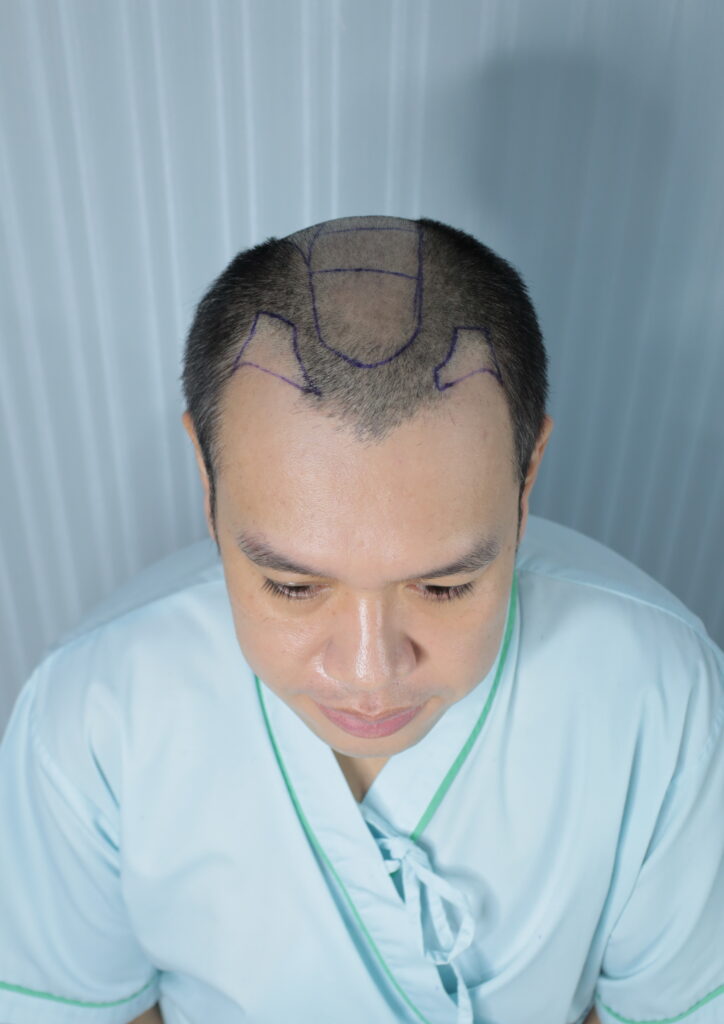
When the hair becomes so thin that the scalp is clearly visible, many people may wonder:
“If I’m almost completely bald on top, can a hair transplant really work?”
The answer is that in many cases, hair transplantation can be performed and the transplanted hair can grow. However, this does not mean that everyone with significant baldness will have the same outcome. Results depend on several factors, particularly the quality and number of grafts available in the Donor Area, age, the cause of hair loss, the size of the bald area, and the number of grafts planned for transplantation
Therefore, for people with baldness on top, the important question is not simply whether a hair transplant is possible. It is also important to consider whether there are enough grafts, which areas should be treated first, and how the treatment should be planned based on the current and future condition of the hair
What Is Baldness on Top?
Baldness on top is a general descriptive term rather than a specific medical diagnosis. It is commonly used to describe a pattern of baldness in which a large area of the scalp is exposed in the top or crown area, while hair remains on the sides and back of the scalp
This pattern is often caused by male pattern hair loss, which is associated with genetic factors and male hormones
In the early stages, it may begin with:
- A receding frontal hairline
- Deeper recession at the temples
- Thinning hair in the midscalp area
- Increased visibility of the scalp at the crown
- Hair shafts becoming finer
- The thinning area gradually becoming wider over time
When hair loss continues for a long period of time, the thinning area may expand until hair remains mainly on the sides and back, creating a large area of visible scalp
Can Hair Grow After a Hair Transplant for Baldness on Top?
Hair can grow after a transplant in many cases, but each patient must be evaluated individually
A hair transplant does not create new hair follicles. Instead, hair follicles are taken from a suitable area, known as the Donor Area, and transplanted into areas where additional hair is needed
Therefore, even if there is little or no hair remaining in the top of the scalp, this does not necessarily mean that a hair transplant is impossible
The key factor is whether the Donor Area contains an adequate number of suitable hair follicles for transplantation. A doctor will evaluate:
- The number of grafts available for transplantation
- Hair density at the back and sides of the scalp
- The size of the bald area
- Hair quality
- The patient’s age and overall health
- The potential for future hair loss
- The patient’s expectations
Why Can Some People with Extensive Baldness Still Have a Hair Transplant?
One important reason is that the hair at the back and sides of the scalp in many men remains stronger than the hair at the front and top of the scalp. This area is known as the Donor Area. If the hair quality and available number of grafts are suitable, the doctor may be able to harvest grafts from this area for transplantation
However, the Donor Area is different for every individual. Some people have dense hair at the back of the scalp and a large number of available grafts, while others may have relatively mild baldness but a less dense Donor Area
Therefore, the degree of baldness alone cannot determine whether someone is suitable for a hair transplant
The Most Important Factor Is the Donor Area
For people with baldness on top, evaluating the Donor Area is a very important part of the treatment planning process. The doctor will consider:
Hair Density
If the hair at the back and sides of the scalp is dense, there may be more grafts available for transplantation
Number of Available Grafts
Hair transplantation requires careful management of the available grafts because the Donor Area is limited
Hair Quality
Thicker hair shafts can provide greater visible coverage compared with finer hair, even when the same number of grafts is used
Hair Characteristics
Curly or wavy hair may create a different visual appearance of density compared with straight hair, even when the same number of grafts is transplanted
If the Bald Area Is Extensive, Are More Grafts Needed?
In many cases, a larger bald area requires more grafts to create adequate visual density
However, hair transplantation does not necessarily mean that every area needs to be restored to the same density. The doctor may prioritize areas that are more visible, such as the frontal hairline. Prioritizing key areas can help make more effective use of the available grafts
Which Areas Should Be Transplanted First for Baldness on Top?
There is no single answer that applies to everyone. In general, the doctor may consider the importance of each area together with the number of available grafts
Frontal Hairline
The frontal hairline has a major influence on the overall appearance of the face
Hairline design should therefore take into consideration:
- Age
- Facial shape
- Hair characteristics
- Hair density
- Potential future hair loss
Top of the Scalp
If the top of the scalp is widely exposed, a certain number of grafts may be needed to reduce the contrast between areas with hair and areas with significant thinning
Crown
The crown has a natural hair whorl and a specific direction of hair growth. Therefore, careful planning of the direction and angle of the transplanted grafts is important
Why Shouldn’t All Available Grafts Be Used at Once Without Careful Planning?
People with extensive baldness may feel that they want to use as many grafts as possible to make their hair look thicker immediately
However, the Donor Area has a limited supply of grafts. Using more grafts than necessary may cause thinning in the back and sides of the scalp or leave fewer grafts available for future treatment
Good planning should therefore focus on the question:
“How can the available grafts be used as effectively as possible?”
rather than simply asking:
“How many grafts can be transplanted?”
How Many Grafts Are Needed for Baldness on Top?
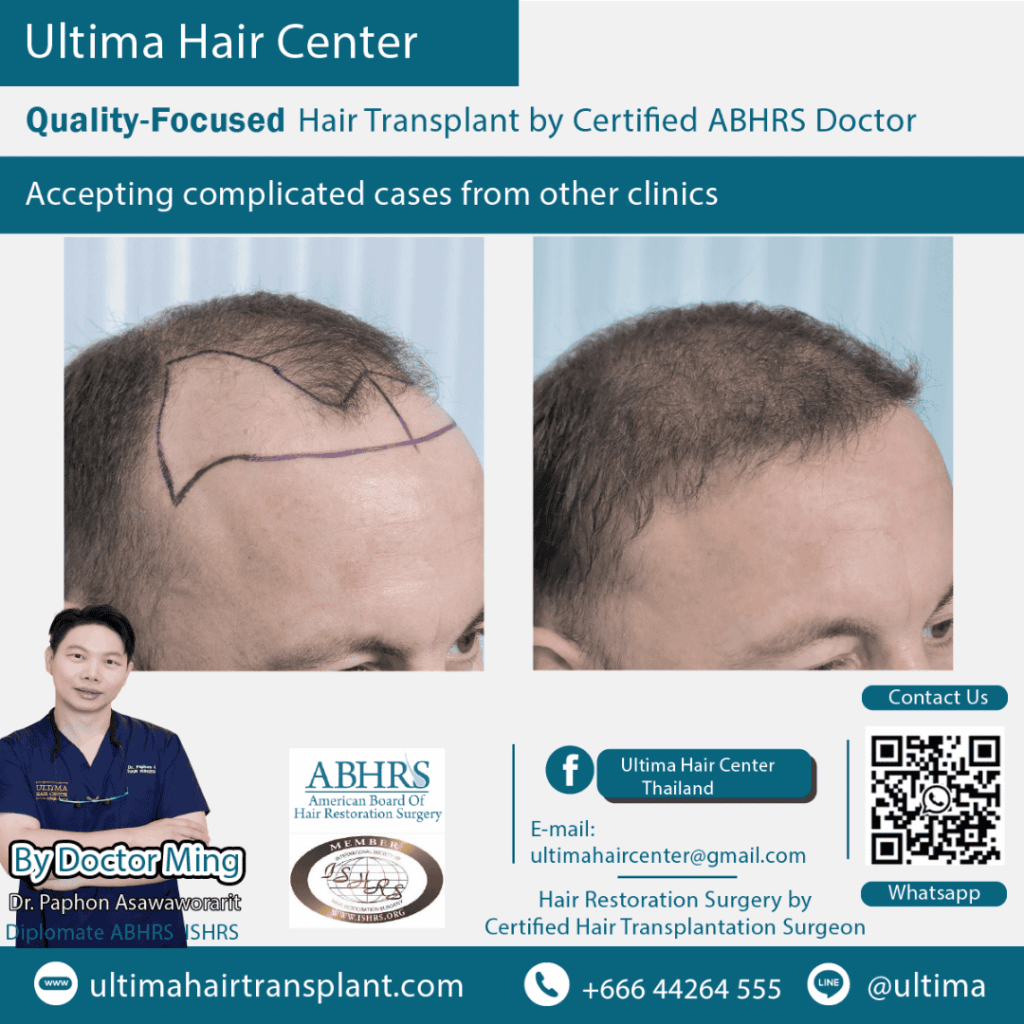
There is no single number that applies to everyone. The number of grafts depends on:
- The size of the area to be transplanted
- The density of the Donor Area and the number of grafts that can be safely harvested
- Hair shaft thickness and characteristics
- The degree of baldness
- The desired density
- The long-term treatment plan
Therefore, estimating the required number of grafts from photographs alone may not be sufficient in some cases. A doctor should evaluate the hair and scalp condition before determining the appropriate number of grafts
If Someone Has Extensive Baldness, Will the Result Look Like Naturally Thick Hair?
It is important to understand that the goal of a hair transplant does not necessarily have to be restoring the same density a person had when they were younger, particularly in patients with a large bald area and a limited number of available grafts. An appropriate treatment goal may be to:
- Create a suitable hairline
- Reduce the amount of visible scalp
- Increase density in key areas
- Create a more balanced overall appearance
- Achieve a natural-looking result
Setting realistic expectations is therefore an important part of the treatment process
Does Age Affect Hair Transplantation in People with Baldness on Top?
If the patient is relatively young and hair loss is still progressing, hairline design and graft allocation should take future changes in hair loss into consideration
On the other hand, in older patients whose pattern of hair loss has become relatively stable, the doctor may consider a different treatment approach
Therefore, hairline design should not be based solely on the condition of the scalp on the day of the procedure
Someone Has Baldness on Top and a Thin Donor Area, Can They Still Have a Hair Transplant?
This situation requires careful evaluation. If the Donor Area is significantly thin, the doctor may need to consider:
- The cause of thinning in the Donor Area
- Whether the patient is suitable for a hair transplant
- Whether there are enough usable grafts
- Whether expectations regarding density should be adjusted
- Whether existing hair should also be medically managed
- Whether another treatment option may be more appropriate
Some patients may still be suitable for a hair transplant, but the treatment plan may need to be more conservative and carefully considered
How Many Months Does It Take to See Hair Growth After a Hair Transplant?
After a hair transplant, the transplanted hair does not grow fully immediately. During the early stage, the transplanted hair may go through changes as part of the recovery process. Transplanted hairs will fall out prematurely, 50-80%, then gradually begins to grow 3-4 months after the procedure according to the natural hair growth cycle
In general, the results gradually change and become more noticeable over several months, and the outcome can usually be assessed more clearly at around 9–12 months after the hair transplant
Therefore, people with baldness on top should not judge the final outcome based on only a few weeks after the procedure
Does Post-Transplant Care Affect the Results?
Yes, it is important. After a hair transplant, patients should carefully follow their doctor’s instructions, such as:
- Carefully caring for the transplanted area during the first 2 weeks
- Avoiding scratching or picking at scabs
- Washing the hair according to the doctor’s instructions
- Avoiding activities that may put the transplanted area at risk during the early recovery period
- Taking medications or using recommended products as instructed by the doctor
- Attending scheduled follow-up appointments
Proper aftercare helps ensure that the transplanted area is appropriately cared for during the recovery period
Does Everyone with Baldness on Top Need a Hair Transplant?
Not necessarily. The first step should be to identify the cause of hair loss and evaluate the condition of the hair and scalp. If the hair loss is caused by male pattern hair loss, a hair transplant may be one appropriate treatment option
However, if the hair loss is caused by another condition, such as certain diseases, hormonal abnormalities, or specific types of hair loss, the doctor may recommend treating the underlying cause first
How Should You Choose a Doctor for a Hair Transplant if You Have Baldness on Top?
A doctor should be evaluated based on several factors, not simply price. Important considerations include:
Hair Transplant Experience
The doctor should have experience treating patients with different degrees and patterns of hair loss. Certification from the ABHRS (American Board of Hair Restoration Surgery) is also one factor that can help demonstrate a doctor’s knowledge, skills, and experience in hair restoration surgery
Ability to Plan the Number of Grafts
This is particularly important for patients with a large area of baldness
Hairline Design
The hairline should be designed to suit the patient’s facial features and age
Donor Area Management
Careful consideration should be given to the appropriate use of grafts and preservation of the hair at the back and sides of the scalp
Follow-Up Care
Ongoing follow-up is important to monitor changes in the hair after treatment
How Should You Choose a Hair Transplant Clinic for Baldness on Top?
In addition to the doctor, patients should consider:
- Medical facility standards
- Medical and support team
- You can talk to and ask questions directly with the doctor
- Cleanliness
- Follow-up system
- Reviews from actual patients
- Results in patients with similar hair loss patterns
When reviewing results, it is particularly important to look at before-and-after photographs with an adequate follow-up period rather than judging the outcome based only on photographs taken immediately after the transplant
How Does Ultima Hair Center Treat Patients with Baldness on Top?
Ultima Hair Center places strong emphasis on evaluating the patient’s hair condition and Donor Area before planning a hair transplant. Each patient is assessed individually, rather than using the same number of grafts or the same transplantation approach for everyone
Treatment planning takes into consideration:
- Degree of baldness
- Pattern of hair loss
- Quality and density of the Donor Area
- Number of grafts available for transplantation
- Facial structure
- Age and potential future hair loss
- The patient’s individual goals and expectations
The doctor responsible for treatment is certified by the ABHRS (American Board of Hair Restoration Surgery), an internationally recognized certification in hair restoration surgery that evaluates the knowledge, skills, and experience of hair restoration surgeons
The key goal is to use the available grafts appropriately and develop a hair transplant plan that is consistent with each patient’s individual hair characteristics, with the aim of achieving a natural-looking and balanced result
You also can talk to and ask questions directly with the doctor
Conclusion: Can Hair Grow After a Hair Transplant for Baldness on Top?

People with baldness on top can undergo hair transplantation and achieve hair growth in many cases, even when there is little or no hair remaining in the top or crown of the scalp
However, the most important factors are that the Donor Area has suitable quality and an adequate number of available grafts, together with careful planning of how those grafts should be used
For people with extensive baldness, the goal of hair transplantation does not necessarily have to be restoring thick hair across every square centimeter of the scalp. Instead, the focus should be on allocating the available grafts appropriately, designing a hairline that suits the face, and planning for future changes in hair loss
Therefore, if you are wondering, “Can hair really grow after a hair transplant if I am almost completely bald on top?”, the most accurate answer is that the hair and Donor Area of each individual need to be evaluated first. Even extensive baldness does not necessarily mean that hair transplantation is no longer an option
