

A Guide to Areas Where Hair and Facial Hair Can Be Transplanted to Enhance Appearance
Hair transplantation today is not limited to the scalp. Hair grafts from the Donor Area can also be transplanted to other areas where additional hair or facial hair is desired, such as eyebrow transplantation, moustache transplantation, and beard transplantation, as well as areas affected by scars or hair loss from various causes
Many people may wonder, “Which areas can be transplanted?” How does each area differ? How many grafts are needed? What can the results look like? And what should you consider when choosing a doctor?
In reality, hair transplantation to different areas requires different planning because the characteristics, direction, angle, density, and shape of hair vary from one area to another
This article covers the main areas where hair and facial hair transplantation can be considered, along with important information to know before making a decision
What Is Hair and Facial Hair Transplantation?
Hair or facial hair transplantation involves taking hair grafts from an area with suitable hair, known as the Donor Area, and transplanting them to an area where additional hair is desired
The basic principle is similar to scalp hair transplantation, but the details of graft placement vary depending on the area, for example:
- Eyebrow transplantation requires careful consideration of the eyebrow shape and the direction of each hair
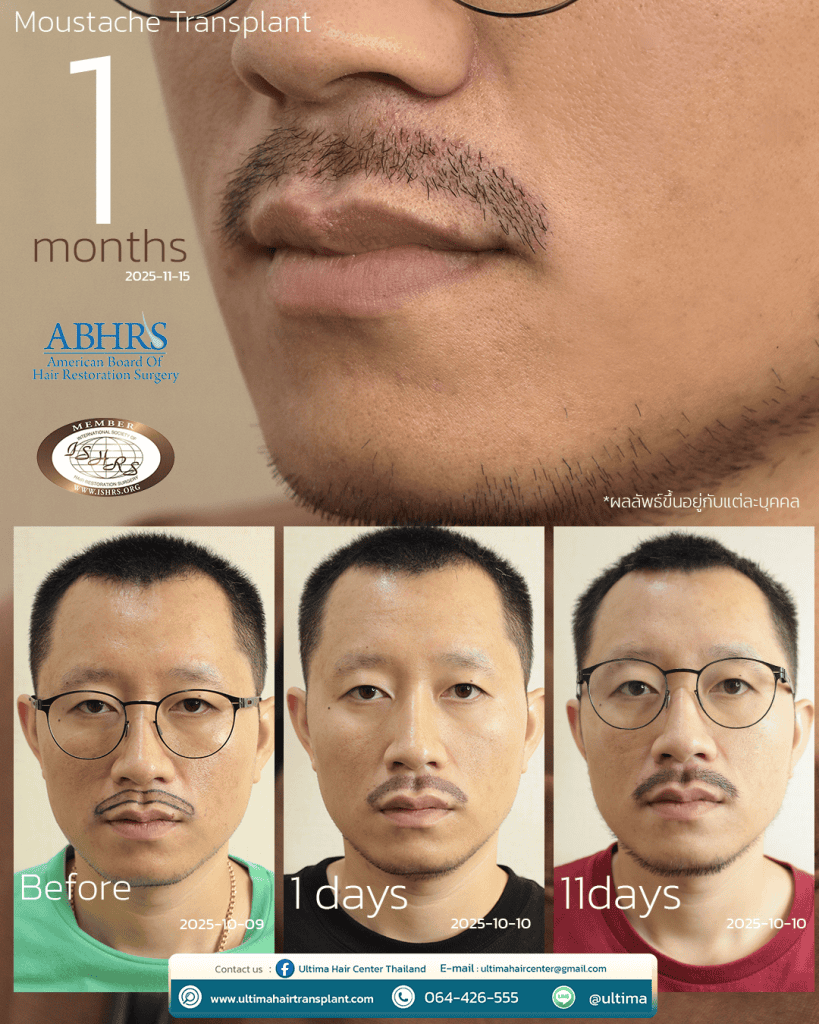
- Moustache transplantation requires attention to the lip line and the direction of the moustache hairs
- Beard transplantation requires designing the beard to complement the individual’s facial structure
- Transplantation into scar tissue requires assessment of the tissue quality because the growth rate may be lower, particularly in thick or raised scars
Therefore, facial hair transplantation is not simply a matter of placing grafts into the desired area. The position and direction of each graft must be carefully planned to suit the area
Which Areas Can Be Transplanted?
There are several areas where hair or facial hair transplantation can be considered. Common areas include:
- Eyebrows
- Moustache
- Beard
- Sideburns
- Temple area
- Scarred areas of the scalp
- Hairline or forehead area
- Areas affected by surgery or accidents in certain cases
However, not every area is suitable for everyone. Not every scar or hairless area can necessarily be transplanted. Each case should be individually assessed
1. Eyebrow Transplantation
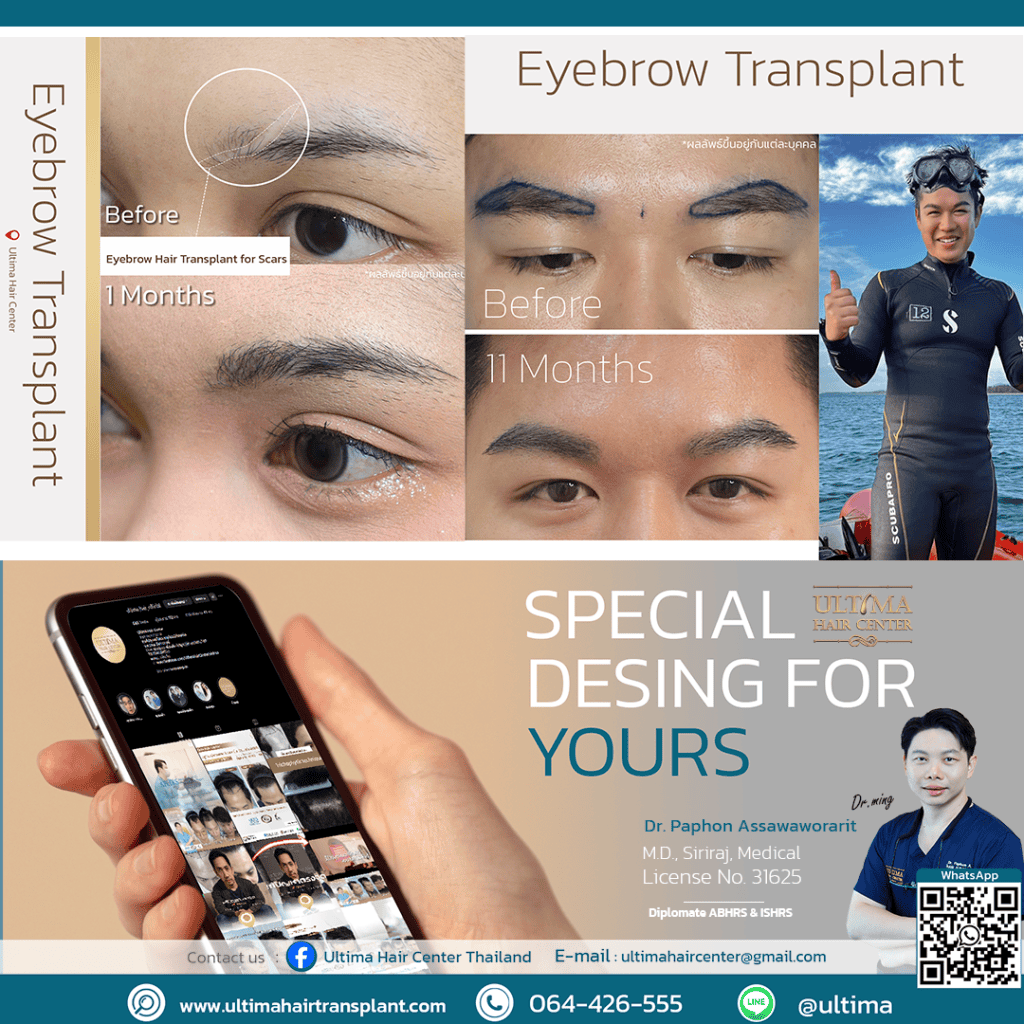
Eyebrow transplantation is one of the procedures that requires a high level of precision because the eyebrows play an important role in facial appearance and expression
People who may consider eyebrow transplantation include those with:
- Thin eyebrows
- Asymmetrical eyebrows
- Eyebrows that have become sparse due to prolonged plucking or waxing
- Naturally thin eyebrows
- Eyebrow loss caused by an accident
- Scarring in the eyebrow area
- A desire to reshape the eyebrows
Why Does Eyebrow Transplantation Require Such Precision?
Eyebrow hairs have specific growth directions. The direction and angle may vary between the inner, middle, and outer portions of the eyebrow
If grafts are placed in the wrong direction, the hairs may stick out or look less harmonious with the existing eyebrow hairs. Therefore, careful design is an important part of the procedure
Can Transplanted Eyebrows Be Trimmed or Shaved?
Yes. However, it is important to understand that hair transplanted to the eyebrow area retains characteristics of the hair from the Donor Area, so it may continue to grow longer than the original eyebrow hairs
People who undergo eyebrow transplantation may therefore need to trim the transplanted hairs periodically. This is one of the points that should be understood before deciding to undergo eyebrow transplantation
2. Moustache Transplantation
Moustache transplantation may be suitable for people who want to increase moustache density or who have sparse or unevenly distributed moustache hair
Different approaches can be considered, such as:
- Adding hair around the upper lip
- Increasing moustache density
- Filling areas where the moustache is sparse
- Adjusting the moustache line
- Creating a moustache shape that complements the face
Moustache transplantation requires careful consideration of hair direction because the area above the upper lip has a different growth pattern from the scalp
3. Beard Transplantation
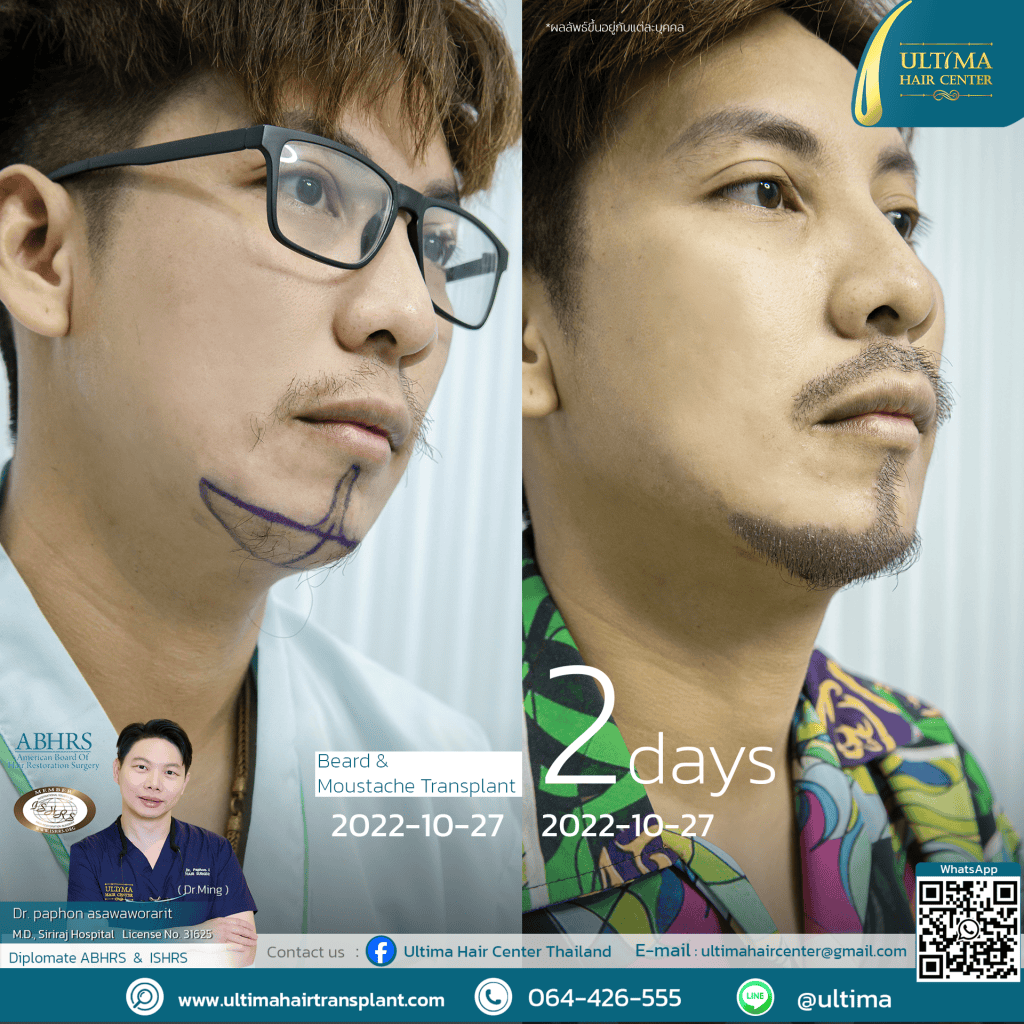
Beard transplantation has become increasingly popular among men who want a more defined facial frame or who have sparse or uneven beard growth
Hair can be transplanted to several areas, including:
- Jawline
- Chin
- Cheeks
- Under the chin
- Areas where the beard is patchy
- Scarred areas
Beard design should take the individual’s facial structure into consideration because a beard shape that suits one person may not suit another
How Are Moustache and Beard Transplantation Different?
Although both areas are located on the face, their design requirements are different
Moustache
Focuses on the area around the upper lip and the direction of the hairs
Beard
Requires consideration of the facial shape, jawline, chin, and cheek areas
Therefore, moustache and beard transplantation should be planned separately rather than using exactly the same approach for both
4. Sideburn Transplantation
The sideburn area is another location where hair transplantation can be considered. It may be suitable for people who have:
- Thin sideburns
- Gaps in the sideburns
- A desire to increase density
- A desire to reshape the sideburns
- Scarring in the sideburn area
The design should take into consideration the relationship between the sideburns, hairstyle, and facial structure
5. Temple Hair Transplantation
The temple area can help create a more harmonious transition between the frontal hairline and the face. Some people may have:
- Deep temples
- Receding hair in the temple area
- Asymmetrical temples
- A desire to improve the facial frame
This area requires particular attention to the angle and direction of the hair because it is a transition zone between the face and the scalp hair
6. Hair Transplantation Over Scars
Hair transplantation can be considered to help reduce the visibility of certain types of scars, including:
- Scars from accidents
- Surgical scars
- Sutured wounds
- Scars from previous hair transplantation in certain cases
- Scars on the scalp
- Scars in the eyebrow area
- Scars in the moustache or beard area
However, every scar is different
Before transplantation, the doctor should assess whether the tissue is suitable and whether the blood supply is sufficient to support graft growth
7. Eyebrow Transplantation Over Scars
Some people may have scars in the eyebrow area caused by accidents or surgery
Eyebrow transplantation may be one option for adding hair to the affected area
However, scar tissue may have more limitations than normal skin
Therefore, the condition of the scar should be evaluated by a doctor before treatment
8. Moustache or Beard Transplantation Over Scars
For people with scars in the moustache or beard area, transplanting grafts into the affected area may help make the scar less noticeable in some cases. However, the result depends on factors such as:
- Size of the scar
- Age of the scar
- Type and characteristics of the scar
- Thickness of the tissue
- Blood supply
- Number of available grafts
- Graft quality
- Condition of the skin in the area
Therefore, each case should be individually assessed
Why Do Eyebrow, Moustache, and Beard Transplantation Require Precision?
The face is a highly visible area
If the hairline, direction, or density is inappropriate, it may be noticeable
Important considerations include:
1. Hair Direction
The transplanted hairs should follow the direction of the existing hair
2. Hair Angle
An appropriate angle can help the transplanted hairs lie closer to the skin
3. Density
Hair does not necessarily need to be transplanted at the same density throughout the entire area
4. Graft Arrangement
Grafts should be positioned appropriately according to the specific area
5. Shape
The design should complement the individual’s facial structure and personal preferences
Where Are the Grafts Taken From?
In general, grafts can be taken from the Donor Area, which is commonly located at the back or sides of the scalp
However, the donor site must be selected according to the quality of the hair and the individual’s suitability
For eyebrow, moustache, and beard transplantation in particular, the characteristics of the donor hair should also be taken into consideration
Why Is the Number of Grafts for Eyebrow Transplantation Different From Scalp Hair Transplantation?
Because the area and goals are different
Eyebrow transplantation may require relatively few grafts compared with a full scalp hair transplant, but it requires a high level of precision when placing each graft
Beard or moustache transplantation may require more grafts depending on the size of the area that needs to be filled
Therefore, the number of grafts should not be compared between procedures without considering the specific area and objective
What Techniques Can Be Used for Facial Hair Transplantation?
Hair transplantation to different areas can use hair-graft harvesting techniques similar to those used for scalp transplantation, such as FUE, FUT
However, the important consideration is not simply the name of the technique. Other factors should also be considered, including:
- Design
- Graft selection
- Graft harvesting
- Graft preparation
- Recipient-site creation
- Angle and direction
- Graft placement
- Post-procedure care
Each step can contribute to the overall result
Who May Be Suitable for Eyebrow, Moustache, or Beard Transplantation?
People who may be suitable include those who:
- Have less facial hair density than desired
- Have areas of missing hair
- Have uneven hair growth
- Want to adjust the shape
- Have scars they would like to make less noticeable
- Want to increase density
- Have an adequate Donor Area
- Have overall health suitable for the procedure
However, determining whether transplantation is appropriate requires an individual assessment by a doctor
Who May Not Be Suitable for Facial Hair Transplantation?
Some people may need further evaluation or treatment of an underlying condition first, such as those who:
- Have a skin condition in the area to be transplanted
- Have active skin inflammation
- Have ongoing uncontrolled hair or facial hair loss
- Have a very limited Donor Area
- Have expectations that exceed the limitations of treatment
- Have certain health conditions that may increase the risks of the procedure
Therefore, a proper pre-treatment assessment is important
Will the Results of Facial Hair Transplantation Look Natural?
The procedure can be planned to achieve a natural-looking result, but no method can guarantee identical results for everyone. Important factors include:
- Design
- Graft quality
- Selection of suitable grafts
- Hair direction
- Hair angle
- Density
- The doctor’s technique
- Individual response to treatment
- Post-procedure care
For eyebrows, moustaches, and beards in particular, graft direction is especially important because these are highly visible areas
What Are the Benefits of Eyebrow, Moustache, and Beard Transplantation?
1. Increasing Hair Density
It can help fill areas that are sparse or have gaps
2. Reshaping
The shape can be designed to suit the individual’s facial structure
3. Helping Conceal Scars
In some cases, grafts can be used to help make scars less noticeable
4. Using the Patient’s Own Hair
The grafts are taken from the patient’s own body
5. Individualized Design
The procedure does not need to follow exactly the same design for everyone
Limitations of Facial Hair Transplantation to Consider
Although facial hair transplantation has potential benefits, there are also limitations
Transplanted Hair May Differ From the Original Facial Hair
This may be particularly noticeable in terms of hair length and growth cycle
Hair Requires Time to Grow
The final result cannot be seen immediately
Regular Trimming May Be Necessary
This is particularly relevant when scalp hair is transplanted to the eyebrows
Results Vary From Person to Person
Results depend on the skin condition, graft characteristics, and individual response
Scar Tissue Has Limitations
Hair growth in scar tissue may differ from growth in normal skin
How Should You Care for Transplanted Eyebrows, Moustache, or Beard?
The basic principles are similar to scalp hair transplantation, but the specific instructions provided by the doctor should be followed
During the early period, you should:
- Avoid touching or scratching the transplanted area
- Do not pick at scabs
- Avoid friction
- Avoid activities that may impact the grafts
- Care for the treated area as instructed
- Take prescribed medication as directed
- Attend scheduled follow-up appointments
When transplantation is performed on the face, extra care may be necessary because the area can easily come into contact with the hands, masks, and everyday activities
Can You Wear Makeup After Eyebrow Transplantation?
You should ask your doctor first
During the early healing period, the transplanted area is still recovering, and certain cosmetics or products may not be appropriate. It is best to wait until your doctor confirms that they can be used
Can You Shave After Moustache or Beard Transplantation?
You may trim or shave the transplanted area after the initial recovery period and once your doctor has given permission
During the early period, however, shaving or creating friction around the transplanted area should be avoided
Once the transplanted hairs have fully grown, patients can maintain and trim them according to their preferred style
Is Facial Hair Transplantation Only for Men?
Not necessarily
Eyebrow transplantation can be performed for both women and men
Moustache and beard transplantation are more commonly requested by men, but people with specific needs may also undergo an individual assessment
The important consideration is to create a plan that suits the individual’s needs and facial characteristics
How Important Is Choosing a Doctor for Eyebrow, Moustache, and Beard Transplantation?
Facial hair transplantation requires precision because the treated areas are highly visible
When choosing a doctor, it is worth considering:
- Experience in hair and facial hair transplantation
- Previous results
- Design approach
- Donor Area assessment
- Graft harvesting and placement techniques
- Post-procedure care
- Follow-up care
For people who place importance on a doctor’s qualifications, undergoing hair transplantation with an American Board of Hair Restoration Surgery (ABHRS)-certified physician may be one factor to consider
However, it should be considered together with the doctor’s experience, previous work, and overall treatment approach
Ultima Hair Center Offers Eyebrow, Moustache, and Beard Transplantation
For those considering facial hair transplantation, Ultima Hair Center offers eyebrow, moustache, and beard transplantation, as well as hair transplantation for various conditions. Treatment planning should begin with an assessment of each individual’s concerns and goals
Planning should consider more than simply which area needs additional hair. Important factors include:
- Facial structure
- Existing hair direction
- Hair density
- Donor Area quality
- Appropriate number of grafts
- Graft direction and angle
- Desired shape
- Post-procedure care plan
The goal is to plan the transplantation so that the transplanted hairs can blend with the surrounding hair and achieve a natural-looking appearance
How Should You Prepare Before Eyebrow, Moustache, or Beard Transplantation?
Before the procedure, tell your doctor about:
- Existing medical conditions
- Medications you are taking
- Any history of drug allergies
- Previous surgeries
- Previous hair transplantation
- Skin problems
- A history of hair or facial hair loss
You should also clearly communicate your goals, such as:
“I want thicker eyebrows”
“I only want to fill in the tail of my eyebrow”
“I want to add beard density to my cheeks”
or
“I want a more defined moustache line”
This information can help the doctor develop a treatment plan that is better suited to your needs
Should You Show Your Doctor a Photo of the Eyebrow or Beard Style You Want?
Yes. This can be a useful way to communicate your preferences
However, it is important to understand that the shape you want may not necessarily be the shape that best suits your facial structure or the number of available grafts. The desired design should also be considered alongside a natural-looking eyebrow or beard shape
The doctor should therefore help assess and adjust the design to suit each individual
Does Facial Hair Transplantation Take a Long Time?
The duration varies depending on:
- The area being treated
- Number of grafts
- Technique used
- Level of detail required for the design
- Size of the area being transplanted
Eyebrow transplantation may require relatively few grafts, but placing each graft requires a high level of precision
Beard or moustache transplantation covering a larger area may take more time
When Will You See Results After Facial Hair Transplantation?
Whether the procedure involves scalp hair, eyebrows, moustache, or beard transplantation, the transplanted hairs need time to enter a new growth cycle
During the early period, some of the transplanted hairs may shed, which can occur as part of the process
The hairs will then gradually begin to grow again
The results become progressively clearer over time, so they should not be judged based only on the first few weeks after the procedure
Summary: Where Can Hair and Facial Hair Be Transplanted?
Modern hair transplantation can be considered for more than just the scalp. Common areas include:
- Eyebrow transplantation
- Moustache transplantation
- Beard transplantation
- Sideburn transplantation
- Temple transplantation
- Hair transplantation into scarred areas
- Hairline transplantation
- Hair restoration in areas affected by accidents or surgery in certain cases
Each area has its own considerations, particularly regarding direction, angle, density, and design
Therefore, the important question is not simply “Can this area be transplanted?” but rather “Is transplantation suitable for me, and how should it be planned?”
For those considering eyebrow, moustache, or beard transplantation, Ultima Hair Center offers eyebrow, moustache, and beard transplantation, with treatment beginning with an assessment of the individual’s concerns and a personalized treatment plan
For those who place importance on a doctor’s qualifications, information about hair transplantation with an American Board of Hair Restoration Surgery (ABHRS)-certified physician can also be considered alongside the doctor’s experience, previous results, treatment planning, and post-procedure care
The goal of transplantation is not simply to increase the number of hairs, but to carefully design and place the grafts so that, once the transplanted hairs have grown, they blend with the surrounding hair and achieve the most natural-looking appearance possible
