

Techniques for Designing Eyebrows That Look Balanced and Natural
Eyebrows are one of the most important features of the face. They help define facial expression, personality, and the overall proportions of the face
For people considering an eyebrow transplant, the most important question may not simply be, “How many grafts do I need?” or “How dense will my eyebrows be?” Instead, the key question is:
“How should my eyebrows be designed to suit my facial structure, and how will they look balanced with my face as the eyebrow hairs grow?”
An eyebrow transplant is different from a scalp hair transplant in several important ways, particularly in terms of eyebrow design, hair direction, graft placement angles, and selecting the appropriate grafts
When properly designed, an eyebrow transplant can help restore areas where the eyebrows are thin or missing and can help create a more balanced overall appearance
This article explains everything from facial analysis and eyebrow design to graft selection, eyebrow transplantation techniques, and important considerations before and after the procedure, helping those interested in an eyebrow transplant understand why proper design is so important
Why Should an Eyebrow Transplant Be Designed to Suit Your Facial Structure?
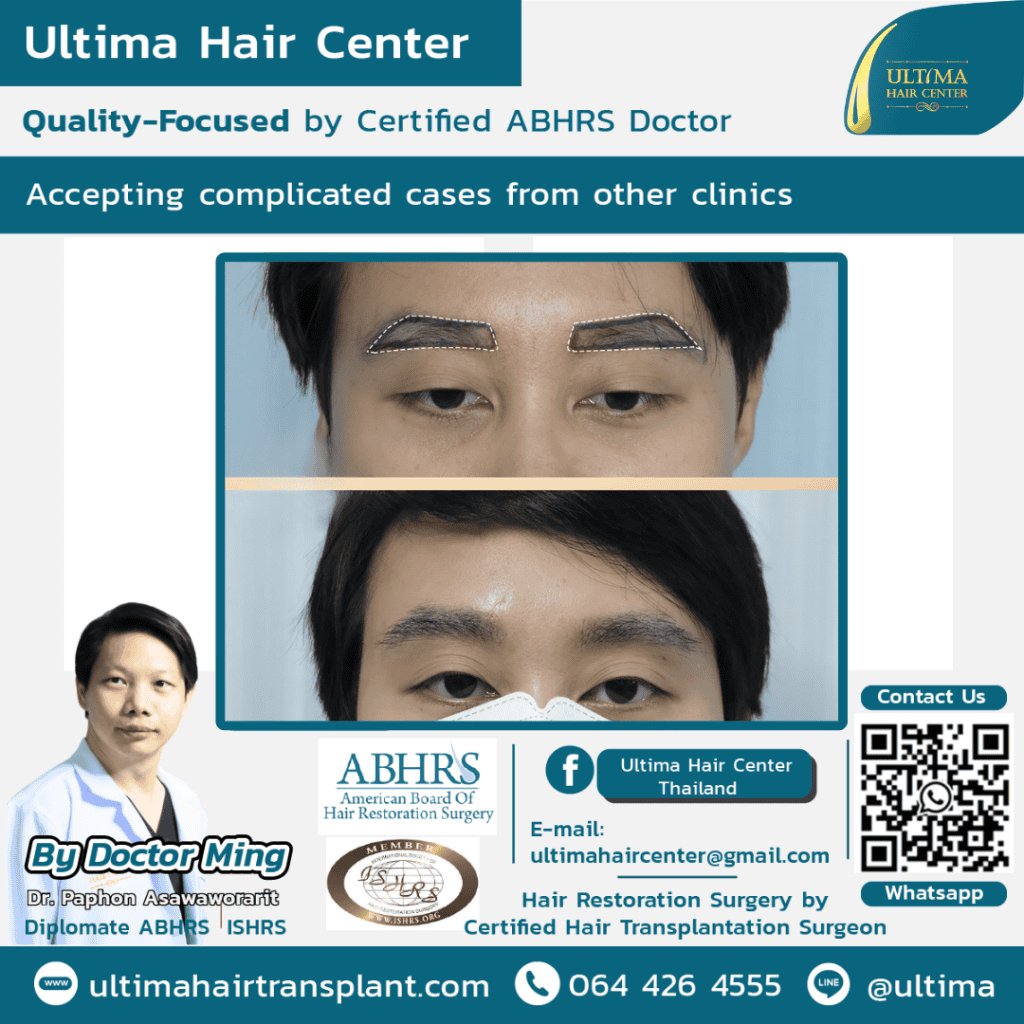
Everyone has a different eyebrow shape
Some people have relatively straight eyebrows
Some have more arched eyebrows
Some have naturally thick eyebrows
Others have thin or short eyebrows
Some have downward-sloping tails
Others have sparse areas around the inner part of the eyebrows
Therefore, simply taking another person’s eyebrow shape as a template and reproducing it may not be suitable for your own face
Eyebrow design should be considered together with:
- Forehead shape
- Facial width
- Eye position
- Distance between the eyes
- Nose shape
- Cheekbone structure
- Jawline
- Overall facial proportions
- Existing eyebrow characteristics
- The patient’s preferences
The goal is not to make your eyebrows look like someone else’s, but to design them to suit your individual facial features
What Is an Eyebrow Transplant?
An eyebrow transplant involves taking hair grafts from a donor area and transplanting them into areas of the eyebrows where additional density or restoration is desired
The physician must consider:
Gender
Position
Density
Direction
Hair angle
Eyebrow length
and Overall shape
This makes eyebrow transplantation different from scalp hair transplantation, where grafts can generally be distributed over a much larger area
The eyebrow is a relatively small area located in the central region of the face, so even a small design or placement error can be highly noticeable
How Does Facial Structure Affect Eyebrow Design?
In general, the overall shape of the face can be used as one factor when planning eyebrow design
However, facial shapes should not be treated as rigid categories because real-world facial proportions vary considerably
The overall face should be considered as a whole
1. Round Face
For a relatively round face, the goal may be to create greater visual definition and balance
An eyebrow with a moderate arch or upward lift may help create a more vertical visual line
However, the eyebrows should not be lifted excessively, as this could make the facial expression appear inconsistent with the person’s natural appearance
2. Long Face
A relatively straighter eyebrow shape may sometimes be considered to create a stronger horizontal line and reduce the visual impression of facial length
However, eye position and forehead proportions should also be taken into account
3. Square Face
A moderately curved eyebrow shape may help soften the appearance of stronger facial lines
However, the design should still take the individual’s personality and overall facial characteristics into consideration
4. Oval Face
An oval face often has relatively balanced proportions, allowing for a variety of eyebrow designs
The key is to maintain appropriate proportions between the eyebrows, eyes, and forehead
5. Heart-Shaped Face
The balance between the forehead and chin should be considered
An appropriate eyebrow design may help create better overall facial balance
But Eyebrow Design Is Not Based Only on Face Shape
This is an important point
Saying that “this face shape requires this type of eyebrow” may be an oversimplification
Even two people with similar facial shapes may have different eye positions, forehead heights, existing eyebrow density, and personalities
Therefore, eyebrow design should consider facial proportions together with each person’s individual characteristics
Key Points to Determine Before an Eyebrow Transplant
Before the procedure begins, the main elements of the eyebrow design should be clearly established
The Inner Brow
The starting point should be positioned appropriately in relation to the distance between the eyes and the bridge of the nose
The Middle Brow
This area gradually increases in density while the direction of the hairs changes
In the upper portion, the hair direction generally moves downward and outward, while in the lower portion, the direction moves upward and outward
The Highest Point of the Brow
The highest point does not necessarily need to be positioned in the same location for every person
The Eyebrow Tail
The appropriate length and whether the tail should rise or descend should be considered carefully
Eyebrow Thickness
Thicker eyebrows are not necessarily better
The appropriate thickness depends on the individual’s facial features and personal preferences
Hair Direction Is Extremely Important in Eyebrow Transplantation
One of the key differences between scalp hair transplantation and eyebrow transplantation is hair direction
Eyebrow hairs do not all grow in the same direction
The direction around the inner brow may differ from the middle and tail sections
Therefore, the physician must carefully consider graft placement so that the transplanted hairs follow the direction of the existing eyebrows
If grafts are transplanted without considering hair direction, the eyebrows may appear inconsistent with the existing eyebrow pattern as the hairs grow longer
Why Is Graft Angle Important?
In addition to direction, the angle at which the hair exits the skin is also important
Eyebrow hairs generally need to lie closer to the skin than scalp hair
Therefore, eyebrow transplantation requires careful control of:
- Position
- Direction
- Angle
- Density
If the angle is too steep, the hairs may stand up more than desired
If the direction is inappropriate, the transplanted eyebrows may not blend well with the existing eyebrows
Why Is Graft Selection Important for an Eyebrow Transplant?
The grafts used for eyebrow transplantation should be selected appropriately
In general, eyebrows require hair characteristics that are suitable for the facial area
Using grafts containing too many hairs in the inner brow or front portion of the eyebrow may make the area appear excessively dense
Therefore, graft placement must take the specific location of each graft into consideration
How Many Grafts Are Needed for an Eyebrow Transplant?
There is no single number that applies to everyone
The number of grafts depends on:
- Eyebrow width
- Eyebrow length
- Desired density
- Existing eyebrow density
- Areas where hair is missing
- Whether the entire eyebrow or only specific areas need to be restored
- Quality of the grafts available from the donor area
Someone who only wants to restore the eyebrow tail may require fewer grafts than someone who wants to reconstruct almost the entire eyebrow
Therefore, the number of grafts should be assessed individually
Is an Eyebrow Transplant the Same as a Hair Transplant?
Not entirely
Although the basic principle is similar—taking grafts from a donor area and transplanting them into the desired area—the details of eyebrow transplantation are more delicate in several respects
Eyebrow transplantation requires particular attention to:
Shape
Symmetry
Direction
Hair angle
Density
and Position on the face
This is especially important because the eyebrows are located in a highly visible area
Who Is a Good Candidate for an Eyebrow Transplant?
People who may be suitable for an eyebrow transplant include:
- People with sparse eyebrows
- People with partially missing eyebrows
- People with sparse eyebrow tails
- People whose eyebrows have become thinner after years of plucking or shaping
- People with scars in the eyebrow area
- People with genetically sparse eyebrows
- People who want to increase eyebrow density
- People who want to modify their eyebrow shape
- People who want to restore eyebrows after an injury or surgery
However, the cause of eyebrow thinning should be evaluated by a physician before the procedure, particularly in people who have experienced rapid changes in eyebrow hair
Who Should Not Rush Into an Eyebrow Transplant?
If eyebrow hair is falling out abnormally or in patches, the underlying cause should be investigated first
For example, if alopecia areata or a skin condition affecting the eyebrow area is suspected, an eyebrow transplant may not be the first step
The underlying problem should be evaluated and managed first
This is one reason why medical assessment is important before deciding on an eyebrow transplant
What Are the Benefits of an Eyebrow Transplant?
Restoring Sparse Areas
An eyebrow transplant can be designed to add density specifically where it is needed
Improving Eyebrow Proportions
For some people, increasing eyebrow thickness or length may help create a more balanced overall facial appearance
Personalized Design
The eyebrow shape does not need to be the same for everyone
Using the Patient’s Own Hair Grafts
Grafts from the patient’s own donor area can be used and positioned according to the desired design
Important Limitations of Eyebrow Transplantation
An eyebrow transplant does not mean that the transplanted eyebrows will require no maintenance afterward
Because the transplanted grafts are typically taken from the scalp, they retain the growth characteristics of scalp hair
As a result, transplanted eyebrow hairs may grow longer than natural eyebrow hairs, meaning the patient may need to:
- Trim the hairs
- Maintain their length
- Shape the eyebrows
periodically
This is something patients should understand before deciding to undergo the procedure
Can Transplanted Eyebrows Be Shaved or Trimmed?
Yes, they can be trimmed as appropriate once the grafts and skin have recovered according to the timeline recommended by the physician
Trimming is part of maintaining transplanted eyebrows
Therefore, anyone considering an eyebrow transplant should understand before the procedure that:
Transplanted eyebrows require periodic maintenance to control hair length
How Should You Prepare for an Eyebrow Transplant?
Before an eyebrow transplant, you should:
1. Inform the Physician About Your Medical History and Medications
This is particularly important for medications that may affect blood clotting and for existing medical conditions
2. Avoid Plucking the Eyebrows as Advised by the Physician
This allows the physician to properly evaluate the existing eyebrow pattern
3. Explain Your Preferred Eyebrow Shape
Tell the physician what type of eyebrow shape you prefer and which areas you would like to improve
4. Bring Reference Photos If You Have Them
You may show photos of eyebrows you like, but you should not expect the exact same shape to be reproduced because every person’s facial structure is different
How Should You Care for Your Eyebrows After Transplantation?
Post-procedure care is important for the recovery of the transplanted area
General recommendations may include:
- Avoid touching or scratching the transplanted area
- Avoid pressing or rubbing the eyebrows
- Keep the area clean according to the physician’s instructions
- Use medications and products as recommended by the physician
- Avoid activities that the physician advises you to avoid during the initial recovery period
- Protect the area from excessive sunlight and physical impact
- Attend follow-up appointments as scheduled
Specific instructions may vary depending on the technique used and the individual’s condition
When Will the Transplanted Eyebrow Grafts Start Growing?
The transplanted grafts do not all begin growing at exactly the same time
During the early stages, the transplanted hairs may undergo changes, and there may be a period when visible transplanted hairs shed
The grafts then enter the growth cycle of the hair
Therefore, the final result should not be judged too early
The physician will evaluate the result according to the appropriate timeline
How Can Transplanted Eyebrows Be Made to Look Similar to Natural Eyebrows?
Several factors are important
1. Design the Shape to Suit the Face
2. Select Appropriate Grafts
3. Place the Hairs in the Correct Direction
4. Control the Graft Angle
5. Avoid Excessive Density
6. Blend the Grafts With the Existing Eyebrows
7. Monitor and Trim the Eyebrows After the Hairs Grow
These factors are more important than simply trying to maximize the number of grafts
Problems That May Occur With Poor Eyebrow Design
Eyebrow transplantation requires a high level of precision
If the planning is not appropriate, potential issues may include:
- Eyebrows that are too thick
- Eyebrows that are too thin
- Asymmetry between the two eyebrows
- Incorrect hair direction
- Hair angles that do not match the existing eyebrows
- An eyebrow tail that is too long or too short
- An eyebrow shape that does not suit the face
- The need for frequent trimming
This is why choosing the right physician is particularly important
Why Is Choosing the Right Physician Important for an Eyebrow Transplant?
An eyebrow transplant is not simply about placing grafts into an area where the eyebrows are sparse
It requires consideration from the very beginning:
“Where should the eyebrows be positioned?”
“How thick should they be?”
“How long should they be?”
“Which direction should the hairs follow?”
“Where should each graft be placed?”
Therefore, the physician should be able to assess hair and facial hair conditions while also designing the eyebrows to suit the patient’s facial features
Ultima Hair Center Focuses on Individualized Eyebrow Design
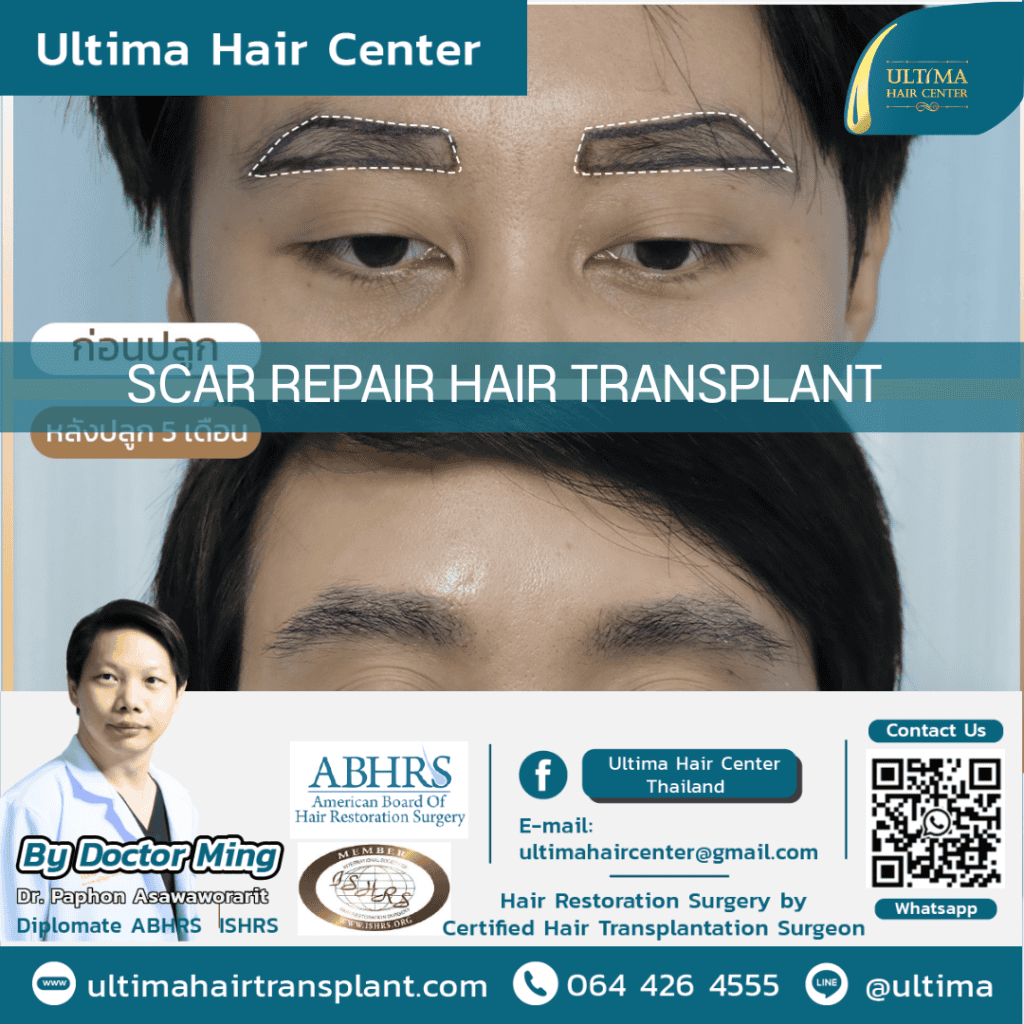
For people considering an eyebrow transplant, one of the most important factors is the design process before the procedure begins
At Ultima Hair Center, the approach to eyebrow transplantation considers each person’s facial structure and existing eyebrows rather than applying the same design to everyone
The planning process takes into consideration the eyebrow shape, density, hair direction, and areas where additional coverage is desired
The goal is not simply to create more eyebrow hair, but to make the transplanted eyebrows fit appropriately with the overall appearance of the face
Dr. Ming Personally Responds to Patient Messages Before an Eyebrow Transplant
Another important point for people considering an eyebrow transplant is the opportunity to communicate directly with a physician
At Ultima Hair Center, Dr. Ming personally responds to patient messages, allowing prospective patients to ask questions about their eyebrow concerns and the basic approach to eyebrow transplantation
Examples of questions patients may ask include:
- Can my eyebrows be transplanted?
- Approximately how many grafts will I need?
- Should I restore only the eyebrow tails or the entire eyebrows?
- Can the eyebrow shape be designed to suit my facial structure?
- Can eyebrows be transplanted over an existing scar?
- Can I have an eyebrow transplant if I have been plucking my eyebrows for many years?
Those interested can start with a free consultation with Dr. Ming to discuss their concerns and expectations before making a decision
If You Are Looking for a Hair Transplant Clinic in Krungthepkritha–Bang Kapi for an Eyebrow Transplant, What Should You Look For?
Even if you search for a hair transplant clinic in Krungthepkritha–Bang Kapi, if you are interested in eyebrow transplantation, you should also check whether the clinic has experience with facial hair transplantation
Important factors to consider include:
Does the physician personally perform the assessment?
Is the eyebrow design planned before the procedure?
Does the physician explain graft direction and angle?
Are grafts selected appropriately for the eyebrow area?
Is follow-up care provided?
Are the limitations of eyebrow transplantation explained honestly?
These factors are more important than choosing a clinic based solely on price
How Is ABHRS Relevant to Eyebrow Transplantation?
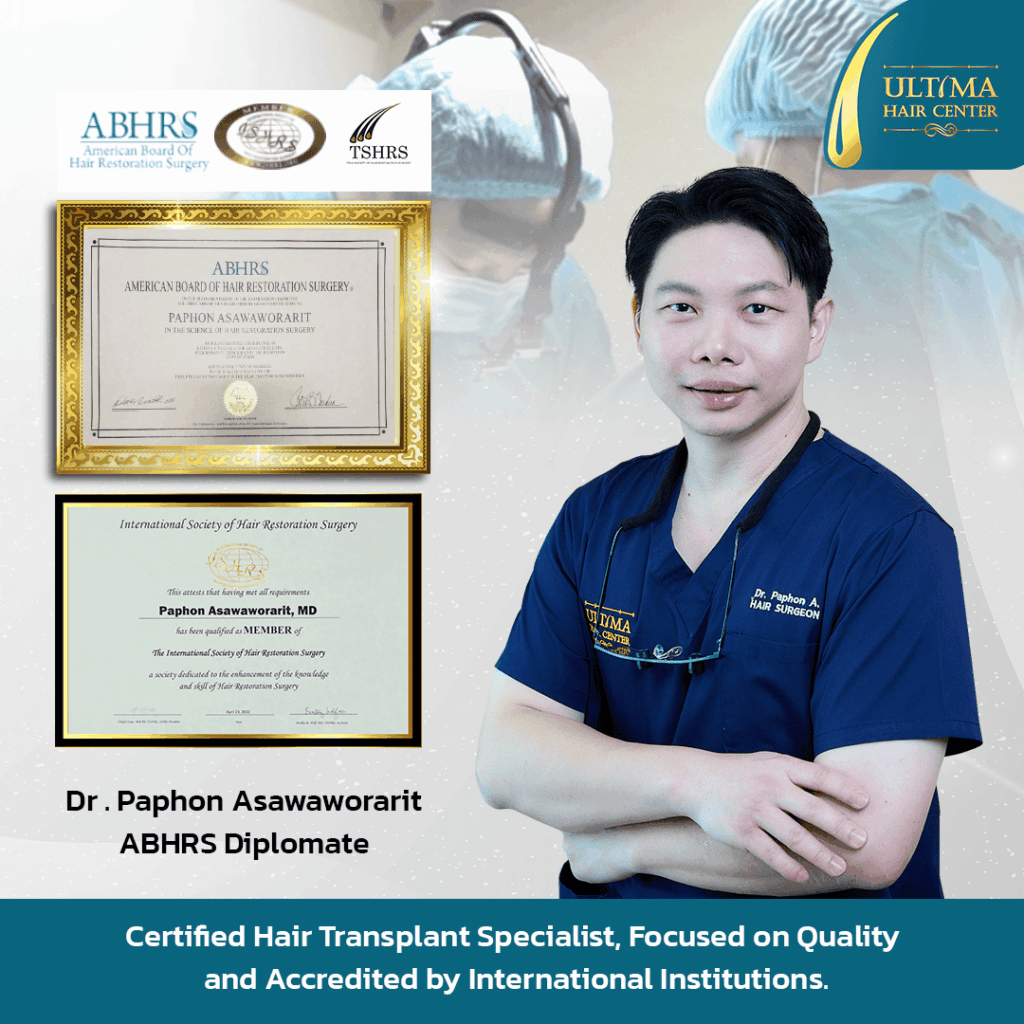
For those interested in having a hair transplant with an ABHRS-certified physician, it is important to understand that ABHRS certification is one professional qualification that can be considered when choosing a physician
However, when selecting a physician for an eyebrow transplant, several factors should be evaluated together, including:
- Knowledge of hair and facial hair transplantation
- Eyebrow design
- Graft selection
- Hair direction
- Graft handling
- Patient assessment
- Follow-up care
This is particularly important for the eyebrow area, where a high level of precision is required
Quality-Focused Eyebrow Transplantation, Not Simply More Grafts
The concept of quality-focused hair transplantation can also be applied to eyebrow transplantation
Having more grafts does not necessarily mean the result will look better
What matters is using the grafts appropriately
Some people may need only a relatively small number of grafts but require a high level of precision in graft placement
Others may only need to restore the eyebrow tails
Some may only need additional density in specific areas
Therefore, individualized planning is more important than determining the number of grafts based solely on a fixed number
Summary: How Can an Eyebrow Transplant Be Designed to Suit Your Facial Structure?
There is no single formula for designing an eyebrow transplant that suits everyone
The key is to analyze the face and design the eyebrows according to each person’s individual proportions, taking into consideration:
- Facial shape
- Forehead
- Eye position
- Distance between the eyes
- Existing eyebrows
- Density
- Eyebrow length
- Hair direction
- Graft angle
- Number of grafts
- Donor area quality
A successful eyebrow transplant is therefore not simply about adding more hairs. It requires careful consideration of position, shape, direction, and facial balance so that the transplanted eyebrows blend appropriately with the face and closely resemble the appearance of natural eyebrows
For those looking for a hair transplant clinic in Krungthepkritha–Bang Kapi and considering an eyebrow transplant, Ultima Hair Center can be considered, with an emphasis on individualized assessment and eyebrow design
Those who would like to ask about the procedure can receive a free consultation with Dr. Ming, with Dr. Ming personally responding to patient messages to discuss their concerns and expectations before making a decision
For those who place importance on physician qualifications, having a hair transplant with an ABHRS-certified physician can be considered as one factor when selecting a physician, together with experience, planning approach, and quality of care
Because a good eyebrow transplant is not about making your eyebrows look like someone else’s, but about designing them to suit your own facial features, look balanced, and look natural as much as possible
