

Hair transplantation is a popular treatment option for people experiencing hair thinning, a receding hairline, baldness, or hair loss from various causes. One of the most common questions people ask is:
“How long will a hair transplant last?”
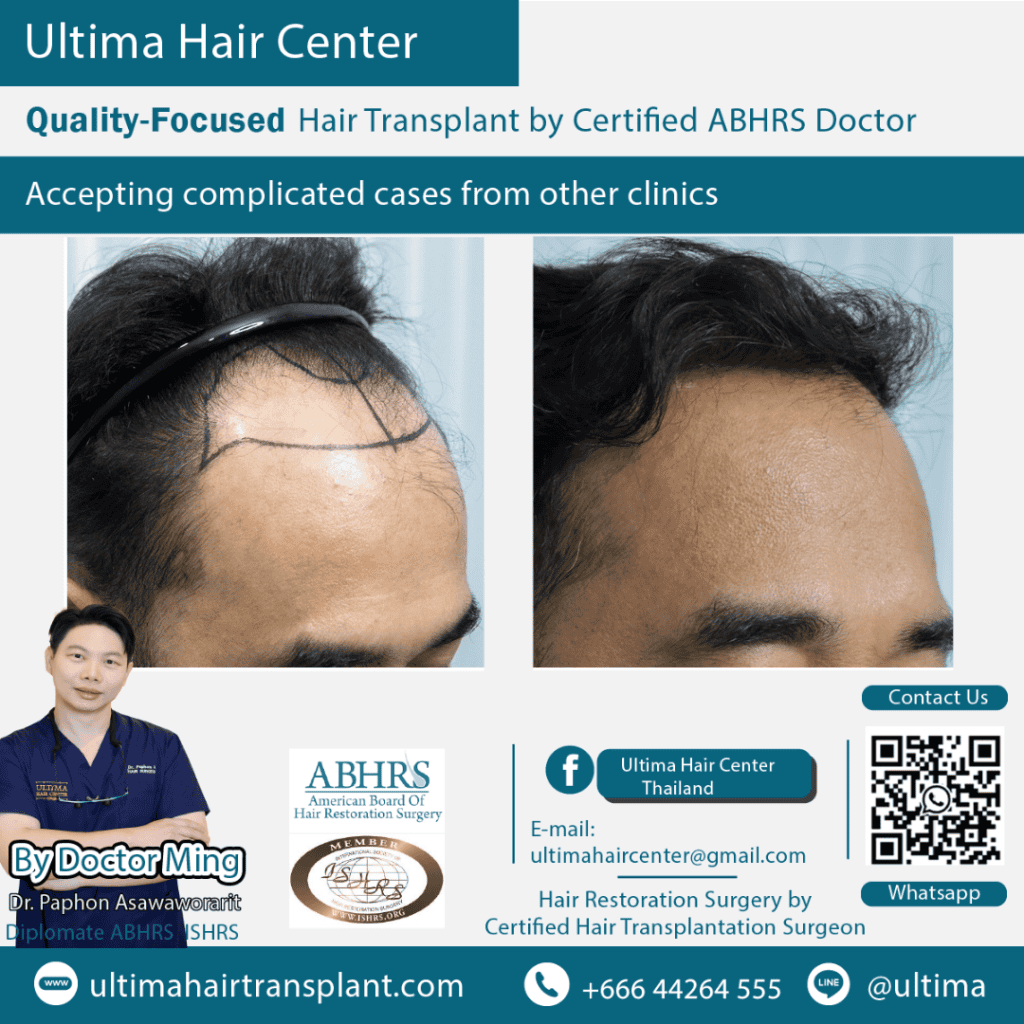
Some people may have seen advertisements describing hair transplantation as “permanent” or may assume that transplanted hair will remain exactly the same for the rest of their lives without any changes
However, the reality is more complex
Hair transplantation involves moving hair grafts from one area of the scalp to another. The grafts are commonly taken from the back and sides of the scalp, where the hair may have different characteristics from the hair in areas affected by hair loss
Therefore, rather than simply asking whether transplanted hair will “last for a lifetime,” a more appropriate question is:
How long can transplanted grafts remain in place, and what factors can affect the long-term outcome?
This article explains the subject from the perspective of medical standards and honest communication, so that people considering a hair transplant can have realistic expectations before making a decision
What Is a Hair Transplant?
A hair transplant is a procedure in which hair grafts are taken from a suitable area, known as the Donor Area, and transplanted into areas affected by hair thinning or baldness
Different techniques can be used, including:
- FUE
- FUT
- DHI or other implantation approaches using specialized instruments
The most important factor is not simply the name of the technique, but how the treatment is planned — which grafts should be used, where they should be placed, how many are needed, and how they should be distributed
What Does “Long-Lasting” Mean in Hair Transplantation?
When discussing how long transplanted hair can last, it is helpful to separate the issue into two areas
1. Transplanted Grafts
Grafts taken from a suitable Donor Area generally have greater resistance to the hair-thinning process associated with genetic hair loss compared with hair in other areas of the scalp
2. Existing Hair That Was Not Transplanted
The existing hair surrounding the transplanted area may still be affected by genetic hair loss and age-related changes
This is why patients should continue to take care of their existing hair even after undergoing a hair transplant
Can Transplanted Hair Fall Out Again?
Transplanted hair can undergo changes as part of the normal hair growth cycle, just like other hair
However, grafts from a suitable Donor Area generally have greater resistance to genetic hair loss than hair in areas affected by progressive thinning
This should not be interpreted as meaning that “transplanted hair can never fall out” because other factors may affect hair over time, including:
- Age
- Genetics
- Hormonal factors
- Overall health
- Scalp conditions
- Hair care
- Graft quality
- The technique and treatment process
For this reason, providing accurate and honest information about expected results is important
Why Are Grafts from the Back and Sides of the Scalp Commonly Used?
In men with genetic hair loss, the hair at the front, middle, and crown areas often becomes thinner than the hair at the back and sides of the scalp. The back and sides are therefore commonly used as the Donor Area
However, not every hair in these areas is necessarily suitable for transplantation. The doctor needs to assess:
- Hair density
- Hair shaft thickness
- Graft quality
- The number of available grafts
- The potential for future hair loss
Why Can Hair Continue to Thin After a Hair Transplant?
This is one of the most important points for anyone considering a hair transplant to understand
A hair transplant adds hair to areas where it is needed, but it does not necessarily stop the underlying process of hair thinning in the existing hair
For example, a man may have a receding hairline and thinning in the middle of the scalp. A doctor may transplant grafts from the back of the scalp to the frontal area. If the existing hair in the middle of the scalp continues to thin over time, a visible difference may develop between the transplanted area and the surrounding existing hair
Therefore, managing and preserving existing hair can be just as important as the hair transplant itself
Hair Transplantation Should Be Viewed as Long-Term Planning
A good hair transplant plan should not focus only on the day of treatment
The doctor should consider the current condition of the hair as well as how the hair may change in the future
This is particularly important for younger patients with genetic hair loss that may still be progressing. Designing a very low hairline or using a large number of grafts during the first procedure may make future treatment planning more difficult
What Factors Affect the Long-Term Outcome?
1. Donor Area Quality
This is one of the most important factors. If the Donor Area has good density and graft quality, the doctor may have more options when developing a treatment plan
2. Graft Selection
Individual grafts can contain different numbers of hairs. Some grafts contain a single hair, while others may contain two to four hairs
The use of different grafts in different areas therefore requires careful planning
3. Hairline Design
The hairline is one of the most visible areas of the scalp. If it is designed inappropriately, even a large number of hairs may not produce an appearance that complements the patient’s facial features
Hairline design should take into consideration:
- Age
- Facial structure
- Gender
- Hair characteristics
- Donor Area density
- Potential future hair loss
4. Number of Grafts Used
A hair transplant does not necessarily produce a better result simply because more grafts are used. The Donor Area has a limited supply of grafts
Using grafts appropriately is therefore important for both current treatment and future planning
5. Care of Existing Hair
Hair that was not transplanted may continue to thin over time. Depending on the individual patient’s condition, the doctor may consider additional treatment or strategies to help maintain the existing hair
Does Age Affect Hair Transplant Planning?
Yes, age can have a significant impact on treatment planning
Younger people who have only recently started experiencing hair loss may not yet have a clear or predictable pattern of future thinning
If a hair transplant is performed too early with a very low hairline or a large number of grafts, problems may arise if the existing hair behind the transplanted hairline continues to thin in the future
Therefore, hair transplantation should take both the patient’s current age and the potential future progression of hair loss into consideration
Do You Need to Continue Taking Care of Your Hair After a Hair Transplant?
Even after undergoing a hair transplant, continued care of the hair and scalp remains important, particularly for existing hair that was not transplanted
Depending on the individual’s condition, a doctor may recommend approaches such as:
- Medications or hair-care products when appropriate
- Additional treatment for hair loss
- Scalp care
- Monitoring changes in hair density and quality
When Can You See the Results After a Hair Transplant?
A hair transplant does not mean that new hair will immediately grow to full density
Transplanted hair goes through its natural growth cycle, and changes may occur during the early stages after the procedure. New hair growth then gradually becomes more noticeable over time
The results typically become clearer as the months pass, and the outcome can generally be assessed more clearly at around 9–12 months after the procedure
Therefore, it is important not to judge the final outcome based on only the first few weeks or months after a hair transplant
If Hair Falls Out After a Hair Transplant, Does That Mean the Procedure Failed?
Not necessarily
It is important to distinguish between transplanted hair and existing hair
These two groups can be affected by different factors. During the early period after a hair transplant, the transplanted hair may go through changes as part of its normal growth cycle
At the same time, existing hair affected by genetic hair loss may continue to thin
If you notice unusual changes or have concerns about your results, you should return to your doctor for an appropriate follow-up assessment
How Should You Understand the Term “Permanent Hair Transplant”?
The term “permanent hair transplant” is sometimes used in advertising or general communication to suggest that grafts taken from a suitable Donor Area are likely to remain in the transplanted area for a long period of time
However, this should not be interpreted to mean that every transplanted hair will remain completely unchanged for the rest of a person’s life
The reality is that hair transplant outcomes depend on multiple factors, and the overall condition of the hair can continue to change with age and genetic factors
Therefore, honest and accurate information is more important than advertising language that may create unrealistic expectations
Why Is Honest Communication Important When Choosing a Hair Transplant Clinic?

Before deciding to undergo a hair transplant, patients should receive information about both the potential benefits and the limitations of treatment, including:
- How much hair can realistically be transplanted
- How many grafts may be appropriate
- Whether there are limitations in the Donor Area
- What level of results can realistically be expected
- Whether existing hair may continue to thin
- Whether additional treatment may be needed
- How long it may take to see the results
Honest communication does not mean being negative. It means ensuring that patients have a complete understanding of the relevant information before making a decision
How Important Are Medical Standards in Hair Transplantation?
Hair transplantation is a medical procedure, so the treatment process should be considered alongside the final visual result
Important factors include:
- Pre-treatment assessment
- Identifying the cause of hair loss
- Planning the number of grafts
- Hairline design
- Graft handling during the procedure
- Hygiene and patient safety
- Post-treatment follow-up
These are all important components of medical standards that patients should consider before choosing a hair transplant clinic
Why Is a Quality-Focused Hair Transplant More Important Than Simply Using the Maximum Number of Grafts?
A good hair transplant does not necessarily require the maximum possible number of grafts
Instead, grafts should be used appropriately for the areas that need treatment
For example, when the number of available grafts is limited, the doctor may need to determine whether priority should be given to:
- The hairline
- The middle of the scalp
- The crown
Or how the available grafts should be distributed among these areas
This type of planning helps ensure that the available grafts are used appropriately
This is the concept behind a quality-focused hair transplant — prioritizing appropriate planning and effective graft use rather than simply focusing on the number of grafts
If You Are in the Krungthep Kreetha–Bang Kapi Area, How Can You Seek Advice About Hair Transplantation?
For people looking for information about hair transplantation in the Krungthep Kreetha–Bang Kapi area, the most important consideration should not simply be distance or price
It is also important to consider whether the patient receives a direct medical assessment and whether the treatment plan is tailored to their individual condition
Before making a decision, patients should ask clearly about:
- The cause of their hair loss
- The appropriate number of grafts
- Donor Area quality
- Appropriate hairline design
- Expected results
- Post-treatment care
- Long-term management of existing hair
Frequently Asked Questions About Hair Transplantation
Will transplanted hair last for a long time?
Grafts from a suitable Donor Area are generally expected to remain in the transplanted area for a long period of time. However, individual results vary, and this should not be interpreted to mean that transplanted hair will remain completely unchanged throughout life, as hair can be affected by other health-related factors
Can hair still fall out after a hair transplant?
Yes. This is particularly relevant to existing hair that was not transplanted, which may continue to thin due to genetic factors and age
Will I need another hair transplant?
Not everyone will need another procedure. However, some people may consider additional transplantation in the future depending on how their hair changes and their individual needs
Is one hair transplant enough?
It depends on the individual. For some people, one procedure may be sufficient, while others may require additional planning in the future, particularly if their hair loss continues to progress
What age is appropriate for a hair transplant?
There is no single age that is appropriate for everyone. A doctor should assess the cause and degree of hair loss, whether the condition has stabilized, and the potential future progression of hair loss before recommending treatment
Conclusion: Understanding Hair Transplant Longevity and the Term “Permanent”
If you ask, “How long will a hair transplant last?”, the answer is that grafts from a suitable Donor Area are generally expected to remain in the transplanted area for a long period of time. However, this should not be interpreted to mean that transplanted hair can never change or fall out, as hair can be affected by other health-related factors
More important than advertising terminology is understanding the facts surrounding hair transplantation — including Donor Area quality, graft selection, hairline design, the number of grafts used, care of existing hair, and long-term treatment planning
For people looking for a hair transplant clinic in the Krungthep Kreetha–Bang Kapi area, it is important to choose a medical facility that emphasizes medical standards, physician-led assessment, and honest communication without creating unrealistic expectations
The concept of a quality-focused hair transplant is not about using the maximum number of grafts. It is about careful planning, making effective use of available grafts, maintaining existing hair, and designing a treatment approach suited to each individual, with the goal of achieving a balanced and natural-looking result over the long term
:::
