

Understanding the American Board of Hair Restoration Surgery and Why It Should Be Considered When Choosing a Hair Transplant Doctor
Hair transplantation today offers a wider range of options, including FUE, FUT, and various approaches to treating hair loss. However, one important question should not be overlooked:
“Who will evaluate, plan, and perform the hair transplant?”
Hair transplantation is not simply a matter of moving hair grafts from one area to another. It requires assessment of the cause of hair loss, evaluation of the Donor Area, hairline design, estimation of the required number of grafts, selection of appropriate grafts for each area, and careful planning of the direction and angle of the frontal hairline, together with long-term treatment planning
For this reason, a physician’s qualifications and certifications are important factors to consider. One certification that may be relevant is ABHRS, or the American Board of Hair Restoration Surgery, an organization involved in assessing physicians’ knowledge and skills in hair restoration surgery
This article explains what ABHRS is, why it matters, how it differs from general marketing claims, and why people looking for a quality-focused hair transplant may want to consider a physician’s certification alongside other important factors
What Is ABHRS?

ABHRS stands for American Board of Hair Restoration Surgery
It is an organization associated with the certification of physicians in Hair Restoration Surgery, with an assessment process covering knowledge and skills related to hair transplantation and hair restoration
It is important to understand that the term “ABHRS” does not simply mean that a physician has attended a hair transplantation course. It relates to a certification process evaluating knowledge and skills in Hair Restoration Surgery according to the organization’s criteria
For patients choosing a hair transplant doctor, information about such certification can therefore be useful when evaluating a physician’s qualifications
Why Is Choosing the Doctor More Important Than Choosing a Technique Alone?
When considering hair transplantation, many people start with questions such as:
“Is FUE better?” or “Is FUT better?”
In reality, the technique is only one part of the treatment
The physician’s treatment planning is equally important
For example, if a patient has hair loss around the frontal scalp, the physician needs to consider:
- Where the existing hairline is
- How the new hairline should be designed
- Approximately how many grafts are required
- Which areas should receive single-hair grafts
- Which areas can receive multi-hair grafts
- How the new hairline should transition into the existing hair
- How much donor hair is available
- How the treatment should be planned if hair loss continues in the future
Therefore, choosing a physician with knowledge and experience in Hair Restoration is an important part of the decision-making process
How Is an ABHRS-Certified Physician Different From the General Term “Hair Transplant Doctor”?
The term “hair transplant doctor” generally refers to a physician who provides hair transplantation services, but the term itself does not indicate the physician’s specific qualifications or certifications
ABHRS, on the other hand, represents a certification specifically related to Hair Restoration Surgery
Patients researching hair transplant doctors can therefore use ABHRS certification as one piece of information when making a decision
However, ABHRS should not be used as the only criterion
It should be considered together with:
- Medical qualifications
- Professional certifications
- Experience
- Previous results
- Hair transplantation techniques
- Hairline design
- Donor Area assessment
- Graft handling
- Post-treatment care and follow-up
Why Is ABHRS Relevant to Hair Transplantation?
Hair transplantation requires both medical knowledge and technical skill in managing hair and grafts
A physician needs to understand the entire process, from:
Hair loss causes → Diagnosis → Treatment planning → Donor Area assessment → Graft extraction → Graft preparation → Hairline design → Graft placement → Post-operative care
Therefore, choosing a physician with certification in Hair Restoration can provide patients with additional information when evaluating the physician’s qualifications
ABHRS Does Not Mean Every Patient Will Achieve the Same Result
This is an important point
Being certified by ABHRS does not mean that every patient will achieve the same hair transplant result
Outcomes depend on many factors, including:
- Age
- Cause of hair loss
- Degree of hair loss
- Quality of the Donor Area
- Number of available grafts
- Hair characteristics
- Hair shaft thickness
- Management of existing hair
- Technique used
- Graft handling
- Post-operative care
- Individual biological response
Therefore, ABHRS should be viewed as one component of the process of choosing a physician, rather than a guarantee of a particular outcome
What Should an ABHRS-Certified Physician Assess Before Hair Transplantation?
Before undergoing a hair transplant, the physician should evaluate more than simply which areas have less hair
1. The Cause of Hair Loss
The physician should first determine the underlying cause, such as:
- Genetic hair loss
- Alopecia areata
- Traction alopecia
- Scalp disorders
- Other causes of hair loss
Different causes may require different treatment approaches
2. The Donor Area
The Donor Area is extremely important because it provides the grafts used for hair transplantation
The physician should assess:
- Hair density
- Hair shaft thickness
- Approximate number of available grafts
- Whether the area has previously been harvested
- How many grafts can reasonably be extracted
3. Age and the Future Pattern of Hair Loss
Younger patients who have only recently started experiencing hair loss may not always be ideal candidates for immediate transplantation
If the existing hair continues to thin, there may eventually be a noticeable difference between transplanted and naturally thinning areas
For this reason, the physician should consider the patient’s long-term situation rather than focusing only on the current appearance
Why Is Hairline Design Important?
The hairline is one of the most visible aspects of a hair transplant
Hairline design should not simply focus on the question:
“Can we place the hairline as low as possible?”
Instead, it should take into account:
- Age
- Facial structure
- Forehead proportions
- Hair characteristics
- Number of available grafts
- The possibility of future hair loss
A hairline that is designed too low may require a large number of grafts and can create greater limitations for future treatment planning
A well-planned hairline should therefore balance the patient’s appearance today with appropriate long-term planning
ABHRS-Certified Physicians and Graft Selection
Grafts are not all identical. A graft may contain one, two, or three hairs, and graft selection should be appropriate for the area being treated
Frontal Hairline
Grafts containing fewer hairs are generally preferred for creating finer hairline detail
Mid-Scalp
Multi-hair grafts can be useful for increasing density in appropriate areas
Crown
The natural direction and rotational pattern of the hair should also be considered
Appropriate graft allocation is one of the important components of achieving a natural-looking hair transplant result
ABHRS-Certified Physicians and Choosing Between FUE and FUT
There are several hair transplantation techniques, with two of the most well-known being:
FUE — Follicular Unit Extraction
and
FUT — Follicular Unit Transplantation
Rather than choosing based on the idea that one technique is universally “the best,” the physician should evaluate each patient individually, including:
- Donor Area
- Number of grafts required
- Hair characteristics
- Hairstyle
- Patient preferences
- Previous hair transplantation
- Future treatment planning
The appropriate approach can then be selected based on the individual case
What Is FUE?
FUE involves extracting individual follicular units from the Donor Area without removing a strip of scalp
One commonly discussed advantage is that it does not create the linear scar associated with FUT
However, FUE requires careful planning and extraction technique. If grafts are harvested improperly or excessively, the Donor Area may appear patchy or noticeably less dense
For this reason, it is not advisable to remove more grafts than the Donor Area can reasonably provide, as excessive harvesting can significantly reduce the density of the hair at the back of the scalp
What Is FUT?
FUT involves removing a strip of scalp from the Donor Area and then dissecting it into individual grafts for transplantation
One advantage of FUT is that it can allow a large number of grafts to be harvested while preserving more of the surrounding donor density compared with extensive FUE harvesting. It can therefore be an option for patients who require a larger number of grafts to cover a relatively extensive area
FUT may also allow the surgical team to directly visualize the hair follicles during graft preparation, which can facilitate the preparation of intact, high-quality grafts
However, FUT results in a linear scar in the Donor Area, so the patient’s preferred hairstyle and individual needs should also be considered
Why Should You Not Choose a Doctor Based Only on the Number of Grafts Offered?
The phrase “3,000 grafts” may sound attractive, but a larger number of grafts does not automatically mean a better result
It is important to consider:
- How many hairs each graft contains
- The quality of the grafts
- Where the grafts are harvested from
- Where they will be placed
- How the grafts will be distributed
- How much donor density will remain
- Whether future hair loss has been considered
A good hair transplant should therefore not be viewed as a competition based solely on the number of grafts
Why Should the Donor Area Be Evaluated Before Deciding on Hair Transplantation?
The Donor Area is a limited resource
If too many grafts are harvested, the back or sides of the scalp may appear thinner
For patients with significant hair loss, careful Donor Area planning becomes even more important
A physician should consider both:
“How many grafts are needed today?”
and
“How many grafts might be needed in the future?”
This is one of the reasons why choosing the right physician is more important than simply choosing the lowest price
Who May Benefit From Choosing an ABHRS-Certified Hair Transplant Physician?
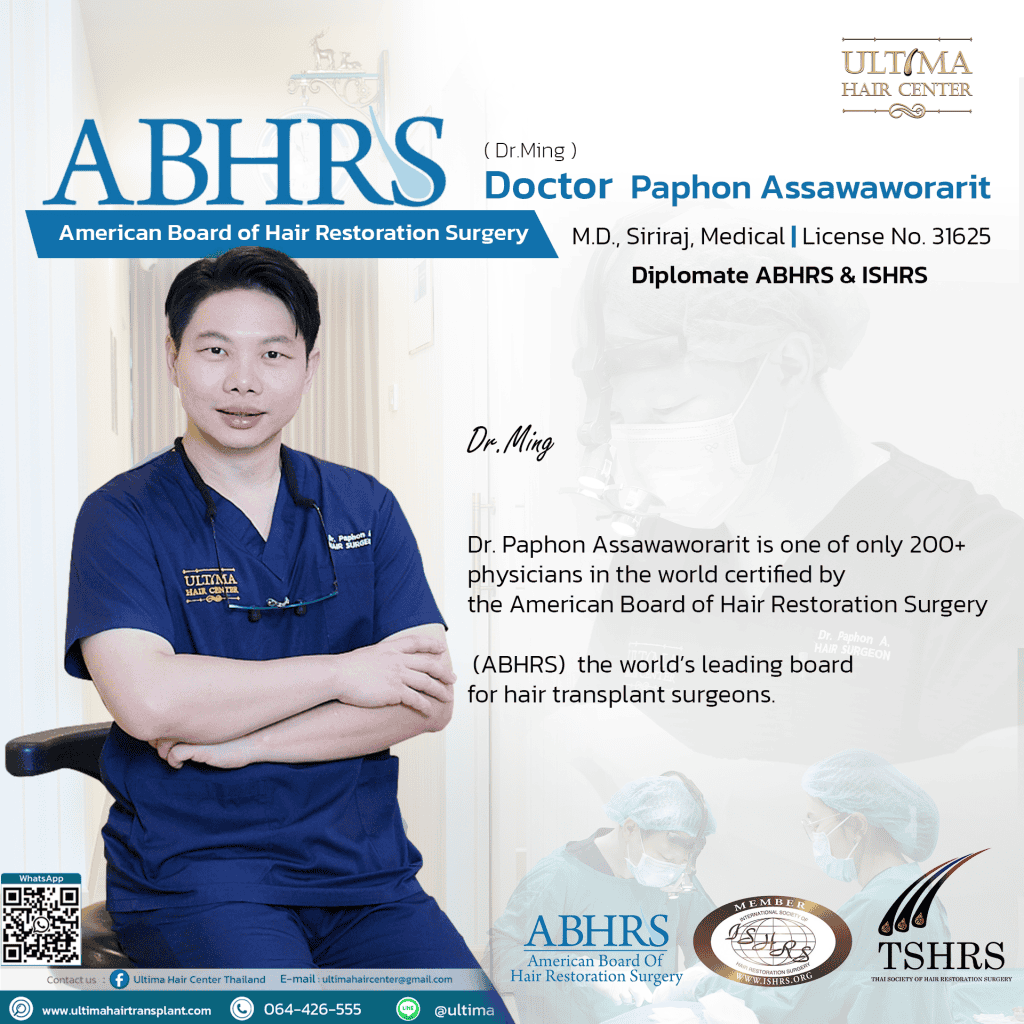
People who are considering hair transplantation and want to make a careful, informed decision may include ABHRS certification among their criteria, particularly if they value formal assessment of knowledge in Hair Restoration Surgery
However, other factors should also be considered, including:
- The individual’s hair loss pattern
- The physician’s previous work
- Treatment philosophy
- Techniques offered
- Hairline design
- Donor Area assessment
- Pre- and post-operative care
How Does Dr. Ming Approach Hair Transplant Planning?
The approach to hair transplantation with Dr. Ming emphasizes evaluating each patient’s individual hair loss before selecting a treatment approach
Two patients with the same degree of hair loss may not require the same number of grafts
Likewise, two patients receiving the same number of grafts will not necessarily achieve identical results
The important point is to bring all relevant information together when planning the procedure, including:
Cause of hair loss → Donor Area → Number of grafts → Design → Technique → Graft placement → Post-operative care
Why Does Ultima Hair Center Place Importance on ABHRS Certification?
The philosophy of Ultima Hair Center focuses on the quality of the hair transplantation process from beginning to end, including long-term care, particularly for patients with genetic hair loss who wish to preserve their existing hair over time
Choosing a physician should therefore involve more than simply asking whether the clinic performs FUE or FUT
The physician should understand the broader principles of Hair Restoration and create a plan that takes into account:
- Age
- Facial structure
- Hair characteristics
- Degree of hair loss
- Donor Area
- Number of grafts
- Potential future hair loss
A well-planned hair transplant should consider more than simply increasing the number of hairs today
How Should You Choose a Hair Transplant Clinic in the Krungthep Kreetha–Bang Kapi Area?
If you are searching for a hair transplant clinic in the Krungthep Kreetha–Bang Kapi area, the decision should involve more than location or price
Who is the physician?
Check the physician’s medical qualifications, certifications, and experience
Who performs the assessment?
The pre-treatment assessment should be sufficiently detailed
Who develops the treatment plan?
Hairline design and graft allocation are important parts of the treatment
Can you communicate directly with the physician?
Being able to discuss your concerns directly with the physician rather than relying solely on an administrator or salesperson can provide more useful information
Is there follow-up care?
Hair transplantation does not end on the day of surgery. Post-operative follow-up is also an important part of treatment
Free Consultation With Dr. Ming Before Making a Decision
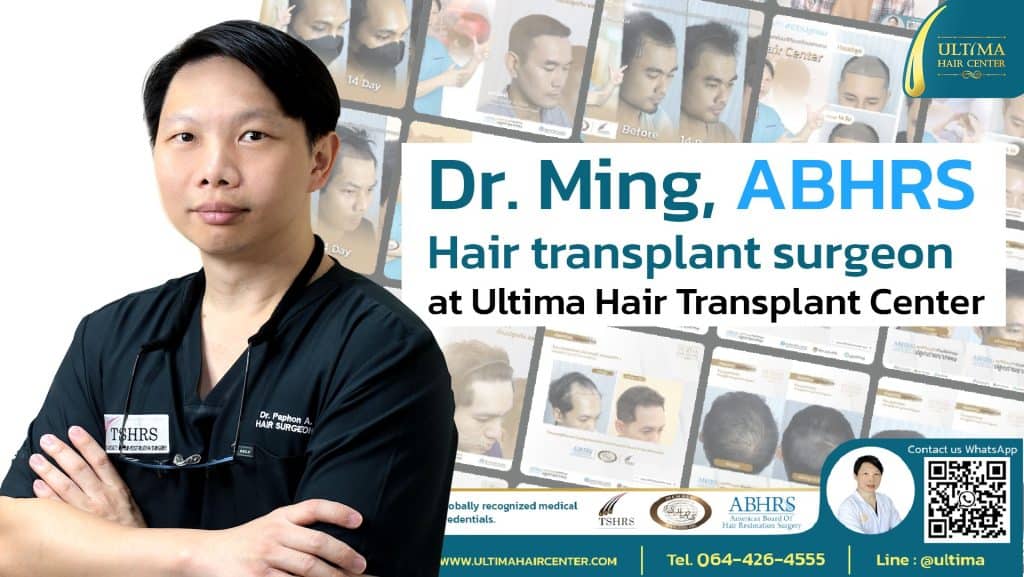
If you are unsure whether hair transplantation is right for you, you can consult with Dr. Ming for free to discuss your hair loss and possible treatment options
A consultation can help answer questions such as:
- Do I actually need a hair transplant?
- Which areas should be transplanted?
- Approximately how many grafts might be required?
- Is my Donor Area sufficient?
- Would FUE or FUT be more suitable?
- Should existing hair loss be treated as well?
- How should the treatment be planned if hair loss continues in the future?
A consultation does not mean that every patient needs to undergo hair transplantation. Rather, it can help patients make decisions based on their individual circumstances
What Does a Quality-Focused Hair Transplant Involve?
The phrase quality-focused hair transplant should not simply refer to the use of modern equipment or a large number of grafts
Quality should be considered throughout the entire treatment process
1. Quality of Diagnosis
The cause of hair loss should be identified first
2. Quality of Treatment Planning
The physician should determine which areas should be treated and in what order
3. Graft Quality
Grafts should be handled appropriately from extraction through transplantation
4. Design Quality
The hairline should be appropriate for the patient’s age and facial structure
5. Graft Placement Quality
Direction, angle, and density should all be considered
6. Quality of Post-Operative Care
Patients should receive appropriate instructions and follow-up care
10 Questions to Ask Before Choosing a Hair Transplant Doctor
Before making a decision, you can ask the physician or clinic:
1. What medical qualifications and certifications does the physician have?
2. Is the physician ABHRS certified?
3. Who performs the assessment and develops the hair transplant plan?
4. What is the quality of my Donor Area?
5. Approximately how many grafts do I need?
6. Why is FUE or FUT being recommended for my case?
7. Does the physician and clinic have the capability to perform both FUE and FUT?
8. Is the proposed hairline appropriate for my age?
9. How will the treatment be planned if my existing hair continues to thin in the future?
10. What type of follow-up care is provided after the procedure?
These questions can provide a much clearer picture than comparing prices alone
ABHRS Is Important, But Real Results Should Also Be Considered
Although ABHRS certification can be an important piece of information, patients choosing a physician should also review actual results
Consider looking at before-and-after cases involving different situations, such as:
- Frontal hairline restoration
- Mid-scalp restoration
- Patients with extensive hair loss
- Patients with limited Donor Areas
- Revision cases from previous clinics
It is also useful to compare photographs taken from similar angles and under similar lighting conditions to make the results easier to assess fairly
Is Hair Transplantation With an ABHRS-Certified Physician More Expensive?
It should not be assumed that ABHRS certification alone determines the price
Hair transplantation costs can depend on many factors, including:
- Number of grafts
- Technique
- Complexity of the case
- Physician’s experience
- Medical facility
- Pre- and post-operative care
Therefore, it is more useful to compare the overall value and services provided rather than focusing only on the price per graft
Is ABHRS the Only Thing You Should Look For?
No. Choosing a hair transplant physician should involve multiple factors:
ABHRS + Medical Qualifications + Experience + Results + Treatment Planning + Technique + Graft Handling + Follow-Up Care
All of these factors should be considered together
Conclusion: Why Should You Consider an ABHRS-Certified Physician for Hair Transplantation?
Hair transplantation requires both medical knowledge and an understanding of Hair Restoration
Choosing an ABHRS-certified hair restoration physician can therefore be one of the factors patients consider when selecting a doctor
However, ABHRS should not be viewed as a guarantee of a specific result. Hair transplant outcomes depend on multiple factors, including diagnosis, Donor Area planning, hairline design, graft selection, extraction and implantation techniques, and post-operative care
For people looking for a quality-focused hair transplant, the most important consideration should not simply be the number of grafts or the lowest price. Instead, look at the treatment as a whole and choose a physician who can clearly explain the reasoning behind the proposed treatment plan
If you are experiencing hair loss and are unsure whether you need a hair transplant, you can consult with Dr. Ming for free to discuss your condition and possible treatment options
For those searching for a hair transplant clinic in the Krungthep Kreetha–Bang Kapi area, consider the physician’s qualifications, ABHRS certification, actual results, treatment planning, and post-operative care as part of your decision-making process
A good hair transplant is not simply about adding more hair. It is about developing an appropriate treatment plan, making efficient use of available grafts, and aiming for a natural-looking result that is appropriate for each individual
