

What Factors Should You Consider Before Deciding?
“Can I have a hair transplant if I’m 20–25 years old?”
This is a common question, especially among young men in university or at the beginning of their careers who have started noticing a receding hairline, a widening forehead, or thinning hair around the mid-scalp and crown
The answer is that being 20–25 years old does not automatically mean you cannot have a hair transplant. However, this is an age range in which careful assessment is particularly important because, for some people, the pattern of hair loss may continue to change over the following years
A hair transplant should therefore not be considered simply in terms of “where is my hair thinning today?” Instead, it is important to ask:
“If my hair loss progresses in the future, how should we plan the use of my available grafts?”
This is why people aged 20–25 should place particular importance on medical assessment and long-term planning before deciding to undergo a hair transplant
This article explains whether hair transplantation is possible at age 20–25, what factors should be considered, the differences between FUE and FUT, the role of medication, Donor Area assessment, hairline design, and what you should know before making a decision
Can You Have a Hair Transplant at Age 20–25?
The answer is yes, in some cases, but not everyone should rush into a hair transplant
Age alone should not determine whether someone is suitable for a hair transplant
A doctor should assess several other factors, including:
- The cause of hair loss
- The pattern of hair loss
- The rate at which the hair is changing
- Family history
- Donor Area density
- Hair quality
- Age when hair loss began
- Scalp condition
- The patient’s expectations
- The potential progression of hair loss in the future
Therefore, two people who are both 20 years old and have similar hair loss may receive very different recommendations
Why Should People Aged 20–25 Be More Careful?
One important reason is that the pattern of hair loss may not yet be fully established
This is particularly relevant for people with genetic hair loss, or Androgenetic Alopecia
Between the ages of 20 and 25, some people may only recently have started experiencing:
- A receding frontal hairline
- Deeper temple recession
- Thinning in the mid-scalp
- Early crown thinning
- Miniaturization of individual hairs
- Reduced overall hair density
These changes may continue to progress
Therefore, if someone undergoes a hair transplant too early while focusing only on the areas that are currently thinning, without planning for continued management of the existing hair, additional treatment may become necessary if other areas begin to thin later
What Problems Can Occur If You Have a Hair Transplant Too Early?
Imagine a 22-year-old whose hairline has started to recede. He may want to lower the hairline significantly to make his forehead appear smaller
If a large number of grafts are used to create a low hairline during the first procedure, the initial result may look very good
However, if the original hair behind the transplanted hairline becomes thinner several years later, the patient may develop an appearance in which the transplanted hair remains while the surrounding native hair becomes sparse
This may create an isolated or “island-like” appearance and could require additional transplantation
The challenge is that the Donor Area contains a limited number of usable grafts, so grafts should not be used without considering the possibility of future hair loss in people who are at risk of further progression
How Long Should Someone Aged 20–25 Wait Before Having a Hair Transplant?
There is no single age that should be considered a universal rule
Some people aged 20–25 may have a sufficiently clear pattern of hair loss and appropriate characteristics to consider a hair transplant
On the other hand, someone who is 25 may still not be ready if the hair is continuing to thin rapidly or the future pattern of hair loss cannot yet be assessed reliably
Therefore, a more important question than:
“Do I need to wait until I’m 30?”
is:
“Is my pattern of hair loss sufficiently clear for us to make a responsible long-term plan?”
Factor 1: Identify the Cause of Hair Loss First
Before considering a hair transplant, it is important to determine why the hair is falling out or becoming thinner
Hair loss is not caused by genetics alone. Potential causes may include:
- Genetics
- Hormonal factors
- Stress
- Insufficient sleep
- Certain nutritional deficiencies
- Scalp conditions
- Certain medications
- Alopecia areata
- Traction-related hair loss
- Hair loss following illness
If the underlying cause has not been identified, rushing into a hair transplant may not be the first or most appropriate option
Factor 2: Determine Whether Hair Loss Is Progressing
The important issue is not simply how many hairs are lost each day
It is also important to assess how hair density is changing over time
For example, if the hairline has continued to recede over the past 6–12 months, or thinning in the mid-scalp has become noticeably worse, the pattern of hair loss may require closer assessment
A doctor may use photographs and scalp examination to help monitor these changes
Factor 3: Family History Matters
It is useful to understand the history of hair loss within your family, such as:
- Does your father have hair loss?
- Do your siblings have thinning hair?
- At what age did their hair loss begin?
- What pattern of hair loss did they develop?
Family history cannot predict the future with certainty, but it is one of the factors that can help a doctor assess the potential pattern of hair loss
Factor 4: Carefully Assess the Donor Area
This is one of the most important considerations when performing a hair transplant on a younger patient
The Donor Area is the area from which grafts are harvested for transplantation, generally from the back and sides of the scalp
Important factors include:
- Hair density
- Hair caliber
- Graft characteristics
- The number of grafts that may be available
- The stability of the Donor Area
- Scalp characteristics
A person aged 20–25 may appear to have a dense Donor Area today, but it is important to consider whether this area itself is likely to change in the future
Factor 5: Do Not Use All Available Grafts to Rebuild the Hairline at Once
Younger patients are often particularly concerned about their forehead, and some may want to lower the hairline as much as possible
However, lowering the hairline significantly can require a large number of grafts
If the hair behind the transplanted area becomes thinner in the future, there may not be enough remaining donor grafts to address the newly affected areas
The key principle is:
Design a hairline that suits your face today while also planning for the years ahead
Factor 6: The Hairline Should Not Be Designed to Look Unnecessarily Youthful
A 20-year-old’s hairline does not necessarily need to resemble the hairline they had as a child
Hairline design should take into account:
- Facial shape
- Forehead
- Eyebrow position
- Facial width
- Age
- Personal appearance
- Pattern of hair loss
- Donor Area density
The goal is to create a hairline that is appropriate and looks natural as time passes
Factor 7: Consider the Native Hair That Has Not Yet Thinned
This is something that many people overlook
A hair transplant can add grafts to areas where increased density is needed, but it does not automatically stop native hair in other areas from becoming thinner
For example, someone may have the frontal hairline transplanted today, but several years later, the mid-scalp may begin to thin
Without considering this possibility from the beginning, a difference may develop between the transplanted area and the surrounding native hair
For this reason, people aged 20–25 should consider managing their existing native hair alongside the hair transplant
Is Hair Loss Medication Important for People Aged 20–25?
In some cases, a doctor may consider medical treatment for hair loss as part of an overall treatment plan
This may be particularly relevant when there is still native hair that may benefit from treatment
The decision to use medication depends on factors such as:
- The cause of hair loss
- Sex
- Age
- Overall health
- Current medications
- Potential risks and side effects
- Individual preferences
Prescription medication or hormonal treatments should not be started independently. A doctor should assess whether they are appropriate first
What If You Are 20–25 and Your Hair Loss Is Severe?
In some cases, a hair transplant may be considered, but careful planning is particularly important
A doctor may evaluate:
- What is causing the hair loss?
- Is the pattern of hair loss sufficiently clear?
- Is the Donor Area adequate?
- Is there native hair that needs to be managed?
- How should the hairline be designed?
- Approximately how many grafts are required?
- How should the treatment plan be adjusted if hair loss progresses in the future?
This is the concept behind quality-focused hair transplantation, rather than focusing only on the initial result
FUE vs. FUT for People Aged 20–25
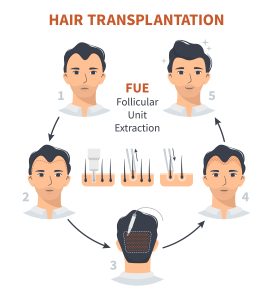
Both techniques may be considered, depending on the individual case
FUE
FUE, or Follicular Unit Excision, involves harvesting individual grafts or follicular units from the Donor Area
Advantages
- Does not create a linear scar from removing a strip of scalp
- Allows grafts to be harvested selectively from the Donor Area
- May be suitable for some people who prefer to wear their hair short
- Grafts may also be harvested from other areas, such as the beard or chest, in selected cases
Limitations
- Harvesting a large number of grafts requires many individual extraction sites
- Excessive harvesting may make the Donor Area appear less dense
- Careful planning of graft harvesting is particularly important
FUT for People Aged 20–25
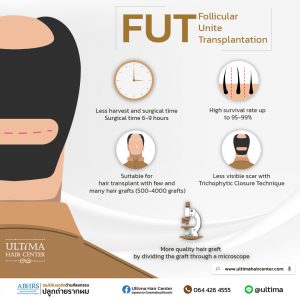
FUT, or Follicular Unit Transplantation, involves removing a strip of scalp from the Donor Area and then dissecting it into individual grafts for transplantation
Advantages
- Can provide a large number of grafts in an appropriate candidate
- Allows grafts to be harvested from a selected donor zone
- Does not reduce density across the entire Donor Area in the same way as dispersed FUE harvesting
- Does not require a wide area of the back of the head to be shaved
Limitations
- Creates a linear scar
- Scalp laxity needs to be considered
- The technique should be evaluated in relation to the hairstyle the patient may want in the future
Should Someone Aged 20–25 Choose FUE or FUT?
The answer is there is no single technique that is best for everyone
The decision should take into account:
- The number of grafts required
- Donor Area quality
- Hair density
- Scalp laxity
- Desired hairstyle
- Previous hair transplant procedures
- The long-term treatment plan
For people aged 20–25 in particular, the choice of technique should be considered beyond the first procedure alone
Is Additional Hair Transplantation Possible After an Initial Procedure at Age 20–25?
It is possible
This does not necessarily mean that the first procedure was unsuccessful. Native hair that was not transplanted may continue to change over time
If hair loss progresses, additional transplantation may be one possible option
However, the extent to which additional transplantation is possible depends on the Donor Area and the number of grafts that remain available
For this reason, younger patients should avoid using grafts unnecessarily
Why Is “Limited Graft Supply” Important for Younger Patients?
Grafts from the Donor Area are not unlimited
For example, if a patient has a certain amount of usable donor hair and uses a large number of grafts during the first procedure, fewer resources will remain for future needs
If hair loss progresses, additional grafts may be required
Therefore, graft allocation is particularly important for people aged 20–25
Hair Transplantation at a Young Age Should Focus on Quality Rather Than Graft Count
A good hair transplant should not simply aim to achieve:
“The maximum possible number of grafts”
Instead, the more important question is:
“How can the available grafts be used most effectively?”
This is the principle behind quality-focused hair transplantation, with emphasis on:
- Treatment planning
- Graft selection
- Hairline design
- Hair direction
- Density
- Appropriate use of the Donor Area
- Long-term planning
Which Area Should Be Prioritized for Hair Transplantation at Age 20–25?
In general, the doctor will consider which areas have the greatest impact on the overall appearance, such as:
Frontal Hairline
The frontal hairline has a major influence on the facial frame
Temples
The temples can affect the overall shape of the facial frame
Mid-Scalp
Some patients experience more significant thinning in this area than at the frontal hairline
The mid-scalp may require a considerable number of grafts, so careful planning is important
For younger patients, prioritizing treatment areas is particularly important
What Should Be Assessed Before a Hair Transplant at Age 20–25?
An assessment may include:
- Hair-loss history
- Pattern of hair thinning
- Scalp examination
- Donor Area assessment
- Hair quality
- Family history
- Relevant medical conditions or contributing factors
- Patient expectations
In some cases, the doctor may recommend additional investigations depending on the patient’s symptoms and clinical findings
If You Have Patchy Hair Loss, Do Not Rush Into a Hair Transplant
If hair loss occurs in clearly defined patches or circular areas, the underlying cause should be investigated first
Patchy hair loss may have a different cause from genetic hair loss
A hair transplant is therefore not the answer for every type of hair loss
The priority should be to establish an appropriate diagnosis before considering transplantation
Hairline Design for People Aged 20–25
Hairline design requires particular care in younger patients
It should not be based solely on the desire to:
“Make my forehead as narrow as possible”
A very low hairline may require a large number of grafts
If native hair behind the transplanted area becomes thinner later, this can create limitations for future treatment planning
An appropriate hairline should consider:
- Facial shape
- Age
- Eyebrow position
- Forehead
- Donor Area density
- Pattern of hair loss
- Future progression
What Expectations Should Someone Aged 20–25 Have?
Expectations should be based on the actual condition of the hair rather than the idea that:
“A hair transplant should restore the hair I had as a child”
The number of available grafts and the size of the Donor Area are limited
More realistic goals include:
Increasing density in strategically important areas
Creating a hairline that suits the face
Using available grafts efficiently
And improving the overall appearance
What Should You Ask Your Doctor Before Having a Hair Transplant?
People aged 20–25 may want to prepare questions such as:
1. What is causing my hair loss?
2. Is my hair loss likely to progress?
3. Am I suitable for a hair transplant now, or should I monitor the situation first?
4. Approximately how many grafts are available in my Donor Area?
5. Which area should be treated first?
6. Should I choose FUE or FUT?
7. Approximately how many grafts will I need?
8. How would we plan for future hair loss?
9. Do I need to manage my existing native hair as well?
10. What level of result can I realistically expect?
These questions can help patients make decisions based on medical information rather than relying solely on Before & After photographs
How Should You Choose a Hair Transplant Clinic If You Are Only 20–25?
Younger patients should place particular importance on planning
If you are searching for a hair transplant clinic in the Krungthep Kreetha–Bang Kapi area, consider whether:
- The doctor personally performs the assessment
- There is a long-term treatment plan
- The Donor Area is carefully evaluated
- The advantages and limitations of FUE and FUT are explained
- The possibility of future hair loss is discussed
- You are given sufficient time to make a decision
- The recommended graft number is based on your individual needs
- Follow-up care is provided after the procedure
Choosing a clinic should not be based solely on price or promotions
Ultima Hair Center Focuses on Planning Before Hair Transplantation
For people considering a hair transplant at age 20–25, Ultima Hair Center places importance on pre-treatment assessment and individualized planning
For younger patients in particular, the Donor Area and potential future progression of hair loss should be considered alongside the problem that is visible today
A hair transplant should not be approached only by asking:
“How many grafts do I need today?”
It is also important to ask:
“How should the available grafts be allocated for the future?”
This is at the heart of quality-focused hair transplantation
Doctor Ming Personally Responds to Patient Chats
For people aged 20–25 who are still unsure whether they should have a hair transplant, speaking directly with a doctor before making a decision can be valuable
At Ultima Hair Center, Dr. Ming personally responds to patient chats, allowing those interested in treatment to discuss their hair loss and initial treatment considerations directly
For example, patients may ask:
- Can I have a hair transplant at age 20?
- Should I have a hair transplant at age 23?
- At age 25, should I treat my hair loss before considering transplantation?
- Should I choose FUE or FUT?
- How should my hairline be designed?
- Is my Donor Area sufficient?
- What should I do if my hair loss progresses in the future?
Patients interested in treatment can consult with Dr. Ming free of charge for an initial discussion before making a decision
Why Is Choosing an ABHRS-Certified Hair Restoration Physician Important for Younger Patients?

For those considering a hair transplant with an ABHRS-certified physician, this credential can be one of the factors considered when choosing a doctor
This may be particularly relevant for people aged 20–25 who require careful long-term planning
However, it should be considered alongside other factors, including:
- Assessment of the cause of hair loss
- Hairline planning
- Donor Area assessment
- Choice of technique
- Graft allocation
- Future planning
- Post-procedure follow-up
The quality of treatment should therefore be evaluated as a whole
Conclusion: Can You Have a Hair Transplant at Age 20–25?
A hair transplant can be performed in some people aged 20–25, but the decision should not be based on age alone
The most important considerations are:
What is causing the hair loss?
How extensive is the hair loss?
Has the pattern of hair loss stabilized?
Is the Donor Area healthy, stable, and sufficient?
How should the hairline be designed?
Would FUE or FUT be more appropriate?
And:
How should the treatment plan account for possible future hair loss?
For people aged 20–25, efficient use of available grafts is particularly important because the pattern of hair loss may continue to change over time
Some people may be suitable for a hair transplant at 20–25, while others may benefit more from monitoring their condition or managing their existing hair before considering surgery
If you are looking for a hair transplant clinic in the Krungthep Kreetha–Bang Kapi area, Ultima Hair Center can be considered with an emphasis on individualized assessment and treatment planning
Those interested in a hair transplant with Dr. Ming can consult with Dr. Ming free of charge, with Dr. Ming personally responding to patient chats to discuss hair-loss concerns before making a decision
For those considering FUE or FUT, the appropriate technique should be determined by a doctor based on the condition of the Donor Area and the individual’s overall hair-transplant plan
For patients who place importance on physician credentials, a hair transplant with an ABHRS-certified physician can also be considered alongside the doctor’s experience, treatment-planning approach, and standards of care
Because for people aged 20–25, a good hair transplant is not simply about correcting hair loss today, but about carefully planning the use of available grafts to suit both the present and the future, in line with the philosophy of quality-focused hair transplantation rather than simply maximizing graft numbers
