

Key Factors That Help Hair Transplant Results Look Seamless and Natural
For people considering a hair transplant, one of the most common questions is:
“Will people be able to tell that I’ve had a hair transplant?”
In reality, the goal of a good hair transplant is not simply to increase the number of hairs in thinning areas. The procedure should be carefully planned so that the transplanted hair looks natural and blends seamlessly with the existing hair as much as possible
What makes a hair transplant look natural does not depend on the number of grafts alone. It involves many steps, from identifying the cause of hair loss and designing the hairline to selecting appropriate grafts, placing the hair at the correct direction and angle, and providing proper post-transplant care
This article covers the key factors for anyone searching for information about “How can I make my hair transplant look natural?” and what should be considered before making a decision
What Does a Natural-Looking Hair Transplant Mean?
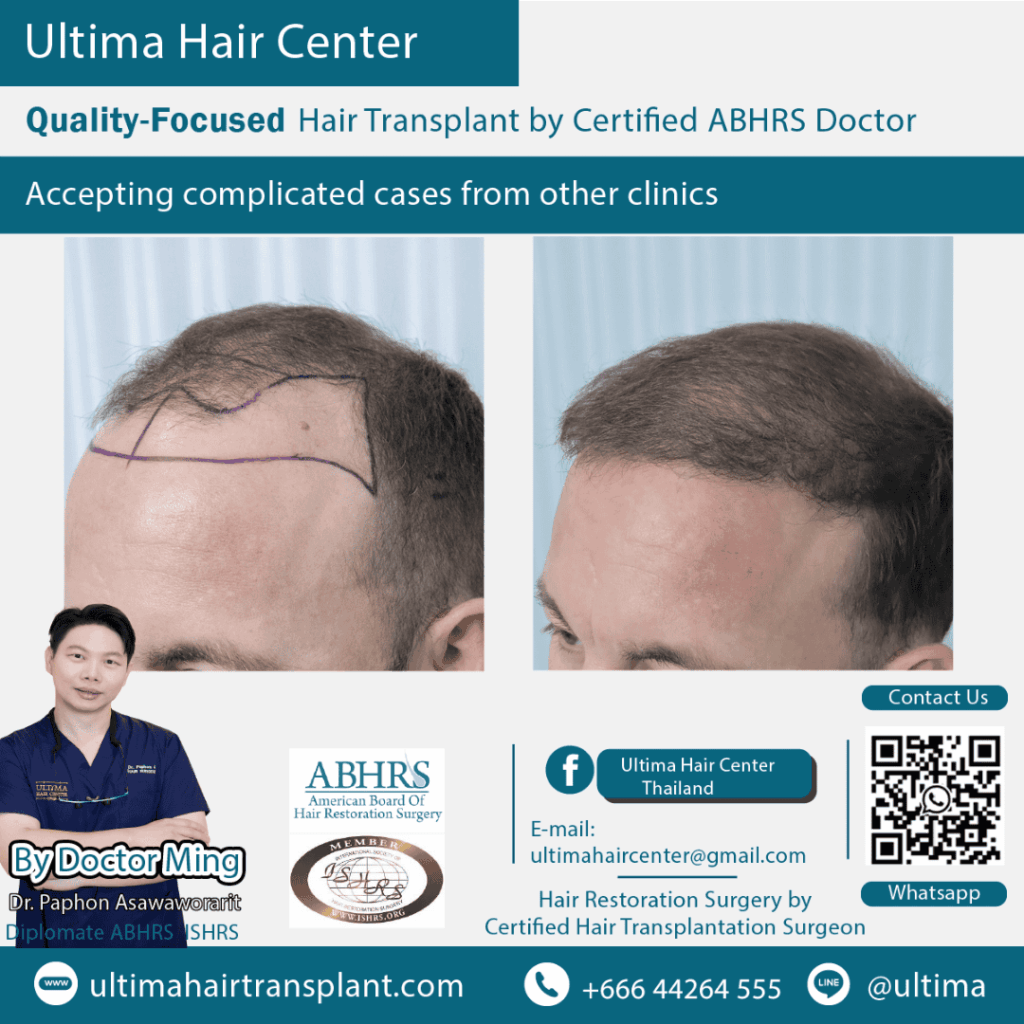
A natural-looking hair transplant means placing transplanted hairs in a way that closely follows the natural growth pattern of each individual
It does not mean that every hair has to be perfectly aligned or that the density must be exactly the same everywhere
In reality, everyone’s hair has natural variations in:
- Hair shaft thickness
- Number of hairs per graft
- Growth direction
- Hair angle
- Density
- Hairline pattern
- Distribution of hair
A hair transplant should therefore aim to reproduce these characteristics appropriately for each individual
Why Do Some Hair Transplants Look Less Natural?
Several factors can make transplanted hair look less seamless or less natural
For example:
- An inappropriate hairline design for the patient’s facial features
- A hairline that is too straight or overly uniform
- Using too many multi-hair grafts at the frontal hairline
- Grafts being placed too far apart or too close together
- Hair direction that does not match the existing hair
- Inappropriate hair angles
- Using more grafts than necessary
- Inadequate assessment of the Donor Area
- Failure to plan for future hair loss
- Problems resulting from a previous hair transplant
Therefore, making a hair transplant look natural is a matter of comprehensive planning, rather than simply choosing one particular technique
1. Start by Identifying the Cause of Hair Loss
Before deciding how many grafts are needed, an important question should be answered first:
“What is causing the hair loss?”
Hair loss and hair thinning can have many causes, including:
- Male or female pattern hair loss
- Alopecia Areata
- Traction alopecia
- Scalp disorders
- Hair loss caused by various underlying factors
- Hair loss following surgery or areas with scarring
If the cause of hair loss has not been clearly identified, rushing into a hair transplant may not be the most appropriate option
Diagnosis is therefore the first step toward quality-focused hair transplantation
2. Design a Hairline That Suits Each Individual
The hairline is one of the most important factors affecting whether a hair transplant looks unusual or looks natural
When the hairline is appropriately designed, it may be difficult for people looking from a normal distance to notice that the person has had a hair transplant
However, if the hairline is too low, too straight, or does not correspond well with the person’s age and facial features, the result may look less natural
Hairline design should take into consideration:
- Age
- Facial shape
- Forehead
- Existing hair density
- Hair characteristics
- Available grafts
- The potential for future hair loss
3. The Frontal Hairline Should Not Be Too Straight
A natural hairline is generally not a perfectly straight line
The frontal hairline usually contains subtle details such as:
- Single hairs
- Variations in density
- Slight irregularities
- Uneven distribution
Hairline design should therefore take these details into consideration
The goal is not to create a “perfect” hairline, but rather one that looks natural
4. Graft Selection Affects the Natural Appearance of the Hairline
A hair graft can contain different numbers of hairs. Each graft may contain approximately 1–3 hairs
At the frontal hairline, single-hair grafts are generally important for creating fine details along the leading edge of the hairline
Grafts containing multiple hairs can be used farther behind the frontal hairline to help increase density where appropriate
Therefore, graft quality and appropriate graft distribution are extremely important
5. Hair Direction Should Match the Existing Hair
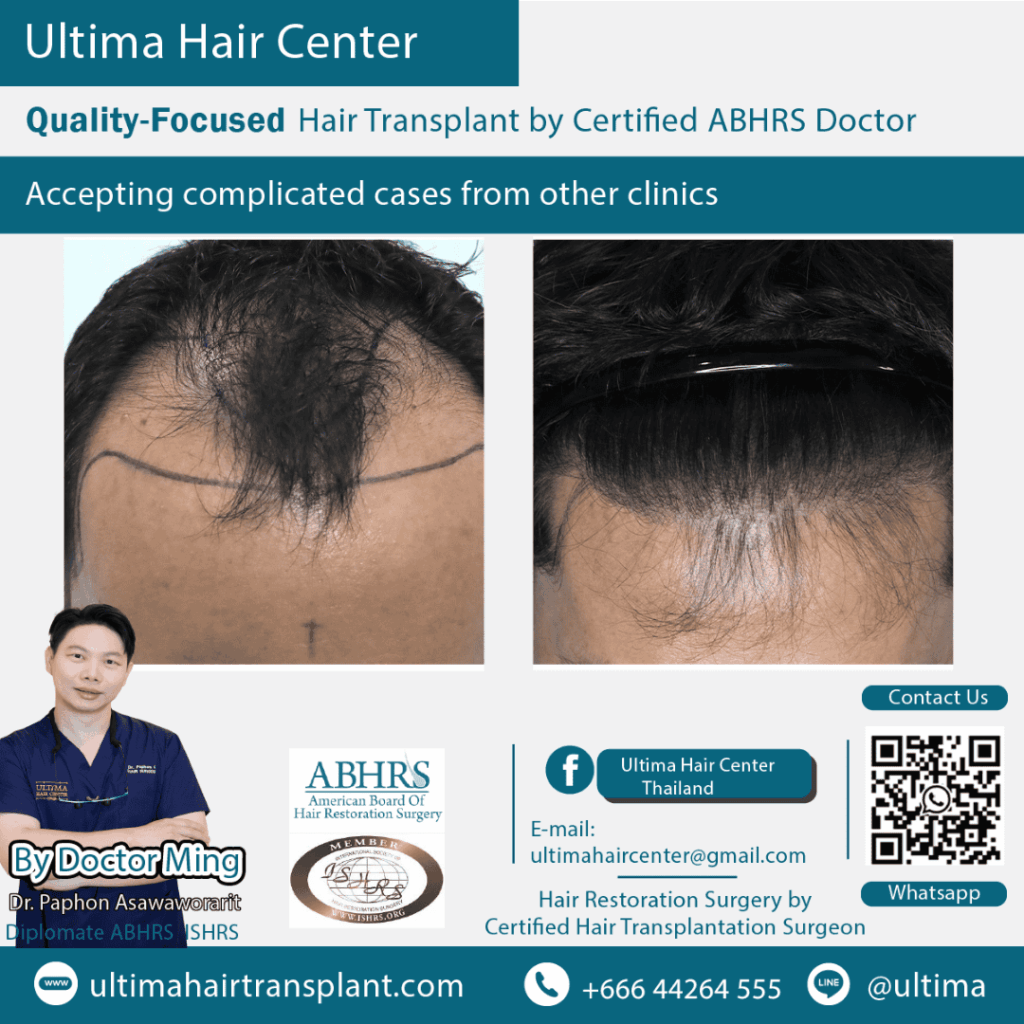
Another factor that people may not immediately notice is hair direction
Different areas of the scalp may have different natural growth directions, such as:
- The frontal area
- Temples
- Mid-scalp
- Sides
- Crown
If grafts are transplanted without considering the existing hair direction, the transplanted hairs may appear to stick up or grow in a direction that conflicts with the surrounding hair
Graft placement should therefore take the original direction of the existing hair into consideration
6. Hair Angle Is Just as Important as Hair Direction
In addition to direction, the angle of the hair is also important
Hair in the frontal area is often placed at a relatively low angle so that it lies closer to the scalp and blends with the existing hair
If grafts are placed at an angle that is too steep, the transplanted hairs may stand upright and become easier to notice
Therefore, the ability to control direction + angle + position is an important part of achieving a natural-looking result
7. Do Not Focus Only on the Number of Grafts
One common misconception is:
“The more grafts I receive, the better the result will look”
This is not necessarily true because the outcome depends on:
- Number of grafts
- Number of hairs per graft
- Area requiring transplantation
- Size of the area
- Hair shaft thickness
- Quality of the Donor Area
- Density of the existing hair
Some patients may need relatively few grafts but achieve a good result through appropriate graft distribution. In contrast, using a large number of grafts does not necessarily guarantee the expected outcome
Therefore, appropriate graft planning is more important than simply pursuing a higher number
8. Assess the Donor Area Carefully
The Donor Area, where grafts are harvested for transplantation, is an important resource in hair restoration
The doctor should assess:
- Hair density
- Hair shaft characteristics
- Approximate number of available grafts
- Graft quality
- How many grafts can reasonably be harvested
- Whether the patient has undergone a previous hair transplant
Harvesting more grafts than appropriate may cause the Donor Area to appear thinner
Therefore, quality-focused hair transplantation should place importance on using grafts strategically and responsibly
9. Plan for Future Hair Loss
This is particularly important for younger patients. A hair transplant does not necessarily stop the progression of thinning in the existing hair
Before undergoing a transplant, patients should consider:
If the existing hair becomes thinner in the future, will the transplanted hairline still look balanced and natural?
The doctor should therefore assess the potential progression of hair loss and plan the use of the Donor Area appropriately
Planning for today should also take the future into consideration
10. Choose FUE or FUT According to the Individual
The choice of technique is important, but there is no single technique that is suitable for everyone
FUE (Follicular Unit Excision)
FUE involves extracting individual hair grafts from the Donor Area, typically through small punches distributed across the donor region at the back of the scalp
One advantage is that it does not create a linear scar
However, appropriate harvesting is important to prevent the Donor Area from appearing patchy or excessively depleted
FUT (Follicular Unit Transplantation)
FUT involves removing a strip of scalp tissue and then dissecting it into individual grafts
It can be an option in certain cases, particularly for patients who require a large number of grafts or those whose donor density may not be sufficient for extensive FUE harvesting
However, FUT results in a linear scar in the Donor Area, so the technique should be considered together with the patient’s hairstyle and individual preferences
If possible, it is advisable to consult a hair transplant doctor who is experienced in both techniques and can provide straightforward information about the advantages and disadvantages of each before making an important decision
11. Maintaining Existing Hair Is Also Important
Hair transplantation does not mean that attention should be focused only on the transplanted grafts. The existing hair is also extremely important
If there is a tendency toward ongoing hair loss or thinning, the doctor may consider additional treatment to help maintain the existing hair, depending on the individual situation
The goal is to allow the existing and transplanted hair to work together and blend seamlessly
12. Do Not Transplant More Hair Than Necessary
Sometimes, trying to achieve the highest possible density may not be the best approach
The frontal hairline has limitations related to blood supply and the available space on the scalp
Placing a large number of grafts into a small area does not necessarily produce a better result
The doctor should therefore assess an appropriate density for each individual area
13. Graft Handling Affects the Outcome
Once grafts have been harvested, they need to be handled appropriately before and during transplantation
Important considerations include:
- Minimizing trauma to the grafts throughout the transplant procedure
- Handling hair grafts carefully
- Keeping grafts in an appropriate solution and at a suitable temperature
- Preventing grafts from drying out
- Minimizing the time grafts remain outside the body when appropriate
These details are part of the overall process and can influence the quality of a hair transplant
14. Post-Transplant Care Is Also Important
Even when a hair transplant is performed by an experienced doctor, aftercare remains important
During the early period, patients should:
- Follow the doctor’s instructions
- Avoid scratching or picking the transplanted area
- Protect the area from impact or trauma
- Wash the hair according to the recommended method
- Avoid activities that increase risk during the period specified by the doctor
- Take prescribed medications as instructed
- Attend scheduled follow-up appointments
Will the Transplanted Hair Grow Immediately After a Hair Transplant?
Not necessarily
After a hair transplant, the transplanted hairs may go through changes as part of the normal hair growth cycle
During the early period, some patients may notice that the transplanted hairs shed before the follicles enter a new growth cycle
Therefore, the result should not be judged too early. Follow-up should take place according to the timeline recommended by the doctor
A Natural-Looking Result Does Not Happen in One Day
Hair transplantation is a process that takes time. In general, the result gradually changes according to the natural hair growth cycle
Patients should therefore understand that:
The day of the hair transplant ≠ the day of the final result
The outcome should be evaluated at an appropriate stage of the recovery and growth process
How Can Hair Transplantation with an ABHRS-Certified Doctor Help Achieve a Natural-Looking Result?
Choosing a hair transplant with an American Board of Hair Restoration Surgery (ABHRS)-certified doctor is one factor that can be considered when selecting a hair restoration physician
Hair Restoration certification provides information regarding the doctor’s training, knowledge, and skills within the certification system of the organization
However, ABHRS certification does not guarantee that every patient will achieve the same result. Other factors should also be considered, including:
- Actual results
- Hairline design
- Treatment planning
- Donor Area assessment
- Hair transplant techniques performed
- Graft handling
- Follow-up care
- Whether patients can communicate directly with the doctor without going through an intermediary
Why Is Choosing the Doctor More Important Than Choosing a Promotion?
Hair transplantation involves planning that affects the patient’s hair over the long term
Choosing a clinic based only on price or promotions may therefore not be sufficient
Important questions include:
Who performs the assessment?
Who designs the hairline?
Who plans the number of grafts?
Will the result look natural?
Is there follow-up care after the procedure?
These questions are more important than simply asking:
“How much does each graft cost?”
What Does Dr. Ming’s Approach to Hair Transplantation Focus On?
For those searching for information about hair transplantation with Dr. Ming, the important point is that treatment should be individually assessed
There is no single formula that works for everyone
A 30-year-old man with a receding hairline may require a different treatment plan from a 50-year-old man with thinning in the mid-scalp area
Similarly, a woman with diffuse thinning around the central scalp may require a different approach from a man with genetic hair loss following a Norwood pattern
Individualized planning is therefore a key part of the process
How Does Ultima Hair Center Approach Hair Transplantation?
The approach at Ultima Hair Center places importance on treatment planning and quality
Hair transplantation should not be viewed simply as:
“How many grafts do I need?”
Instead, the more important question is:
“How should the available grafts be used to suit this individual?”
This approach allows for more detailed planning by considering both the current hairline and the potential progression of hair loss in the future
What Should You Consider When Choosing a Hair Transplant Clinic in Krungthep Kreetha–Bang Kapi?

If you are searching for a hair transplant clinic in the Krungthep Kreetha–Bang Kapi area, do not choose a clinic based solely on location or price
Consider:
The Doctor
What qualifications and certifications does the doctor have?
Diagnosis
Does the clinic evaluate the cause of hair loss before recommending a transplant?
Treatment Planning
Does the doctor explain the estimated number of grafts and the reasons behind the treatment plan?
Hairline Design
Is the hairline appropriate for the patient’s facial features and age?
Donor Area
Is the Donor Area carefully assessed before harvesting?
Follow-Up
Does the clinic provide appropriate aftercare and follow-up?
Can you communicate directly with the doctor without having to go through a salesperson or administrator?
Free Consultation with Dr. Ming Before Making a Decision
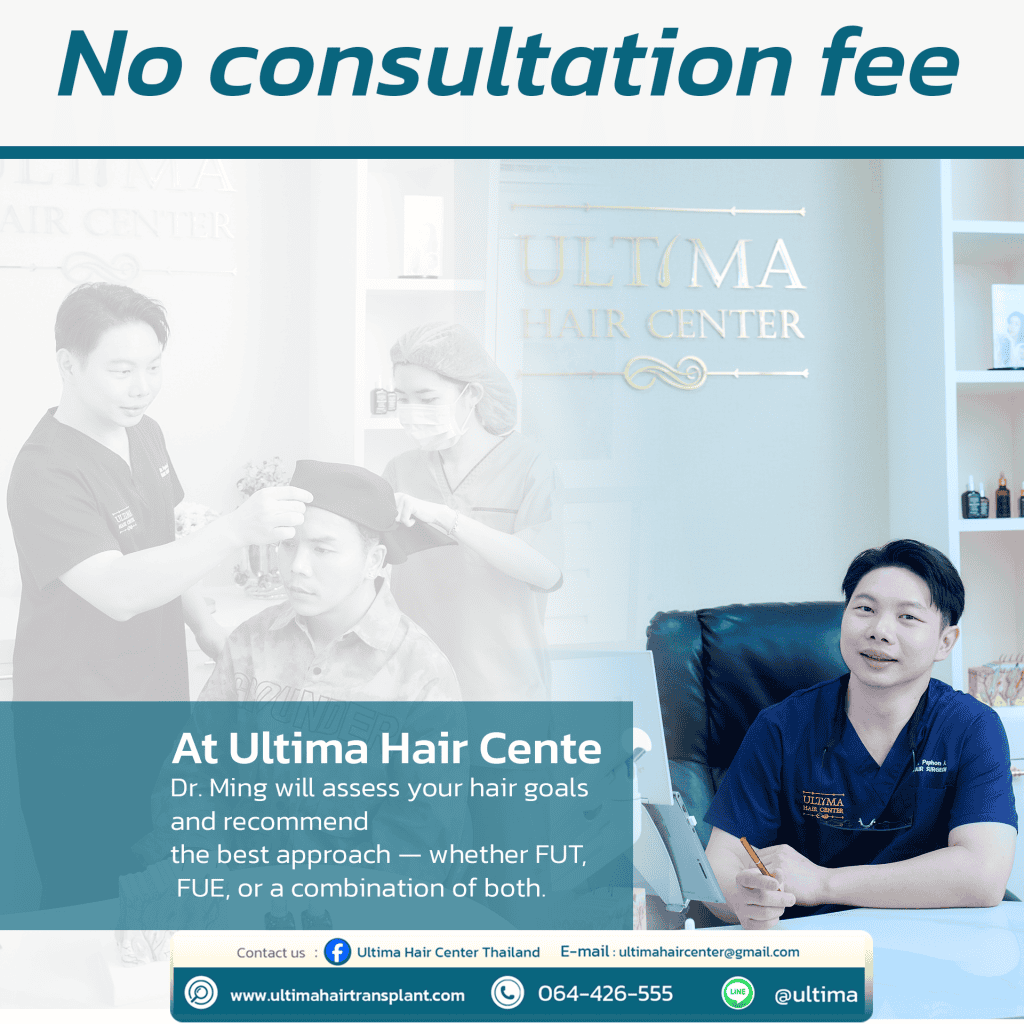
If you are unsure whether you are suitable for a hair transplant, a free consultation with Dr. Ming can help you better understand your individual situation before making a decision
Topics that can be discussed include:
- Whether your current level of hair thinning requires a transplant
- Which areas should be treated first
- The approximate number of grafts required
- Whether your Donor Area is sufficient
- Whether FUE or FUT may be more suitable
- How the hairline should be designed
- Whether the existing hair may continue to thin
- How to plan for possible future hair loss
A consultation before treatment can help patients make a more informed decision
10 Factors That Help a Hair Transplant Look Natural
The key factors can be summarized as follows:
1. Correctly identify the cause of hair loss
2. Design a hairline appropriate for the individual
3. Use grafts appropriate for each location
4. Place grafts according to the direction of the existing hair
5. Control the angle of the transplanted hair
6. Distribute grafts appropriately
7. Carefully assess the Donor Area
8. Avoid using more grafts than necessary
9. Plan for future hair loss
10. Handle the grafts properly and provide appropriate aftercare
All of these factors work together. No single factor alone determines whether a hair transplant will look natural
Frequently Asked Questions About Making a Hair Transplant Look Natural
Will people be able to tell that I have had a hair transplant?
If the hairline is appropriately designed and the grafts are carefully placed, the result can look natural and blend with the existing hair. However, it cannot be guaranteed that other people will never notice
How many grafts are needed for a natural-looking hair transplant?
There is no fixed number. It depends on the area requiring transplantation, existing hair density, hair characteristics, and the quality of the Donor Area
Does FUE look more natural than FUT?
It cannot be concluded that one technique will always produce a more natural-looking result than the other. The quality of planning and the surgical procedure are highly important
Each technique also has different advantages and disadvantages. It is therefore advisable to consult a hair transplant doctor who is experienced in both techniques and can provide straightforward information to help you make an appropriate decision
How important is the hairline?
Very important. The hairline is one of the easiest areas to notice, so its design should take age, facial features, and the potential for future hair loss into consideration
What are the benefits of choosing an ABHRS-certified doctor?
ABHRS certification is one factor that can be considered when choosing a doctor for Hair Restoration. It should be evaluated together with the doctor’s qualifications, experience, actual results, treatment planning, and ongoing post-transplant care
Why can some people still tell that someone has had a hair transplant?
Possible reasons include an inappropriate hairline design, grafts placed in directions that do not match the existing hair, using multi-hair grafts in the frontal hairline, or inappropriate density, among other factors
Conclusion: Making a Hair Transplant Look Natural Starts with Proper Planning
If the goal is to achieve a natural-looking hair transplant, the focus should not simply be on increasing the number of hairs. The process should begin with identifying the cause of hair loss, assessing the Donor Area, designing the hairline, selecting appropriate grafts, and placing the grafts according to the direction and angle of the existing hair
Future hair loss should also be considered, because good hair transplant planning should take into account both the current result and the appropriate use of the Donor Area over the long term
For those looking for quality-focused hair transplantation, choosing the right doctor and hair transplant clinic is an important decision. In particular, patients may consider a doctor with appropriate qualifications and Hair Restoration certification, such as a hair transplant with an American Board of Hair Restoration Surgery (ABHRS)-certified doctor, while also reviewing actual results and the doctor’s approach to treatment planning
If you are interested in hair transplantation with Dr. Ming, you can consult with Dr. Ming for free to discuss your concerns and receive an initial assessment before making a decision
For those searching for a hair transplant clinic in the Krungthep Kreetha–Bang Kapi area, Ultima Hair Center can be considered with emphasis on individualized assessment, graft planning, hairline design, and appropriate use of available grafts
Because the goal of a good hair transplant is not simply to “have more hair,” but to plan the procedure so that the transplanted hair blends with the existing hair and makes the overall appearance of the hair look as natural as possible for each individual
