

When Does It Hurt, How Much Does It Hurt, and How Should You Prepare?
“Does hair transplantation hurt?”
This is one of the first questions many patients ask before deciding to undergo a hair transplant, especially those who have never had a procedure involving the scalp before. Many people worry about whether they will experience pain during graft harvesting, graft implantation, or after the procedure
In reality, modern hair transplantation can significantly reduce pain during the procedure through the use of local anesthesia. However, this does not necessarily mean that you will “feel nothing at all” throughout the entire procedure. Patients may still feel pressure, touch, movement, the injection of local anesthetic, or a sensation of tightness in the scalp at certain stages
The level of discomfort also varies from person to person, depending on individual sensitivity, response to local anesthesia, and anxiety before the procedure
Therefore, a more useful question than simply asking “Does a hair transplant hurt?” is:
“When does a hair transplant hurt, and how does the doctor manage discomfort throughout the procedure?”
This article explains what patients can expect before, during, and after a hair transplant, including the differences between FUE and FUT and how to prepare to minimize anxiety and discomfort
Does Hair Transplantation Hurt?
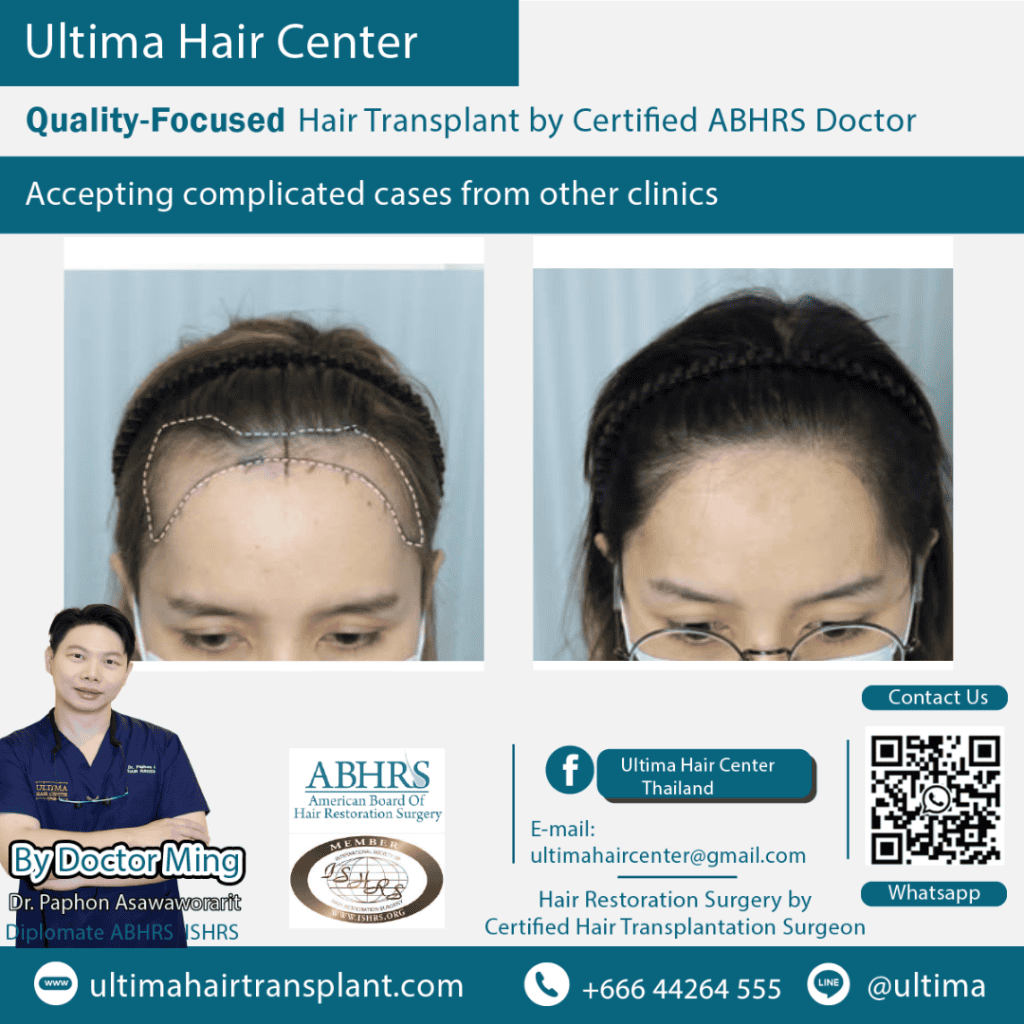
In general, local anesthesia is used during hair transplantation to significantly reduce pain in the treatment area
After the anesthesia has taken effect, most patients do not experience significant pain during the main stages of the procedure
However, patients may still experience sensations such as pressure, tightness, or mild discomfort during:
- Graft harvesting
- Creating recipient sites
- Implanting the grafts
- The period after the local anesthetic wears off
The exact experience varies from person to person
Which Part of a Hair Transplant Usually Hurts the Most?
Based on the typical experience of patients, the injection of local anesthesia is often the stage where patients feel the most discomfort because a needle is inserted into the skin
The initial needle prick may cause some discomfort, while the injection of the anesthetic may produce a stronger sensation of pressure or stinging
Once the local anesthesia takes effect, the sensation of pain is significantly reduced
However, everyone has a different sensitivity to pain, so the experience is not exactly the same for every patient
Why Can Local Anesthetic Injections Hurt?
Local anesthetic needs to be injected into the scalp so that it can numb the treatment area
The sensation during injection may be caused by:
- The needle entering the skin
- Pressure as the anesthetic is injected into the tissue
- Tension in the skin
- Differences in sensitivity between different areas of the scalp
Therefore, although local anesthesia greatly reduces pain during the procedure, the initial injection itself can still be uncomfortable
Can You Still Feel Pain After the Anesthetic Is Injected?
Once the local anesthesia has taken effect sufficiently, most patients tend to feel:
Pressure, touch, or movement of the scalp
rather than sharp pain
If a patient experiences pain during the procedure, the doctor can assess the area and administer additional local anesthesia when necessary
Therefore, patients should not feel that they have to endure pain throughout the procedure. If you feel pain during the procedure, tell your doctor immediately
Does FUE Hair Transplantation Hurt?
FUE, or Follicular Unit Excision, is a technique in which Follicular Units are harvested individually from the Donor Area using a small punch instrument
Local anesthesia is administered to the Donor Area before graft harvesting begins
Once the anesthesia has taken effect, patients generally should not experience significant pain during graft harvesting, although they may still feel:
- Pressure
- Touch
- Movement
- Sound or vibration from the equipment
at certain points during the procedure
Does FUT Hair Transplantation Hurt?
FUT, or Follicular Unit Transplantation, involves removing a strip of scalp from the Donor Area and then separating the tissue into individual hair grafts
As with FUE, local anesthesia is used before the procedure
The sensations patients experience are therefore generally more related to the local anesthetic injections and tightness around the wound after the procedure than to significant pain during graft harvesting
Because FUT involves a linear incision, the area requiring local anesthesia may be more localized compared with FUE
Which Is More Painful: FUE or FUT?
It is not appropriate to say that one technique is always more painful than the other because discomfort depends on several factors, including:
- Individual pain sensitivity
- Amount of local anesthetic used
- Treatment location
- Number of grafts
- Duration of the procedure
- Condition of the scalp
- Post-operative care
The experience can therefore vary considerably from one patient to another
Does a Hair Transplant Hurt After the Procedure?
Once the local anesthesia wears off, patients may experience sensations such as:
- Scalp tightness
- Soreness
- Mild pain
- Itching
- Tightness around the Donor Area
- Increased sensitivity to touch
These sensations generally decrease as the scalp recovers
If your doctor provides pain medication or other medication after the procedure, it should be taken according to the doctor’s instructions
Will the First Night After a Hair Transplant Be Painful?
The experience during the first night varies from person to person
Some patients may experience only mild tightness or soreness, while others may experience more discomfort
Sleeping position and pressure on the scalp can also affect how you feel after the procedure. Your doctor may recommend:
- Avoiding pressure on areas that are painful
- Avoiding scratching the grafted area
- Taking medication as instructed
Why Does the Scalp Feel Tight After a Hair Transplant?
Scalp tightness can result from several factors, including:
- Tissue swelling
- Inflammation associated with the healing process
- The procedure itself
- Wounds in the Donor Area
- Wounds in the recipient area
Scalp tightness does not necessarily mean that something has gone wrong with the procedure
However, if the symptoms become progressively worse or are accompanied by other unusual symptoms, you should contact your doctor
Does the Scalp Itch After a Hair Transplant?
Itching is common during the recovery of the scalp and may occur due to:
- The healing process
- Dry skin
- Scabbing
- Changes in the skin following the procedure
Most importantly, do not scratch or pick at the scabs yourself
Doing so may cause irritation or interfere with the healing area. Follow your doctor’s instructions for post-operative care
Is Swelling After a Hair Transplant Related to Pain?
Some patients may experience swelling around the forehead or eyes after a hair transplant, particularly during the first few days
Swelling may result from the local anesthetic or fluids used during the procedure, as well as the tissue’s response to the procedure
Swelling does not necessarily mean that the hair transplant has been unsuccessful
However, if you experience excessive swelling, severe pain, or other concerning symptoms, contact your doctor promptly
What Factors Can Make a Hair Transplant More Uncomfortable?
The level of discomfort may be influenced by several factors
1. Individual Pain Sensitivity
Everyone has a different pain threshold
2. Anxiety Before the Procedure
People who are afraid of needles or highly anxious may perceive sensations during the procedure more strongly
3. Number of Grafts
Procedures involving a larger number of grafts may take longer
4. Technique Used
FUE and FUT involve different methods of graft harvesting and different types of wounds
5. Treatment Area
Different areas of the scalp may have different levels of sensitivity
6. Pain Management During the Procedure
Preparation, administration of local anesthesia, and monitoring the patient’s comfort throughout the procedure are all important
How Can You Make a Hair Transplant Less Painful?
Managing discomfort does not depend only on medication. It should begin before the procedure
1. Tell Your Doctor That You Are Concerned About Pain
Your doctor can explain the procedure and prepare an appropriate approach
2. Inform Your Doctor About Any Drug Allergies
Especially allergies or previous reactions to local anesthetics or other medications
3. Tell Your Doctor About Any Medications You Take
This includes prescription medications, supplements, and other products that may affect the procedure
4. Get Enough Rest
Adequate rest can help your body prepare for the procedure
5. Eat According to the Clinic’s Instructions
Do not unnecessarily fast or avoid certain drinks unless instructed to do so by your medical team
6. Do Not Take Painkillers or Other Medication on Your Own Before the Procedure
Ask your doctor first, particularly because some medications may affect blood clotting
The Technique Used to Inject Local Anesthetic Can Also Affect Discomfort
An appropriate injection approach can help reduce discomfort, such as:
- Using a small needle
- Injecting the anesthetic slowly
- Using relaxation techniques or listening to music
- Using an appropriate anesthetic formulation
- Applying ice during local anesthetic injection when appropriate
What If You Are Very Afraid of Needles?
Many people who are afraid of needles can still undergo a hair transplant normally
The most important thing is to tell your doctor before the procedure:
“I am very afraid of needles and I am very concerned about pain”
This allows the doctor and medical team to prepare an appropriate approach
There is no need to hide your anxiety. Good communication can make it easier for the medical team to take care of you
How Long Does a Hair Transplant Take?
The duration depends on:
- Number of grafts
- Technique used
- Characteristics of the case
- Graft harvesting process
- Graft preparation
- Graft implantation
A procedure involving a large number of grafts may take several hours
As a result, fatigue or remaining in the same position for an extended period may sometimes be more noticeable to the patient than pain
Can You Take a Break During a Hair Transplant?
Hair transplantation can take several hours, so appropriate breaks may be possible during the procedure
If you feel:
- Tired
- Neck pain
- Back pain
- The need to use the restroom
- Uncomfortable
- Pain
tell the medical team. You do not need to force yourself to endure discomfort
Should You Take Pain Medication After a Hair Transplant?
If your doctor considers it necessary, you may be prescribed pain medication to take after the procedure
Always take medication according to your doctor’s instructions
Do not purchase and take different types of painkillers on your own without informing your doctor, because some medications may affect blood clotting or interact with other medications
What Symptoms After a Hair Transplant Should Prompt You to Contact Your Doctor?
Recovery varies from person to person, but you should contact your doctor if you experience:
- Unusually severe pain
- Pain that continues to worsen
- Excessive swelling
- Bleeding that does not stop
- Pus or unusual discharge
- Fever
- Spreading redness
- An allergic reaction to medication
- Any other unusual symptom that causes concern
Do not attempt to diagnose unusual symptoms yourself based solely on information found online
Does Choosing an Experienced Hair Transplant Doctor Make the Procedure Less Painful?
The doctor’s skills and planning can play an important role in the patient’s overall experience, particularly with:
- Administration of local anesthesia
- Selection of injection sites
- Graft harvesting
- Wound management
- Tissue handling
- Graft placement
- Monitoring the patient’s condition during the procedure
However, it would be inappropriate to assume that an experienced doctor can guarantee that every patient will experience no pain at all
A more appropriate goal is:
To keep discomfort at a level that the patient can tolerate while maintaining safety throughout the procedure
Why Is Choosing the Doctor More Important Than Looking Only at the Price?
Hair transplantation is a medical procedure
Therefore, patients should consider more than just the price, including:
- Who evaluates the patient?
- Who plans the treatment?
- Who performs the procedure?
- Who handles the grafts?
- Is there post-operative follow-up?
- Can the patient communicate with the doctor?
- Are the risks and limitations clearly explained?
For patients looking for quality-focused hair transplantation, medical standards and treatment planning should be considered more carefully than choosing a clinic based solely on promotions
What Should You Consider When Choosing an ABHRS-Certified Hair Restoration Doctor?
If you are considering hair transplantation with an American Board of Hair Restoration Surgery (ABHRS)-certified doctor, the certification is one factor that can be considered when choosing a hair restoration doctor
However, certification should not be the only consideration. It should be evaluated together with:
Assessment of Hair Loss
The doctor should assess the cause and pattern of hair loss
Donor Area Assessment
The doctor should determine whether an adequate number of grafts are available
Hairline Design
The design should take into account facial structure, age, and the number of available grafts
Choice of Technique
FUE or FUT should be selected according to the individual case
Care During the Procedure
This includes pain management and appropriate graft handling
Post-Operative Follow-Up
Follow-up allows the doctor to assess recovery and hair growth over time
At Ultima Hair Center, We Emphasize Direct Communication With the Doctor
At Ultima Hair Center, communication with patients before they make a decision is an important part of our approach
Dr. Ming personally responds to patient messages, allowing patients to ask directly about hair loss, hair transplantation, and any concerns they may have
For patients who are worried about pain, questions can be discussed before the procedure, such as:
“I am very afraid of needles. Will a hair transplant hurt?”
“If I feel pain during the procedure, can additional local anesthesia be given?”
“Will I need pain medication after the procedure?”
“How are FUE and FUT different in terms of discomfort?”
Discussing these concerns beforehand can help reduce anxiety and give patients a clearer understanding of what to expect
If You Are Looking for a Hair Transplant Clinic in Bangkok’s Krungthep Kreetha–Bang Kapi Area, What Should You Ask?
If you are searching for a hair transplant clinic in the Krungthep Kreetha–Bang Kapi area, consider asking the clinic the following questions before making a decision:
1. Can I consult directly with the doctor?
2. Is the doctor certified by ABHRS?
3. Who develops the treatment plan?
4. If I experience pain during the procedure, can I tell the doctor?
5. How are post-operative symptoms managed?
6. Does the doctor provide post-operative follow-up?
7. Who can I contact if I experience an unusual symptom?
These questions provide insight into the overall care system rather than focusing only on price
Free Consultation With Dr. Ming Before Your Hair Transplant
If you are concerned about whether a hair transplant will hurt, speaking with a doctor before the procedure can help you understand the actual process and what to expect
At Ultima Hair Center, patients can consult with Dr. Ming for free to discuss hair loss and questions about hair transplantation
Dr. Ming personally responds to patient messages, allowing patients to ask questions and discuss their initial concerns directly
Frequently Asked Questions: Does Hair Transplantation Hurt?
Does a hair transplant hurt a lot?
Local anesthesia is generally used, which significantly reduces discomfort during the main stages of the procedure. The injection of local anesthesia itself may cause some pain or stinging
Which part hurts the most?
The injection of local anesthesia is generally the stage patients notice most. Once the anesthesia takes effect, the sensation usually changes to pressure or touch rather than significant pain
Will I experience pain after a hair transplant?
Some patients may experience tightness, soreness, or mild pain after the local anesthesia wears off. The level of discomfort varies from person to person
Does FUE hurt?
Local anesthesia is used before graft harvesting, so significant pain should not be expected during the main harvesting process
Does FUT hurt?
Local anesthesia is also used before FUT, so significant pain should not be expected during the main procedure
Can people who are afraid of needles have a hair transplant?
Yes, but you should tell your doctor before the procedure so that the medical team can prepare an appropriate approach
What should I do if I feel pain during the procedure?
Tell your doctor immediately. You should not feel that you have to endure pain, as the doctor can assess the area and consider administering additional local anesthesia
Summary: Does Hair Transplantation Hurt?
A hair transplant can involve some discomfort, but local anesthesia can significantly reduce pain during the procedure
The stage patients often notice most is the injection of local anesthesia. Once the anesthesia takes effect, patients generally experience pressure, touch, or tightness rather than significant pain
After the procedure, some patients may experience:
- Tightness
- Soreness
- Itching
- Mild pain
- Swelling in some cases
These symptoms generally decrease as the scalp recovers
However, everyone’s experience is different, and no one can guarantee that a hair transplant will be completely painless
More important than simply asking “Does a hair transplant hurt?” is asking:
“How does the doctor plan and manage discomfort before, during, and after the procedure?”
For patients looking for quality-focused hair transplantation, it is important to consider the doctor, technique, graft handling, medical standards, and post-operative follow-up rather than choosing a clinic based solely on price
For those interested in hair transplantation with Dr. Ming or searching for a hair transplant clinic in the Krungthep Kreetha–Bang Kapi area, you can ask about the procedure and your concerns regarding discomfort before making a decision
At Ultima Hair Center, we emphasize communication and individualized planning, with Dr. Ming personally responding to patient messages. Patients can also consult with Dr. Ming for free to discuss their initial questions about hair transplantation
For those considering hair transplantation with an American Board of Hair Restoration Surgery (ABHRS)-certified doctor, it is worth considering the doctor’s qualifications, pre-operative assessment, appropriate technique, pain management, graft handling, and post-operative follow-up together
Because a good hair transplant is not simply about achieving a certain number of grafts. It should also prioritize patient safety, quality graft handling, patient care, and planning for results that look natural from beginning to end
